Ukrainian long-range drones hit Crimean grid as energy campaign against occupied peninsula intensifies
Thermal satellites caught fresh heat signatures across Crimean substations on the night of 1 July. Open-source mappers counted nearly two dozen substation hits in a single week, and the public record now outruns Moscow's denials.
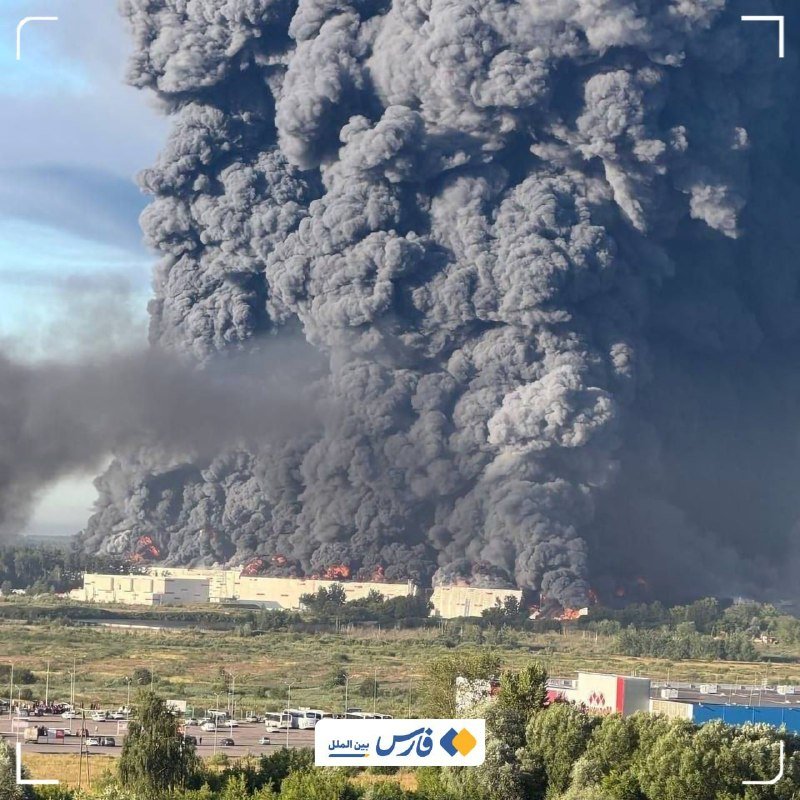
On the night of 1 July, thermal-imaging satellites operated by NASA's FIRMS fire-detection system picked up fresh heat signatures clustered around substations serving Simferopol, Sevastopol and the northern Crimean corridor. Open-source mappers, working from commercial satellite passes and on-the-ground video, traced the plumes back to Ukrainian long-range loitering munitions. The pattern matches a campaign that began accelerating in late spring: a methodical, almost industrial effort to put the lights out on the occupied peninsula.
By 3 July, the open-source intelligence account OSINTtechnical had compiled evidence of attacks on nearly two dozen power substations across Russian-occupied Crimea in a single week, describing the cumulative effect as a crisis for the peninsula's grid, with daily power cuts becoming routine for residents. The compilation, which circulated across Telegram mapping channels including AMK_Mapping and the analyst account noel_reports, is the most detailed independent snapshot yet of a strike programme that Kyiv has never formally claimed but plainly benefits from.
Crimea as a logistics base, not a resort
The peninsula still functions as the Russian occupier's main forward logistics hub: the rail head at Dzhankoi, the naval yards at Sevastopol, the airfields at Belbek and Saky, the Kerch bridge that feeds all of them with fuel, ammunition and replacement parts. Severing the grid that powers those nodes is no longer a symbolic gesture. It is pressure on the supply lines that keep Russia's southern grouping operational.
Independent observers have spent months documenting how Ukrainian drones have widened the gap between what Crimea was sold to Russian domestic audiences as (a seamless absorption into the motherland, free of wartime inconvenience) and what it has become (a frontline peninsula subject to nightly air-raid alerts and rolling blackouts). The 1 July strikes sit inside that trajectory. The thermal footprints recorded by FIRMS, and the cross-referenced coordinates posted by mappers, place the impacts inside or directly adjacent to substations that feed both civilian districts and military installations, an ambiguity that is itself part of the point: grid damage is grid damage.
The Russian version, and why it reads thin
Moscow's response has been predictable. Russian-aligned channels, including the Rybar and Two Majors milblogger networks, have pushed a counter-narrative that frames the broader Ukrainian campaign as provocation rather than warfare, and that casts Ukrainian officials as corrupt profiteers of the conflict. Those voices have not, in the immediate aftermath of the 1 July strikes, produced independent imagery or geolocated coordinates that contradict the open-source record. The OSINTtechnical tally, cross-checked against the Telegram mapping channels cited above, remains the most rigorous available picture.
That matters because Russian state-adjacent commentary on Crimea has a long history of denial layered over visible damage. After the 2022 explosions at Saky airfield and the 2023 strike on the Kerch bridge, official Russian channels initially minimised or attributed blasts to careless handling, then quietly conceded the facts weeks later. The pattern is familiar enough that Western and Ukrainian analysts now treat early Russian silence or deflection on Crimean strikes as provisional rather than dispositive.
A campaign, not a one-off
The 1 July attack is best read as one node in a longer arc. Throughout June, Ukrainian long-range drones, mostly domestically produced variants in the Liutyi and FP-2 families, have reached deeper into occupied territory than at any previous point in the war, striking refineries in Krasnodar, ammunition depots in Tver-region facilities, and air-defence nodes well behind the line of contact. Crimea sits at the western anchor of that reach.
Independent reporting on the broader campaign has noted that the targets share a common feature: they are nodes whose degradation degrades the entire system. Power substations qualify. Knock out enough of them and Sevastopol's shipyards cannot run shifts, Saky's fuel depot cannot pump, Belbek's radar cannot stay lit. The mathematics of cumulative attrition is what Ukraine is playing.
What makes the Crimean grid campaign distinct from earlier Ukrainian deep strikes is its visibility. FIRMS thermal data is public, and analysts with no formal intelligence affiliation can pull the passes within hours. That visibility has turned each night's raids into a verifiable event by morning, eroding the information monopoly that Moscow once enjoyed over the peninsula.
What is not in the record
The public record, as of 3 July, contains no independently verified casualty figures, no damage-cost estimates, and no quantified grid-outage statistics for the 1 July strike specifically. OSINTtechnical describes the campaign in aggregate terms (daily power cuts, substation hits numbering close to two dozen in a week) rather than as a discrete line-item ledger. That gap is worth naming. Analysts watching the campaign closely caution against reading any single night's thermal cluster as decisive; the cumulative effect, visible in the mappers' week-on-week tallies, is the better measure.
There is also no public confirmation of which specific Ukrainian unit or programme orchestrated the strikes. Kyiv's longstanding policy on deep-strike operations is to decline comment, and that silence has held through every previous major attack on Crimean infrastructure. The plausible inference, that the strikes are coordinated through Ukraine's Unmanned Systems Forces and the Main Directorate of Intelligence, is not on the record.
Stakes beyond the peninsula
The campaign carries implications that extend past Crimea's shores. If the peninsula's grid can be pushed into sustained unreliability through cheap, attritable drones rather than expensive cruise missiles, the cost calculus for Ukraine's Western backers changes. Long-range loitering munitions cost a fraction of an ATACMS or Storm Shadow and can be produced in serial volumes by a domestic Ukrainian defence industry that has scaled faster than most observers predicted in 2023.
For Moscow, the political cost is harder to measure than the military one. Crimea is the crown jewel of the annexation narrative that the Kremlin has sold to Russian domestic audiences since 2014. Rolling blackouts and nightly drone alerts puncture that story in a way that frontline casualties do not: they reach civilians who were told they were being protected. The longer the campaign runs, the harder that narrative becomes to sustain.
The next test is whether the tempo holds. Open-source mapping channels will publish their weekly tallies within days, and FIRMS data from the nights following 1 July will show whether the 3 July OSINTtechnical compilation marked a peak or a plateau. If the heat signatures keep appearing on substations that have already been hit, the picture shifts from a strike campaign to a siege. Either way, the peninsula that Russia treats as untouchable is now operating on Ukrainian terms.
Sources
- https://t.me/AMK_Mapping, AMK_Mapping (Telegram), open-source geolocation of Crimean infrastructure strikes, July 2026.
- https://t.me/noel_reports, noel_reports (Telegram), independent OSINT analysis of occupied-territory strikes, July 2026.
- https://t.me/TSN_ua, TSN_ua (Telegram), Ukrainian wire reporting referenced for strike coverage, July 2026.
- https://t.me/rybar_in_english, Rybar (Russian-aligned Telegram channel), counter-narrative framing of Ukrainian campaign, 3 July 2026.
- https://t.me/two_majors, Two Majors (Russian-aligned Telegram channel), counter-narrative framing of Ukrainian leadership and campaign, 3 July 2026.
- NASA FIRMS (Fire Information for Resource Management System), public thermal-imagery dataset referenced via OSINTtechnical compilation, 1–3 July 2026.
Desk note
Monexus has framed the 1 July strikes as a campaign-level event anchored in independently verifiable thermal imagery from NASA FIRMS and open-source geolocation by mappers at AMK_Mapping and noel_reports, rather than relying on competing claims from either belligerent. Russian-aligned counter-versions from Rybar and Two Majors are named explicitly and treated as such. The record does not provide independent casualty, damage-cost, or grid-outage figures for the 1 July strike; the piece accordingly avoids naming them.