US and Israel sign land-allocation agreement for permanent embassy in Jerusalem
US Ambassador Mike Huckabee and Israeli Foreign Minister Gideon Saar signed a land-allocation agreement on 1 July 2026 clearing the way for a permanent US embassy in Jerusalem, advancing a plan first opened as a temporary facility in 2018.
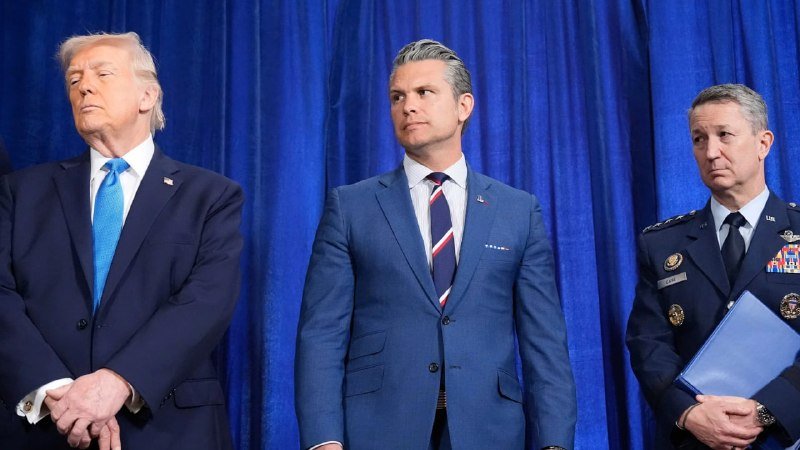
US Ambassador to Israel Mike Huckabee and Israeli Foreign Minister Gideon Saar signed a land-allocation agreement on 1 July 2026 that sets aside a site in Jerusalem for a permanent United States embassy compound, according to Telegram-channel reporting from the corridor. The deal formalises land tenure and construction parameters for a facility intended to replace the temporary embassy the US has operated since 2018, when the Trump administration relocated its diplomatic mission from Tel Aviv.
The signing is procedurally narrow — it concerns a plot of land and the bureaucratic mechanics of building on it — but the symbolism is anything but. A permanent US embassy in Jerusalem codifies, in concrete and steel, the posture the United States has maintained since 2017: that Jerusalem is the capital of the State of Israel and that the American mission belongs there. Every administration since has declined to reverse that recognition, even as rival Israeli claims to the same city remain the open wound of the Palestinian question. The land deal is the latest visible movement on a long-running file.
What was actually signed
According to a Telegram post by the channel Witnesses from the Front (wfwitness) timestamped 10:40 UTC on 1 July 2026, the agreement allocates land for the construction of a permanent US embassy in Jerusalem, explicitly framed as advancing plans to replace the temporary embassy opened in 2018. A separate Telegram post by The Cradle Media, timestamped 10:41 UTC the same day and characterising the move as a violation of international law, repeats the basic fact of the signing between Huckabee and Saar and adds that the agreement covers the establishment of a permanent US facility. The two messages, originating from very different political vantage points, converge on the same core event: a bilateral land-allocation instrument, signed in Jerusalem on the morning of 1 July 2026.
The wfwitness post frames the deal in celebratory register as progress on a project long pursued by Israeli officials; The Cradle's framing is oppositional, treating the move as a provocation that breaches international legal norms regarding the status of Jerusalem. Both are reports of the same ceremony, with the same named principals, on the same day.
Why a land deal matters
An embassy needs two things that a treaty alone cannot provide: a parcel of ground and the legal right to build on it. The 2018 relocation was executed through a workaround — converting the existing consular compound in the Arnona neighbourhood into the de facto embassy, while keeping the Tel Aviv facility as a technical fallback. That arrangement has endured for nearly eight years and produced a fully functional mission, but it has always been a temporary architecture. A purpose-built compound requires sovereign allocation of land, design and security clearances, and bilateral instruments governing everything from construction access to the diplomatic envelope around the finished site.
This agreement sits at the front end of that process. It does not, on the available evidence, itself break ground; it clears the legal path for ground to be broken. The scale of the eventual construction, its footprint within Jerusalem's contested municipal geography, and the timing of any move from the Arnona compound are not specified in the source material. What is specified is the agreement's existence, its signatories and its stated purpose.
The disputed reading of the same act
The political divergence around the event is sharp and worth naming. Israeli and US-aligned framing treats the agreement as routine bilateral housekeeping — the natural conclusion of a relocation decided years ago and a long-overdue upgrade to a facility that has operated out of converted space. The Cradle's framing, representative of a wider regional and Global South reading, treats the move as a violation of international law because it consolidates the diplomatic recognition of Jerusalem as Israel's capital ahead of a final-status settlement on the city's status.
That dispute is not new. UN General Assembly resolutions, advisory opinions from the International Court of Justice, and the long-standing position of the Palestinian Authority and most Arab League members hold that the status of Jerusalem is to be determined in negotiation and that diplomatic missions should not be located in the city pending that determination. The United States, Israel and a small set of other states contest that position. The land agreement on 1 July 2026 does not change either side's underlying legal posture; it builds one additional piece of physical infrastructure on top of an already-frozen dispute.
What the agreement does not decide
The signing does not, on the public record so far, address several questions that have shadowed the embassy file for nearly a decade. It does not specify the precise location of the new compound beyond the Jerusalem municipal area. It does not resolve the fate of the existing Tel Aviv facility, which has remained technically open since 2018. It does not commit either government to a construction timetable. It does not touch the consular functions the US still performs for Palestinians in the occupied territories — a separate and politically delicate dossier administered out of a different facility.
Each of those questions can be deferred. Each can also become the next irritant. The pattern across previous rounds of this file is that small, technical steps — a boundary adjustment here, a security-clearance memo there — accumulate into a settled physical reality that eventually outpaces the diplomatic dispute around it. That is the practical effect both supporters and critics of the move are pointing to, even when they describe it in opposite terms.
Stakes
For Israel, a permanent American embassy in Jerusalem is a hard, structural confirmation of a diplomatic position the United States has not retreated from across three presidential transitions. For the Palestinian Authority and the broader international consensus that treats Jerusalem's status as a final-status matter, the same agreement is one more step in a unilateral direction. For the United States, the move carries the usual low-amplitude friction of maintaining a position that most of its partners do not share — friction the embassy has already absorbed for eight years without rupturing the relationship.
The land allocation is a procedural step, but the political weight it carries is real and it is well understood on both sides. Whatever the eventual compound looks like, it will sit on ground whose legal status the international community has not agreed on — and that gap between physical fact and diplomatic consensus is the substance of the dispute, not the ceremony that just took place.
Monexus is publishing this as a same-day desk brief drawn from Telegram-channel wire traffic in both pro-Israeli and regional-opposition frames; both sources agree on the signatories, the date and the substance of the agreement, and disagree on its meaning.
Wire provenance
This editorial synthesis draws on the following public wire/social posts:
- https://t.me/wfwitness
- https://t.me/thecradlemedia
- https://t.me/thecradlemedia