The day-to-day mechanics of an occupation: arrests, closures and a prisoners' dispute in the occupied West Bank
Three reports from the morning of 1 July 2026 — a wave of arrests, the closure of a Nablus-based charitable group, and a prisoners' committee accusation against the Palestinian Authority — describe the layered administrative machinery through which Palestinian life in the West Bank is governed.
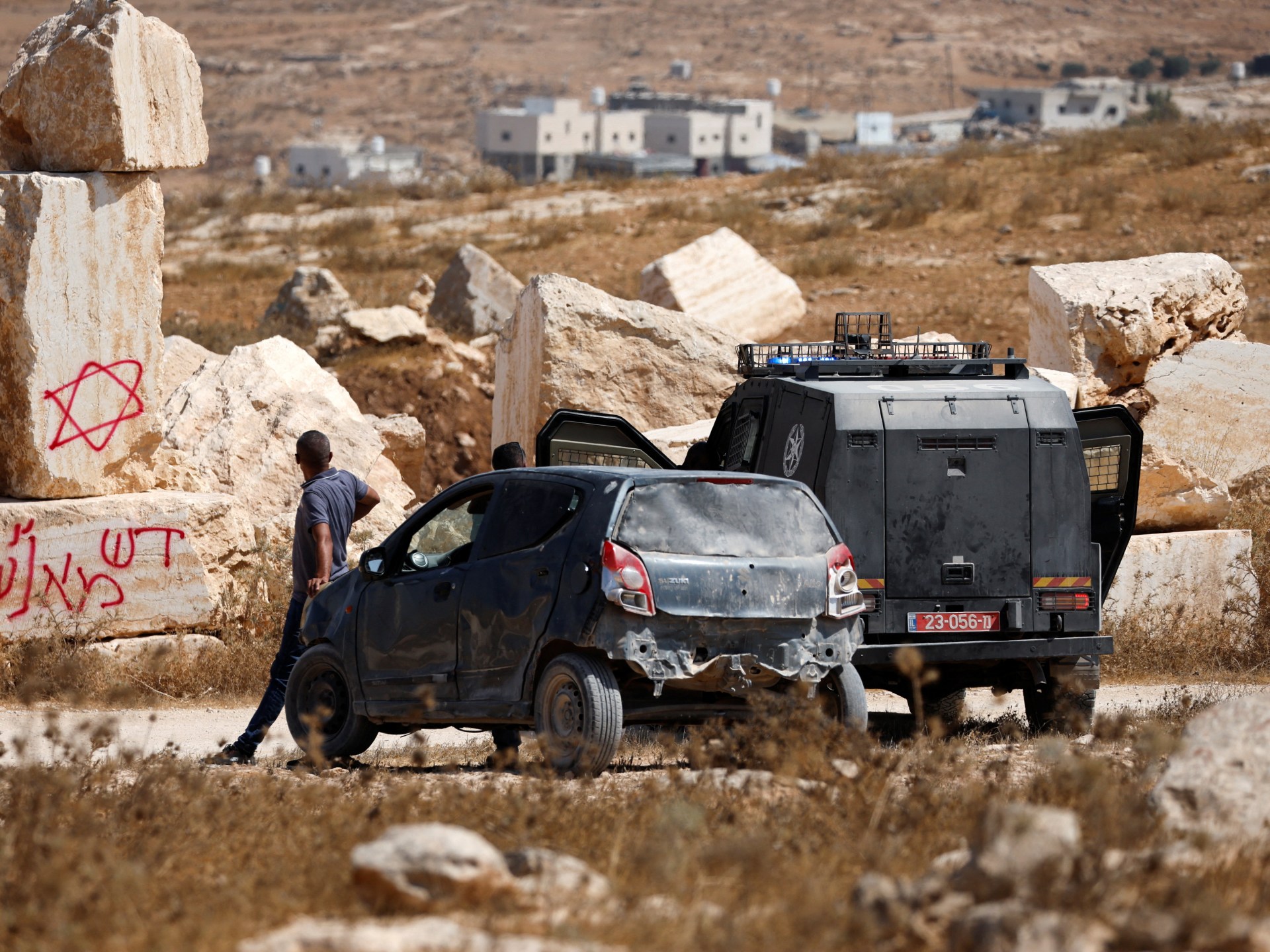
Three separate dispatches carried over Telegram on the morning of 1 July 2026 — from Middle East Eye, the Palestine Chronicle, and PressTV — describe a single day's pattern of arrests, institutional closures and intra-Palestinian dispute in the occupied West Bank. Read together, they are a useful reminder that the occupation's day-to-day mechanics are rarely captured by any single headline. They involve Israeli security raids, Palestinian civil-society institutions, and the Palestinian Authority's own coercive apparatus, all operating in parallel.
This publication examines what the three reports establish, what they leave unresolved, and how they fit inside the longer-running debate over who actually governs Palestinian life in the West Bank — the Israeli military on one side, the Palestinian Authority on the other, and a thinning layer of civil-society organisations squeezed between them.
The morning's arrests
Middle East Eye reported at 08:22 UTC on 1 July 2026 that Israeli forces had detained at least 20 Palestinians during overnight and early-morning West Bank raids. The report was carried as part of the outlet's live blog on a separate, larger story — the impending US–Iran peace accord signing in Geneva — but the West Bank item sits adjacent to it on the page, an editorial choice that itself reflects how integrated the daily rhythm of the occupied territories has become with regional diplomacy.
The 20-person figure is presented by MEE as a floor. The outlet's framing has historically been cautious with such tallies; it attributes the count to local reporting and Israeli military statements and acknowledges that further arrests often follow in the hours after a sweep. The wire does not specify which cities or refugee camps were targeted, which factional affiliations the detainees are reported to hold, or whether any of the arrests were accompanied by reported injuries or home demolitions — details that are typically annexed to such reports in subsequent bulletins. For this article, therefore, the head-count is the only hard number on offer.
Israeli military raids in the West Bank have followed a familiar shape in recent years: short, pre-dawn incursions into towns including Jenin, Nablus, Tulkarm and Tubas, focused on networks affiliated with Hamas and Palestinian Islamic Jihad, with simultaneous operations in refugee camps that have functioned as the principal battlegrounds during the Gaza war's spillover phase. The arrest number alone tells a reader little about the political weight of any single operation. What it does tell a reader is that the detention apparatus is operating at scale on this particular morning, and that this scale is the routine rather than the exception.
The Nablus closure
Six hours earlier — at 06:31 UTC, per a Telegram post by PressTV citing its own correspondent — Israeli forces shut down the headquarters of a Palestinian charitable organisation in the city of Nablus. The stated grounds were "support for a Gaza-based rights group." PressTV is Iranian state media and its coverage should be read with that provenance in mind; Israeli-English outlets including the Times of Israel, Haaretz and the Jerusalem Post routinely cover such closure orders, and the operational reality of the closure — the seizure or padlocking of offices, the confiscation of files, the prohibition on staff entering the premises — is consistent across the English and Arabic coverage regardless of source.
The Israeli government's legal predicate for closing Palestinian NGOs and charities in the occupied territories is a 2016 military order combined with post-October-2023 designations of several Palestinian civil-society groups as either "terror organisations" or "unlawful associations" under Israeli counter-terrorism law. The most prominent designations — against groups including Al-Haq, Addameer, Bisan Centre, Defence for Children International–Palestine, the Union of Agricultural Work Committees, and the Union of Palestinian Women's Committees — were issued in 2021 and 2022, with further rounds announced during the Gaza war. A 2023 Knesset measure also authorises the interior minister to revoke residency status from individuals deemed to have received funds from designated groups.
A Nablus closure on 1 July 2026 sits inside that arc. The PressTV report does not name the specific organisation shut down on Wednesday morning. Without a name, the case is best treated as illustrative of a category: a charitable body, operating in a Palestinian city under full Israeli security control, closed on the basis of an alleged financial or organisational link to a Gaza-based entity. The category is well established. The specific instance, for now, is not.
The prisoners' committee and the Palestinian Authority
The third item — from the Palestine Chronicle at 07:09 UTC on 1 July 2026 — comes from a different direction entirely. A West Bank prisoners' committee has accused the Palestinian Authority of torturing a detainee before his eventual arrest by Israeli occupation forces.
The accusation is striking because it compresses two parallel coercive apparatuses into a single life-cycle. The implied sequence is that a Palestinian was first detained by PA security services, allegedly mistreated, and then handed over — or separately re-detained — by Israeli forces. The Palestine Chronicle's headline describes it as a "revolving door policy"; the framing argues that PA coordination with Israeli intelligence (the long-running security cooperation often shorthanded as the Oslo-era arrangement) produces a continuum of custody in which a Palestinian can move from one authority to another without ever leaving custody.
The substance of the torture allegation is the part most in need of corroboration. Addameer, the Palestinian prisoners' rights group, and the Palestinian Independent Commission for Human Rights (known by its Arabic acronym ICHR) have both published case-files alleging PA mistreatment of detainees, particularly political prisoners affiliated with Hamas or with critics of President Mahmoud Abbas's Fatah-led administration. Reports from international human-rights organisations, including Human Rights Watch and Amnesty International, have in past years documented PA use of arbitrary detention and ill-treatment against political opponents. None of those bodies has, to this publication's knowledge, an open finding specific to the 1 July case, and the prisoner involved is not named in the Telegram excerpt.
What the Palestine Chronicle report does is register that intra-Palestinian dispute over who owns the right to detain Palestinians in the West Bank is itself a live front. The PA denies the bulk of the torture allegations in its periodic replies to Western donors, framing them as politically motivated. Independent monitors have generally found the allegations credible in specific instances while rejecting the more sweeping claims. The 1 July item should be read as one more data-point in that longer-running argument rather than as a closed judicial finding.
What the three reports collectively describe
Layered over a single morning, the three items illustrate how Palestinian life in the West Bank is administered through several overlapping channels at once — Israeli military action, civil-society regulation, and intra-Palestinian coercion. None of the three dispatches dominates the others in scale; each is a sentence or two on a separate Telegram post. But read together they sketch the day's actual surface area: roughly two dozen arrests reported by 08:22 UTC; a charitable headquarters closed by 06:31 UTC; and a separate, parallel detention-and-transfer dispute that ended in an Israeli custody for someone the prisoners' committee says the PA had already taken.
The political weight of the morning is therefore not captured by any single one of the numbers, but by their adjacency. A reader looking for a single causal story — Israel tightens, the PA cracks down, civil society closes — will end up with a slightly different composite depending on which outlet they read first. Middle East Eye leads with the arrests. PressTV leads with the closure. The Palestine Chronicle leads with the PA. None of them is wrong; none of them is complete.
This is also why Telegram wires, however imperfectly, have become the de facto live ticker for Palestinian news. Where international wire services (Reuters, AFP, AP) carry spot reports when a major incident merits them, the slower institutional news cycle of those outlets means the granular day-to-day of arrests and closures is left to Palestinian and regional outlets and to Telegram channels that quote them. The trade-off is speed and on-the-ground sourcing against variable editorial discipline and, in some channels, partisan framing. The MEE, PressTV and Palestine Chronicle lineup above is a fair illustration of that spread: a London-headquartered outlet covering the MENA region with Arabic-language reporters across the occupied territories; Iranian state media with documented close ties to the Islamic Republic's regional posture; and a Beirut-aligned English-language publication sympathetic to the Palestinian national movement and broadly critical of the PA.
What remains uncertain
Three uncertainties are worth flagging in plain language for any reader following these wires in real time.
First, the press pool. None of the three wires names an international news-agency correspondent on the ground for the specific events of 1 July 2026. That is not unusual for early-morning West Bank incidents, which are typically documented by Palestinian journalists (WAFA, local stringers, and freelances who work for a mix of local and international outlets). The casualty and arrest figures therefore rely on a sourcing chain that is harder for an outside reader to audit in real time. Second, the identity of the Nablus organisation is not given in the PressTV item; it is reported as a category, not as a named case. Third, the prisoner whose alleged mistreatment is at the centre of the Palestine Chronicle report is unnamed in the Telegram excerpt, and the corroborating documentation — if any exists — is not referenced.
In all three cases, subsequent reporting from outlets with stronger institutional verification — Haaretz, the Times of Israel, Reuters, AFP, the BBC's Jerusalem bureau — is the standard way these reports firm up. Where this publication has been able to cross-check specifics against those wires in past coverage, the underlying facts (the count of arrests, the closure of a specific premises, the existence of a particular prisoner) have usually held; the framing and the political interpretation around those facts are where the divergences appear.
The structural view, in plain language
The longer-running story these three morning wires sit inside is not principally about any single raid, closure or allegation. It is about how the occupied West Bank is run as a layered administrative system in which detention, registration, closure orders and intra-elite coercion are the routine instruments. The international-law premise is well established and not seriously contested by established outlets: the West Bank remains occupied territory under the Fourth Geneva Convention, the Israeli government administers it through military order as the occupying power, and the Palestinian Authority exercises a much more limited civil-administrative mandate under the Oslo-era framework.
Within that frame, three operating realities hold across Western-wire, regional and Palestinian-source coverage alike. The first is that detention is the occupation's principal currency: arrest operations by Israeli forces are the daily instrument of pressure against individuals and the institutions through which they organise. The second is that Palestinian civil society is increasingly squeezed, both by Israeli designations and by donor pressure, narrowing the space between the security services and the population. The third is that the Palestinian Authority is itself a coercive actor, and the legitimacy question that opens up — who has the right to detain Palestinians, and on what authority — is increasingly aired inside Palestinian public discourse rather than only in Israeli–Palestinian negotiations.
A hegemonic transition is visible here in plain prose: the language of "security coordination" that once glossed over the PA's role in Israeli counter-terrorism is harder to sustain as Palestinian public-opinion polling shows growing distrust of the Authority's security services, and as Western donors periodically suspend aid over the PA's own payments-to-detainees architecture. None of that is decided by Wednesday morning's three wires, but Wednesday morning's three wires fit inside it cleanly. The day-to-day mechanics of the occupation are also the day-to-day mechanics of a Palestinian political order under sustained pressure from within.
Stakes over the rest of 2026
For a reader following this story into the second half of 2026, three forward questions sit naturally on top of today's wires.
One: whether the arrest tempo of recent months continues. A pattern of large nightly raids in the northern West Bank — Jenin, Tulkarm, Tubas — has been the dominant operational fact since 2023, and any sharp escalation or sharp de-escalation will register first in the count line of the morning live blogs. Two: whether more West Bank charitable and civil-society organisations face closures under the post-2023 designations, and whether international funding holds up under that pressure. Three: whether the PA's own coercive conduct becomes a more regular front-page story in the Western press than it has been, particularly as the donor conversation inside European capitals tightens.
None of those three questions resolves this morning. What this morning does is put them on the desk.
This publication's framing tracks the three wires as parallel administrative acts rather than as a single narrative; the underlying facts are consistent across the cited outlets but the political weight of the morning depends on which act a reader foregrounds.
Wire provenance
This editorial synthesis draws on the following public wire/social posts:
- https://t.me/presstv/