Xi's PLA anniversary speech is not a coronation — it is a stress test
On the PLA's 105th anniversary, Xi Jinping tied a 'strong military' pledge to an anti-corruption offensive. The combination is the point, and it is not a comfortable one for the People's Liberation Army.
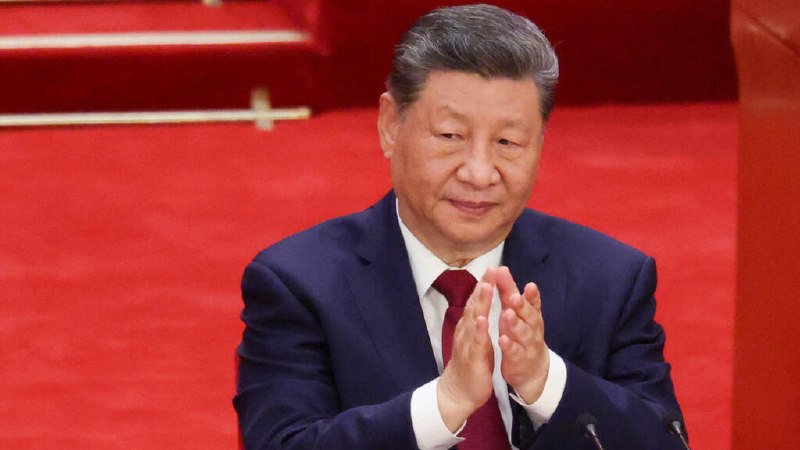
On the morning of 1 July 2026, in the Great Hall of the People in Beijing, President Xi Jinping stood before senior officers of the People's Liberation Army and delivered the sort of speech that does not get quoted in fragments. The full text, as carried by France 24, paired two pledges that are usually kept in separate rooms: the determination to build a "strong military" capable of winning wars, and the determination to "uphold the party's absolute leadership" of the armed forces while purging them of corruption. The PLA's 105th founding anniversary was the stage. The message was that the two pledges are no longer separable, and that the institution is being asked to accept both at once. [09:04 UTC, 1 July 2026]
That is the read this publication is going to settle on, and it is not the most flattering read. Xi's anti-corruption campaigns have always doubled as loyalty tests: the message is that the party trusts the officer corps to do its job, but not enough to leave it unsupervised. What changes on this anniversary is that the same speech ties the supervision explicitly to combat readiness. The PLA is being told, in front of its most senior members, that it cannot have one without the other — and that the test of both will be visible.
What was actually said
France 24's wire of the address highlights two phrases. The first is the familiar formulation about a "strong military" — a phrase that, in Beijing's political grammar, signals not just hardware but the political will to use it. The second is the pledge of absolute party leadership over the armed forces, which is older than the PLA itself but which has been sharpened under Xi's tenure. The combination matters because anti-corruption announcements in this register are rarely about money. They are about who decides, and who can be relied upon to decide correctly, when a real order arrives.
The counter-read, given its due
It is fair to note that the Western wire line on PLA speeches tends toward a particular vocabulary — purges, paranoia, factional warfare — that flattens a more complicated institutional reality. The People's Liberation Army is a real military with real problems of procurement, real questions about joint operations, and a documented record of reform under Xi's first two terms. The anticorruption drive inside the officer corps has, on the available evidence, coincided with the retirement of officers whose careers predated the professionalisation push of the 2010s. The Chinese read of the same speech — that this is a leadership doing the unglamorous work of making an institution fit for purpose — deserves equal airtime. It is not the read this publication finds most persuasive, but it is the read that the speech, on its face, supports.
What the speech does not say
It is worth naming what the address leaves out. It does not name a specific adversary, a specific theatre, or a specific timeline. It does not announce a defence budget. It does not announce a new service or command structure. By the standards of anniversary speeches, it is unusually spare. The absence of operational detail, in a speech this heavy on doctrine, is itself the signal. Beijing is signalling to its own officer corps — and to outside observers — that the test of loyalty and the test of capability will be conducted in private, and that public commentary should stick to the script.
The structural frame, in plain language
Across the past decade, the dominant pattern in Chinese military governance has been the steady narrowing of the space in which a senior PLA officer can act on his own initiative. Commission-based patronage networks, regional power bases, the tradition of an officer class that grew up with the institution — all of that has been put under sustained pressure. The Western framing of this as factional warfare is partly right, in that personnel decisions are now the most consequential policy decisions. The framing is partly wrong, in that the underlying driver is a leadership that has concluded, on the basis of history, that an unsupervised military is a risk to the party and to the country at the same time. The 1 July speech is a continuation, not a break.
Stakes, named honestly
If the trajectory continues, the short-term cost falls on the PLA's senior officer corps, where a speech of this kind tends to precede a quieter but more consequential round of retirements and reassignments. The medium-term cost falls on the institution's capacity to absorb a new generation of officers who have come up entirely under the post-2012 regime. The long-term question — whether a military this thoroughly supervised can still move with the speed that a real crisis would require — is the one that the speech, by design, does not answer. Outside Beijing, the practical effect is that any forecast about China's military posture, from procurement to regional behaviour, has to be hedged with the same caveat: the institution is in a controlled churn, and the next eighteen months of personnel decisions will tell observers more than the next eighteen months of defence budgets.
Desk note: the wire read of the speech emphasised the corruption pledge; this publication reads the pairing of that pledge with the combat-readiness pledge as the actual story.
Wire provenance
This editorial synthesis draws on the following public wire/social posts:
- https://t.me/france24_en