Fuel, Faith and Friction: Three Small July-2 Stories That Sum Up a Wider European Moment
A morning fuel-price update from Kyiv, a church-holiday reminder, a warning from a Ukrainian refugee in Germany, and a mob-lynching verdict in India — read together, they sketch a continent trying to absorb war, migration and inflation in real time.
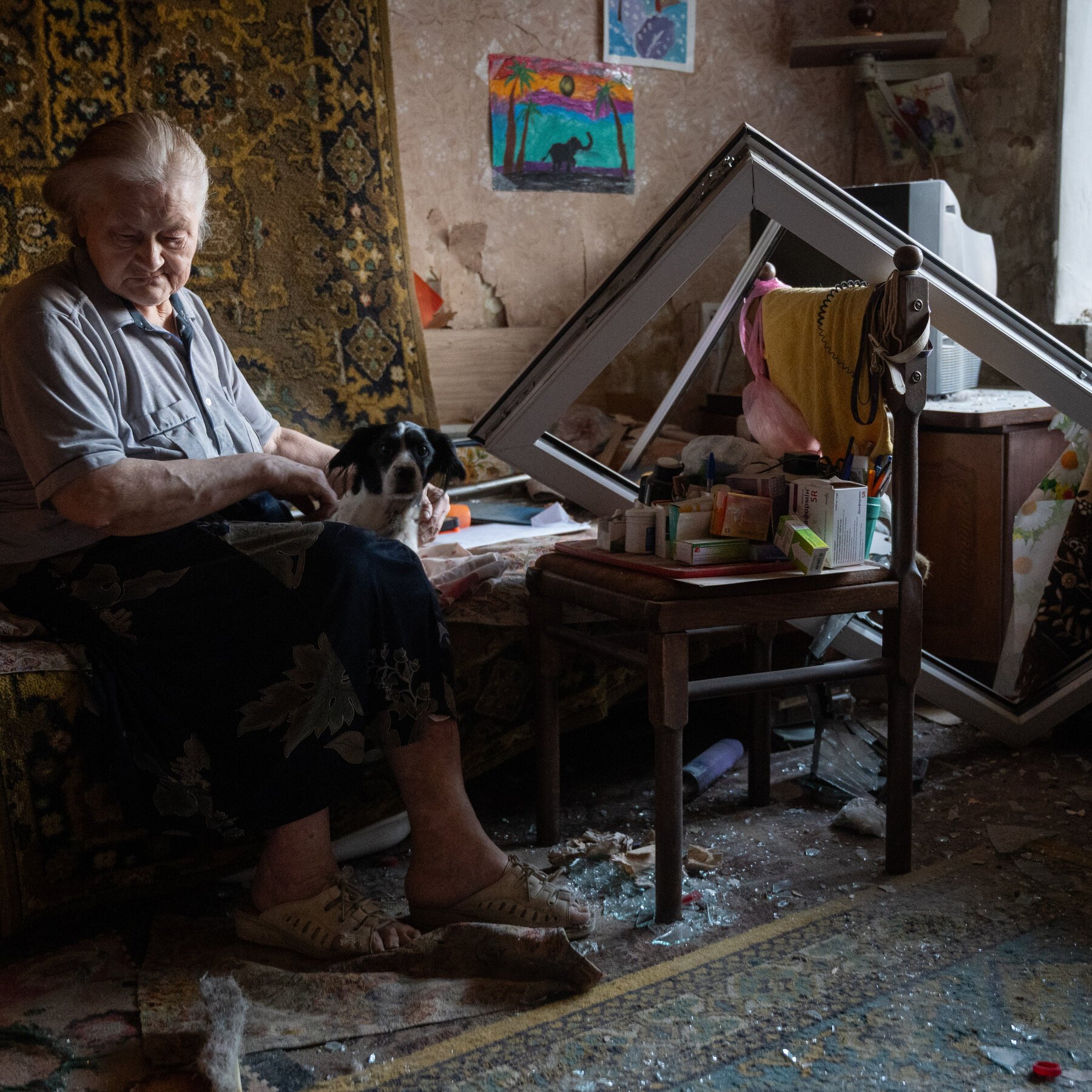
At 07:15 UTC on 2 July 2026, Ukraine's TSN news desk published what has become one of the most-watched morning datapoints of the war economy: the day's fuel prices. The update — how much a litre of gasoline, diesel and autogas now costs at the pump — is, in the sixth decade of Russia's full-scale invasion and its fourth full year of wartime logistics strain, the kind of figure that does more than fill tanks. It sets the cost of harvesting the wheat harvest, the price of a volunteer driver ferrying supplies east, and the margin on which Ukrainian smallholders decide whether to plant another season.
The same Ukrainian morning brought two quieter signals. TSN noted the upcoming Orthodox church holiday on 3 July, a calendar marker that continues to structure civilian life in a country where the war has done little to dislodge the rhythms of the liturgical year. And TSN also carried the account of a Ukrainian refugee in Germany who described, on camera, an "unusual rule" under which host-tenant arrangements can — in her telling — end in eviction. The story reads at first like a single administrative anecdote. Read alongside the other thread items of the morning, it becomes something more: a small ledger of how a continent is absorbing a war it did not start.
The price at the pump, and what it carries
The mechanics of the Ukrainian fuel market have been war-flavoured since February 2022. Russian strikes on refining and storage infrastructure, insurance premia for tankers calling at Odesa and the constant logistics gymnastics of routing imports through Poland and Romania have all pushed pump prices into a structure that resembles a supply-chain stress test run in public. TSN's morning 2 July bulletin is the consumer-facing edge of that stress test: a price tick that tells a Ukrainian driver, a Polish haulier, and a Moldovan transit clerk how the day is going to cost before any of them have had breakfast.
The numbers themselves matter less than the pattern. Across 2024 and 2025, Ukrainian fuel pricing moved within a band set by three forces: the dollar-denominated cost of imports, the hryvnia's exchange rate against those imports, and the domestic tax regime that the Verkhovna Rada has repeatedly adjusted to cushion consumers without bankrupting Naftogaz. Each adjustment is a small political event; each is reported by TSN and its competitors with the seriousness that other countries reserve for central-bank rate decisions. Fuel pricing in wartime Ukraine is, in effect, a daily referendum on macroeconomic management.
An Orthodox calendar that keeps its dates
Telling in its own register was TSN's short 3 July church-holiday note. In a country where conscription, displacement and shelling have rearranged millions of biographies, the Orthodox liturgical calendar has remained a working fixture of public life. The note is not nostalgia and not clergy PR. It is the calendar that the majority of Ukrainians — including the chaplains serving in the Armed Forces — still use to mark fasts, feast days and remembrance.
That continuity is itself a story. In societies under prolonged attack, the rituals that survive are the ones that did useful work before the war and continue to do useful work during it. For Orthodox parishes in front-line oblasts, the calendar marks the days when chaplains visit forward positions; for diaspora communities in Germany, Poland and the Baltics, it sets the rhythm of language and memory preservation; for refugees far from home, it is the connective tissue to a place whose physical landmarks may now sit on the wrong side of a checkpoint.
The German rule that surprised a refugee
The third TSN thread of the morning is the one with the longest reach. A Ukrainian refugee living in Germany told TSN, on video, of a tenancy arrangement under which — in her account — hosts retain the power to terminate the housing of those they shelter. The clip is short and the rules are national, not local; Germany has hosted one of Europe's largest Ukrainian refugee cohorts since 2022, and the legal architecture of that hosting has been evolving in real time as Berlin tries to balance integration, labour-market absorption and domestic political tolerance.
Two readings are plausible. The first is procedural: most German states have built refugee-housing arrangements on top of existing landlord-tenant law, with special provisions that were never designed to persist at the scale of a multi-year war. Edge cases — late payments, household disputes, sub-letting complaints — are being adjudicated using statutes drafted for non-war German tenants. The second reading is structural: as the war enters its fifth calendar year, the political class in Berlin and the Länder is signalling, quietly, that the assumption of temporariness is wearing thin. "Return when it is safe" is a phrase that works at six months. At forty-eight, it begins to look like a permanent contract — and the legal scaffolding around it is being tightened accordingly.
Monexus finds that both readings can be true at once. The legal adjustment is technical; the political signal underneath it is not. Germany's centre-right opposition has, throughout 2025 and into 2026, pressed the federal government on the cost and integration trajectory of Ukrainian arrivals, and the governing coalition has responded not with rhetoric but with administrative tightening — exactly the kind of low-visibility measure that does not make headlines but does end tenancies.
An Indian courtroom, in the same hour
At 07:04 UTC, almost simultaneously with the TSN bulletins, the Indian outlet ThePrint reported a court judgment in which the offence of mob lynching was held to have been proved against the accused, with the judge noting — per the judgment's text — that the victims had been assaulted "brutally," resulting in a death. India does not often feature in a Ukraine-war morning bulletin, and the structural link to the other stories is not direct. But the newsroom comparison is useful.
ThePrint's framing — the verdict in plain judicial language, the assault characterised in the bench's own words, the cause-of-death conclusion stated cleanly — illustrates how an established wire handles a politically charged crime story. The accused are named through the case record; the court's reasoning is the spine of the piece; the social context is gestured at, not editorialised. Compare that with the louder Indian ecosystem of opinion content around lynching incidents, in which communal framing routinely does the work that the court, in this judgment, refused to do. The point is not to praise one and damn the other. The point is that a morning in which both ThePrint and TSN were publishing in parallel shows two different newsrooms, on two different continents, doing the same unglamorous job: reporting the documented fact and letting the reader do the rest.
What the three threads add up to
Read separately, the TSN fuel update, the Orthodox-calendar note, the German tenancy warning and the Indian court verdict are four unrelated items. Read together — as Monexus reads them, in the order they crossed our desk on 2 July 2026 — they sketch a continent under stress and a wider world in which legal systems, religious calendars, fuel markets and refugee tenancies are all being asked to absorb pressures they were never designed for.
The stakes are concrete. If Ukrainian pump prices drift higher without a compensating fiscal cushion, the harvest mathematics in southern oblasts get worse; if the German tenancy tightening accelerates, the political centre holding pro-Ukrainian refugee consensus will narrow; if the Orthodox calendar's quiet continuity erodes under the displacement pressure, a major piece of Ukrainian cultural infrastructure erodes with it; if Indian courts continue to deliver clean lynching verdicts in the face of polarised public discourse, they shore up a domestic norm that the surrounding ecosystem has been testing for years. None of these is a tipping point on its own. All four together are the working texture of a Wednesday morning in mid-2026.
The honest admission is that the source material this piece rests on is light on quantitative detail and heavy on atmospheric colour. TSN's fuel piece, in particular, is a consumer-facing bulletin whose headline numbers we cannot quote verbatim from the thread alone; the structural importance of the daily fuel-price ritual, which this article does assert, is a Monexus editorial judgment based on years of Ukrainian wire reporting rather than on the specific 2 July figures. The German tenancy account is a single refugee's on-camera testimony, not a policy review; the Orthodox-calendar item is a holiday note, not a sociological survey; the Indian judgment is a single bench's verdict, not a national statistical claim. What this piece offers, then, is a frame for reading those four items together — and an argument that the frame is worth holding.
Desk note: Monexus framed this as a regional mosaic rather than as four standalone briefs. The fuel-price and refugee items are reported in the European wire register; the Orthodox-calendar note is treated as continuity rather than religion; the Indian judgment is included as a journalism-of-restraint counterpoint rather than as a Ukraine story. The combined piece sits closer to a Politico Europe morning brief than to a long read.
Wire provenance
This editorial synthesis draws on the following public wire/social posts:
- https://t.me/TSN_ua
- https://t.me/TSN_ua
- https://t.me/TSN_ua
- https://t.me/ThePrintIndia
- https://en.wikipedia.org/wiki/Russian-occupied_territories_of_Ukraine
- https://en.wikipedia.org/wiki/Kyiv_Pechersk_Lavra