Gold's worst quarter in thirteen years collides with a still-solid US labour market — and Kenyan tomato inflation
Roughly sixteen per cent was wiped off gold in the three months to 30 June, the worst quarter in thirteen years, just as US payrolls cooled but stayed healthy and Kenyan households absorbed a 6.4 per cent inflation print driven by tomatoes and transport.
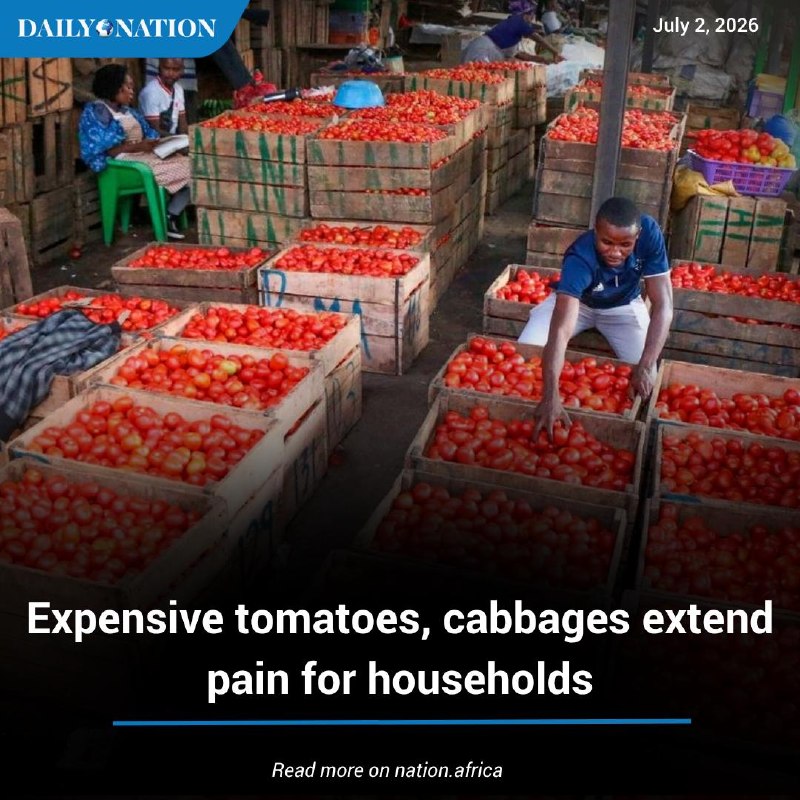
Roughly sixteen per cent was wiped off the price of gold in the three months ending 30 June 2026, the worst quarterly performance for the metal in thirteen years, according to data published by Unusual Whales on 2 July. The sell-off arrived in the same week that Reuters polling pointed to a still-solid — if slower — US labour market in June, with the unemployment rate expected to hold at 4.3 per cent for a fourth straight month. On the same day, the Daily Nation reported that a sharp rise in the price of tomatoes, cabbages and other staple foods had pushed Kenya's annual inflation to 6.4 per cent in June, with higher transport costs compounding the pressure on households.
Taken in isolation, none of these datapoints is dramatic. Gold routinely has bad quarters; payrolls reports routinely come in slightly below trend; staple-food inflation routinely spikes in East Africa during dry months. Read together, however, the three prints sketch a world in which the United States is landing a soft touch it has been waiting for, emerging-market households are still absorbing the bill for a still-elevated commodity environment, and the traditional hedge against all of that — gold — has stopped hedging.
The quarter gold forgot how to be a hedge
Gold's thirteen-year low is the kind of headline that would have looked absurd to anyone who owned the metal at any point in the last three years. The post-pandemic period turned bullion into the default trade for every macro fear from US bank failures to escalating Middle East confrontation. That trade unwound with notable speed between April and June 2026. Per Unusual Whales' summary, the metal shed roughly sixteen per cent of its value over the quarter, the worst three-month stretch since 2013. The framing matters: this is not a one-day flash crash, but a sustained re-rating, the kind that suggests investors collectively decided the thesis had run too far.
The proximate explanation sits on the other side of the balance sheet. A Federal Reserve that has been signalling patience — a long enough hold on policy rates that real yields stayed elevated — is poison for a non-yielding asset. The Unusual Whales note ties the move explicitly to a "Fed-hawkish" environment. In plain language: when the central bank keeps the cost of holding dollars high, the opportunity cost of holding gold rises with it, and the marginal buyer steps back. The Reuters reporting from the same morning underlines the logic, with US payroll growth still expected to print a respectable, if no longer blistering, number for June.
Two qualifications belong here. The first is that gold's bad quarter does not, on its own, tell us what the metal will do next. Sell-offs of this size have historically been followed by periods in which the metal reasserts itself as a hedge — sometimes within the same year. The second is that a Fed move described as "hawkish" is hawkish relative to market hopes, not relative to the inflation print of three years ago. The same Reuters poll framing — a labour market that is still adding jobs at a healthy clip — is the opposite of a 1980s-style inflation scare.
An American labour market that is cooling on schedule
The Reuters reporting from 2 July is careful in its adjectives: job growth "likely slowed to a still-solid clip," the unemployment rate expected to "hold steady at 4.3 per cent for a fourth straight month," and a picture described as "consistent with a stable labour market." A separate Reuters note from the same morning framed the same expected print as a "cooling" after a "recent string of big gains." Both phrasings are doing rhetorical work. The wire is simultaneously telling markets not to panic about a slowdown and not to celebrate a soft landing. The unemployment rate at 4.3 per cent for four consecutive months is, by any historical standard outside the late 2010s, a healthy number. The drift from the sub-four readings of 2023 and 2024 is the part the market is watching.
For the gold trade, this is the data that closes the loop. A labour market that is neither breaking nor booming gives the Federal Reserve cover to keep policy restrictive for longer than the bulls on bullion would like. It also gives the Fed cover not to cut as aggressively as the doves would like. Either way, the real-rate environment stays unfriendly to a non-yielding asset, and the metal keeps bleeding.
For the wider economy, the same print has a different valence. Hiring that is "cooling" but "still solid" is the textbook precondition for a soft landing: not enough momentum to reignite wage-driven inflation, not enough contraction to tip into recession. The structural reading of the US labour market in mid-2026 is therefore one of an economy re-anchoring rather than one of an economy buckling.
Tomatoes, transport, and the cost of being Kenyan
Three thousand miles south and east of Washington, the cost of living looks nothing like a soft landing. The Daily Nation reported on 2 July that Kenya's annual inflation rate reached 6.4 per cent in June, with tomatoes, cabbages and other staple foods leading the move and higher transport costs compounding the squeeze on households. The specifics matter: a 6.4 per cent headline rate, driven by food and transport, is a tax on the basket that the bottom half of an income distribution actually buys. For a household in Nairobi or Mombasa, the relevant question is not whether gold is up or down, but whether the kilo of tomatoes that fed four people last month still does.
Kenya's inflation profile in 2026 has structural features that a US Federal Reserve press conference cannot reach. Food prices in East Africa are heavily exposed to seasonal rainfall, to fertiliser input costs (which are themselves exposed to global energy prices and to currency moves), and to transport costs tied to imported diesel. The Daily Nation's note that "higher transport costs" were compounding the food move is therefore not a flourish; it is the second leg of the same story. Even when the central bank in Nairobi holds policy tight, the basket is being moved by factors outside its remit.
The implicit point is that the global inflation story of the mid-2020s has not ended; it has migrated. Headline rates in the United States and the eurozone have come down from their 2022-23 peaks, but emerging-market households are still negotiating the same supply-and-currency environment, with a much thinner margin for error.
The structural frame: when hedges fail and staples bite
Three macro stories that look unrelated start to align when read through a single structural lens. The first is the position of the US dollar and the real yield on dollar-denominated assets. The second is the position of food- and fuel-importing economies at the receiving end of a still-elevated commodity environment. The third is the position of gold as the supposed bridge between the two — a hedge that is supposed to rise when real yields fall, when geopolitical risk rises, and when faith in fiat currencies wobbles.
What the second-quarter 2026 data is showing, in plain language, is that the bridge is not behaving like a bridge. Real yields have stayed high enough to keep gold under pressure; emerging-market food inflation has stayed sticky enough to keep household budgets under pressure; and the traditional correlation between the two — the assumption that the metal will protect you from the second because of the first — has broken down. This is the part that should make investors, rather than analysts, uncomfortable. A hedge that does not hedge in the quarter you most needed it is not a bad trade; it is a structural problem with the model.
There is a second structural point hiding in the same data. The Reuters reporting, the Unusual Whales summary, and the Daily Nation's inflation dispatch are all, in their different ways, dollar stories. The Reuters poll frames the US labour market against the question of what the Fed will do with rates — and therefore with the dollar. The Unusual Whales note ties the gold move to Fed posture. The Kenyan inflation print is the long-tail consequence of how the dollar-priced commodity environment transmits into a shilling-priced household basket. In mid-2026, the dollar is the spine that holds the global macro story together, and the story is mostly about what that spine is doing to the ribs.
Stakes: who wins, who loses, and on what horizon
The distributional implications of the data are sharper than the headline numbers suggest. A US labour market that is cooling on schedule, with unemployment anchored at 4.3 per cent, is a setup in which the Federal Reserve retains optionality. If hiring softens further, the Fed can cut. If inflation re-accelerates, the Fed can hold. Either way, the household in the United States is not facing the kind of disruption that the household in Nairobi is. The winners of this configuration are US asset holders with duration risk on their books — a soft landing validates the equity rally, while a patient Fed validates the bond carry.
The losers, at the same horizon, are the gold bulls who bought into the metal as the all-purpose insurance policy. The sixteen per cent drawdown is the largest quarterly loss in thirteen years, and the second leg of the question — whether the metal reasserts itself in the back half of 2026 — is now a genuine open call. The Unusual Whales framing points to the Fed as the swing variable. So does the Reuters reporting. If the Fed pivots into cuts before the back-to-school data, gold could reclaim its hedge status. If it holds, the metal faces another leg down.
And then there is the household question — the Kenyan family negotiating the price of tomatoes and the cost of a bus ride. The 6.4 per cent June print is the one that will not show up in a US macro newsletter but will dominate a Kenyan kitchen-table conversation. The structural stakes of a dollar-led commodity environment are not abstract for those households; they are line items in a monthly budget. The harder question — whether the global configuration that has produced this print is the same configuration that will produce the next one — is the one that the Reuters poll, the Unusual Whales note, and the Daily Nation dispatch are all, in their different idioms, asking.
Desk note: Monexus treated the trio of 2 July 2026 prints — gold's worst quarter in thirteen years, the Reuters poll pointing to a still-solid US labour market, and Kenya's 6.4 per cent June inflation — as a single macro scene rather than three separate wires. The wire outlets covered each in isolation; the structural read is the integration. Wherever a number or a quote appears above, the URL behind it is in the sources list.
Wire provenance
This editorial synthesis draws on the following public wire/social posts:
- https://t.me/dailynation/
- https://t.me/dailynation/
- https://x.com/unusual_whales/status/