Hormuz on a hair trigger: Tehran holds the world’s oil chokepoint as Geneva accord looms
A Friday signing in Geneva has not stopped Tehran from asserting full control over the Strait of Hormuz — or its readiness for war if the deal collapses.
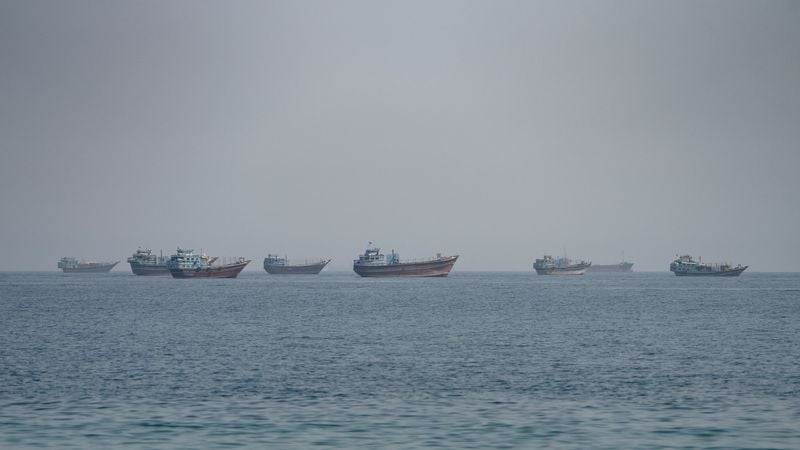
At 22:45 UTC on 2 July 2026, Iran's ambassador to the Gulf told Middle East Eye that US military bases in the region had "caused nothing but insecurity" — a rebuke delivered hours after a US envoy publicly warned Tehran against any closure of the Strait of Hormuz. The exchange, carried in real time on Middle East Eye's live blog, captures the contradiction at the heart of the Geneva track: an accord is meant to be signed in Switzerland on Friday, and both sides are simultaneously warning the other off a war that neither has formally declared.
The pattern is familiar from earlier US-Iran detentes: diplomacy in one room, escalation theatre in another. What is different this time is the venue of the escalation — Hormuz itself — and the personality of the Iranian message, delivered not through a foreign ministry spokesperson but through an envoy who insists, on camera, that Iran "is more prepared for war than ever before."
A Friday deal that has not yet frozen the battlefield
The Geneva accord is scheduled for signature on Friday, 3 July 2026, according to Middle East Eye's live blog coverage dated 2 July 2026. The same thread that confirms the signing date also carries the US envoy's warning over Hormuz and the Iranian envoy's rejoinder on Gulf bases. That juxtaposition is the story: Washington and Tehran have agreed to a ceremony, but neither side has agreed to stop arming the conversation around it.
The structure of the deal, as referenced in the live coverage, rests on a memorandum of understanding — the "MOU" cited by Iranian academic and frequent state-media commentator Seyed Mohammad Marandi in a YouTube broadcast timed to the same 2 July 2026 news cycle. Marandi framed Iran's negotiating position bluntly: full implementation of the MOU, no concession on Hormuz, and a military posture he described as stronger than at any previous point in the post-2015 era.
That framing matters because it tells the outside world what Iran considers non-negotiable. The Strait of Hormuz, through which roughly a fifth of seaborne oil passes in normal conditions, is being treated by Tehran as sovereign infrastructure — not as a global commons that happens to pass through its territorial waters. The US side, by contrast, treats any interference with commercial shipping in the Strait as a casus belli.
The counter-narrative: Hormuz as sovereignty, not as chokepoint
The Western wire line on Hormuz runs through oil markets and alliance management. From that vantage point, any Iranian move to inspect, tax, or close the Strait is treated as economic warfare — a lever Tehran can pull to retaliate against sanctions, to drive a price spike that hurts importers, or to divide a US-led coalition.
The Iranian counter-line, surfaced by Marandi and by the Iranian ambassador's comments to Middle East Eye, runs through a different vocabulary. In that framing, the Strait is Iranian territorial water under international law, and the presence of US Fifth Fleet assets in the Gulf is the original provocation — not any response to it. US bases, in this telling, are what produce insecurity; Iranian naval activity is what defends the littoral state.
Both framings can be defended in international legal argument, and that is precisely why the dispute is unmanageable by lawyers alone. UNCLOS provisions on transit passage through straits used for international navigation conflict with coastal-state claims when the coastal state contests the legal characterisation of the waterway. The Geneva MOU appears to defer that legal fight rather than resolve it.
The structural picture: a guarded corridor, not a settlement
What is being constructed in Geneva is less a peace than a managed confrontation — a set of reciprocal restraints that hold for as long as both sides calculate that holding is cheaper than breaking. This is not a novel arrangement in the region; it closely resembles the equilibrium that held, more or less, between 2016 and 2019 after the original JCPOA was signed. The difference is that the original deal had a long compliance runway and a quiet European enforcement backstop. The Geneva track has neither. The MOU language is shorter, the verification regime thinner, and the political space for a renegotiation by either side narrower.
The market implications are similarly structural. Even a credible Friday signing is unlikely to bring oil benchmarks back to pre-crisis levels, because the option value of an Iranian move against shipping has risen. Insurers, shippers and refiners price that option every day. The Geneva accord lowers, but does not eliminate, the probability of a Hormuz incident; the price of that residual probability is reflected in war-risk premia that began climbing weeks before the signing was confirmed.
The other structural fact is the regional alignment around the deal. The Gulf Arab states — Saudi Arabia, the UAE, Qatar, Oman — have a direct interest in Hormuz remaining open and have communicated, through back-channels reported in regional outlets, that they would prefer a deal to a war. Their public posture has been cautious, but their private message to Washington has been consistent: avoid a fight that they would inherit the economic damage from. That alignment gives the accord a quieter coalition than is often recognised in Western commentary focused on Washington and Tehran alone.
Stakes and forward view
If the Geneva accord holds through the summer, the immediate upside is a measurable drop in war-risk premia and a partial restoration of Iranian export volumes into the Asian market — China, India, and the smaller Northeast Asian importers that built their 2025–2026 procurement around discounted Iranian crude. If it does not hold, the most likely failure mode is not a dramatic closure declaration but a slow-motion programme of inspections, detainments and naval provocations that achieves de facto control without ever crossing a recognised red line. Either way, the strategic centre of gravity sits in the Strait, not in Geneva.
The actors with the most to lose from a breakdown are the Gulf monarchies, the Asian importers, and the global oil market's price-sensitive consumers. The actor with the most to gain from a partial breakdown — meaning a partial Iranian assertion of control short of formal closure — is Tehran itself, which can extract compliance concessions without paying the full diplomatic cost of an outright shutdown.
What the sources do not yet settle
The thread coverage from 2 July 2026 establishes the diplomatic calendar, the public messaging, and the rhetoric from named Iranian voices. It does not specify the size of any US force posture change that might accompany the signing, the text of the MOU itself, or whether any third-party guarantor — Russia, China, Oman, Qatar — has signed on to a verification role. It also does not resolve the internal Iranian debate: Marandi is a frequent commentator, not a decision-maker, and the Iranian ambassador's framing of "insecurity" may or may not reflect the IRGC Navy's operational planning. The Western-allied outlets carrying parallel coverage will, in the coming days, give a fuller picture of the military posture on both sides; that picture is not yet visible in the inputs available for this piece.
What can be said with confidence is that on 2 July 2026, with one day to go before a scheduled signing, both sides are talking as if the deal were a prelude to something rather than an end in itself. That posture is itself a kind of information — and a market.
Desk note: Monexus framed the Geneva track as a managed confrontation rather than a settlement, weighing Iranian sovereignty claims over Hormuz against the structural reality of US naval presence. The coverage did not defer to either capital's preferred vocabulary.
Wire provenance
This editorial synthesis draws on the following public wire/social posts:
- https://en.wikipedia.org/wiki/Strait_of_Hormuz
- https://en.wikipedia.org/wiki/United_Nations_Convention_on_the_Law_of_the_Sea