Iran buries Khamenei: what a managed succession in Tehran tells the world
The Islamic Republic put its farewell ceremony for Ayatollah Khamenei on state television within hours of his coffin reaching southern Tehran. The choreography of the mourning is itself the political signal.
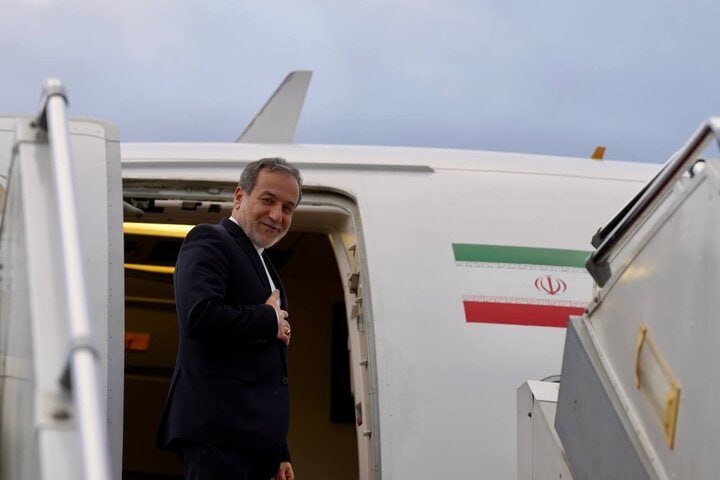
The coffin of Ayatollah Seyyed Ali Khamenei crossed southern Tehran on the evening of 2 July 2026, reaching the Imam Khomeini Hussainiya to a procession that state-aligned channels broadcast almost in real time. Footage of the cortege circulated through the Iranian state wire within minutes — IRNA posted video of the body arriving at 22:01 UTC, Press TV followed with the coffin bearing shot at 20:30 UTC, and Tasnim published the full farewell frame shortly after. The choreography is unusually fast, even by Islamic Republic standards, and that is the political fact of the day.
The reading worth taking seriously is not that Tehran has improvised a farewell, but that it has executed a pre-built one. The Republic's institutions do not tolerate a power vacuum in public; they rehearse continuity so that private uncertainty never becomes a public rupture. If the farewell is this tightly produced, the leadership file behind it almost certainly is as well.
What is actually being shown
The images from 2 July are deliberately deniable. They are devotional and intimate — a martyred leader, a familiar hussainiya, a crowd gathered to mourn — but they are also operationally transparent. State outlets IRNA, Press TV, and Tasnim moved the footage simultaneously across English-language channels, a tell that the messaging was centrally coordinated rather than locally reported. A farewell at Imam Khomeini's hussainiya, rather than at a military or parliament site, signals that the religious frame is doing the work, not the security or republican one.
That choice matters beyond Tehran. The Republic's legitimacy claim at home rests on guardianship of the revolutionary order; abroad, it rests on the brand of the Axis of Resistance. A religious farewell telegraphs continuity of both. Tunisian voices featured on Press TV at 20:16 UTC called the late leader's legacy more widely recognised "following the recent war," an oblique but deliberate line: it positions Khamenei as the figure who held the regional front together.
What the framing conceals
The obvious counter-frame is the one Western wires will reach for: succession crisis, factional infighting, the IRGC inheriting a brittle state. There is genuine reason to treat that frame with weight. Every Islamic Republic succession has been less orderly in private than in public. The offices of the Supreme Leader, the Guardian Council, the Assembly of Experts, and the IRGC command all have distinct stakes. The Republic will not name a successor during a public mourning window; the contest will be conducted in clerical chambers the cameras are not invited to.
But the alternative read is also incomplete. Public-facing speed is not the same as private speed. The same institutions that visibly choreographed 2 July have spent four decades building a personnel pipeline. Theakers who treat speed as instability tend to overstate Western agency in shaping what happens next in Tehran; the institutions have their own tempo, and that tempo is the story.
The structural picture, in plain language
Across the region, the past several years have been bad ones for the post-2014 status quo: a multi-front war involving Iranian partners in Gaza, Lebanon, and Yemen, Israeli operations deep into Iranian command architecture, and a sanctions regime that has hardened rather than loosened. The Iranian state has lost senior figures at a rate that would, in most comparable systems, force a fundamental rethink. It has not done so. Instead it has alternated compression at the top with controlled openings to the wider region. A pre-built succession is the logical endpoint of that posture. It also reshapes the regional arithmetic: the institutions that controlled escalation decisions remain the institutions controlling them now, which makes both de-escalation and inadvertent escalation equally plausible.
For Washington's Middle East portfolio, the operative question is whether a managed transition tightens or loosens Iranian behaviour. The pre-2015 deal-era assumption was that personalist Iranian leadership was the principal risk; the post-2023 record suggests the opposite — that institutional continuity is itself the variable that compounds unpredictability, because it allows the system to absorb personnel losses without policy revision.
What is genuinely uncertain
The thread footage confirms the ceremony and the framing. It does not confirm a name, a date, or a procedure for succession. It does not show who carried the coffin, who delivered the eulogies, or which clerical body has formally convened. Press TV's Tunisian segment establishes a regional mood; it does not establish Tunisian state position. The Iranian opposition abroad has not, in the material available, registered a coordinated response — silence that is itself data, but data of an unknown kind.
The honest summary is this: what Tehran has shown the world on 2 July is competence, not direction. The farewell tells us the system can perform; it does not tell us what it will perform next. Until the Assembly of Experts or the Supreme National Security Council issues a public institutional signal, the room is reading body language, not policy.
That uncertainty is the story. The rest is posture.
This publication frames the Tehran farewell as an institutional signal — a managed ceremony, not an improvised one — and treats Western crisis-narratives as a counter-weight rather than a default.
Wire provenance
This editorial synthesis draws on the following public wire/social posts:
- https://t.me/Irna_en
- https://t.me/Irna_en
- https://t.me/presstv
- https://t.me/presstv
- https://t.me/tasnimnews_en
- https://t.me/azeri_Khamenei_ir