Iran's parliament speaker calls for mass turnout as Tehran prepares funeral for Khamenei
Mohammad Bagher Ghalibaf has urged Iranians to turn out in force for the funeral of the country's 'martyred leader', framing the moment as one that must carry a 'call for blood' to the world stage.
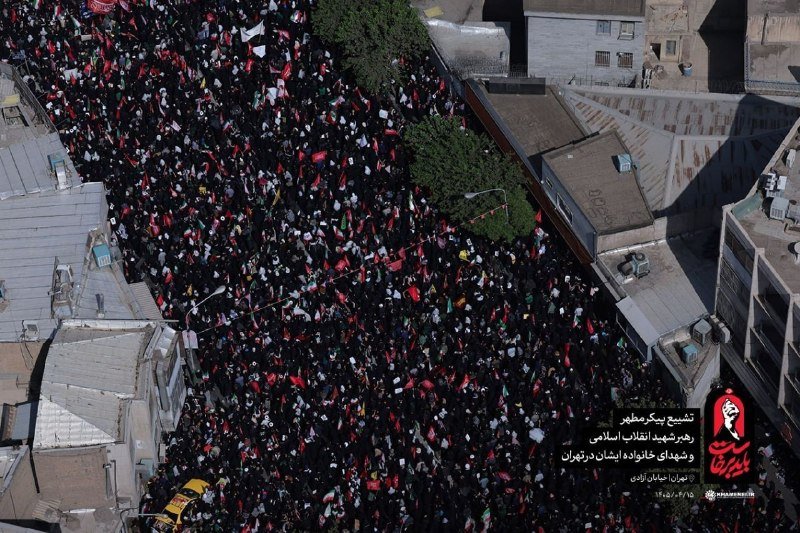
Tehran is preparing a state funeral framed, in the words of its parliamentary leadership, as a moment the Iranian nation must seize on the world stage. On 2 July 2026, Mohammad Bagher Ghalibaf, the speaker of Iran's parliament, called on Iranians to turn out in force for the funeral of the country's "martyred leader," according to state-aligned outlets that carried his message within minutes of one another. The framing of the funeral — and of the public response it is meant to elicit — is now being choreographed from the top of the legislative branch, with wording that points outward as much as inward.
The choreography matters. A funeral in Tehran is never only a rite of passage; it is a signalling event, read for what it says about the cohesion of the political elite, the standing of the security services, and the posture the Islamic Republic intends to adopt in the months ahead. By choosing the language of martyrdom and a "call for blood" delivered to the world, Qalibaf is signalling continuity rather than mourning, and is asking ordinary Iranians to do the same.
What was said, and where
Qalibaf's message circulated through three Iranian state-aligned channels on the morning of 2 July 2026. IRNA, the official state news agency, reported at 08:08 UTC that the parliament speaker had called for mass turnout at the funeral of "martyr Imam Khamenei." Within roughly half an hour, Al-Alam and Tasnim — both operating in Persian and with English-language desks — carried parallel reports. Tasnim's English wire, timestamped 06:35 UTC, quoted the speaker directly: "One should stand up and bring the nation's call for blood to the world." Al-Alam, timestamped 06:37 UTC, ran the same formulation, framing Iran as "the great nation of Iran today" rising to a defining moment.
The uniformity of the language — across an official news agency and outlets closely associated with the security services and the Guardian Corps ecosystem — suggests the wording was coordinated rather than improvised. Qalibaf is not a backbencher issuing a personal call; he is the speaker of the Majles, and his statements function as institutional positioning.
The framing the state wants
The reference to the funeral of a "martyred leader" recasts a religious and political ceremony in the vocabulary of sacrifice. Martyrdom in the official Iranian lexicon is not only an eschatological category; it is a mobilising one, used historically to demand public commitment and to confer legitimacy on the actions of the state. Pairing it with the instruction to "bring the nation's call for blood to the world" widens the register further — the funeral is positioned as an act with external consequence, a moment at which the Iranian street is asked to be visible to foreign audiences.
That is a deliberate choice. The Islamic Republic has, over four decades, used large public gatherings as diplomatic theatre: to project unity after assassinations, to absorb sanctions pressure, to demonstrate the depth of the regime's social base, and to test the elasticity of its own coalition. Asking citizens to attend in such numbers, in such language, suggests the leadership reads the moment as requiring proof of both.
Why the messaging leaves ambiguity
For all the consistency of the wire copy, the underlying political picture is not fully settled. The sources do not specify a date for the funeral itself, nor do they detail which senior officials will deliver remarks, which foreign delegations have been invited, or how the security apparatus is calibrating access to central Tehran. IRNA, Al-Alam and Tasnim are also state-aligned outlets reporting on a state-aligned actor; their accounts should be read as the official line, not as independent confirmation of public mood.
The phrase "call for blood" — translated from the Persian circulated by Al-Alam and Tasnim — is also worth handling carefully in English-language coverage. In Iranian political rhetoric it carries a long history of use after the 1979 revolution, the eight-year war with Iraq, and subsequent targeted killings of nuclear scientists and commanders. It can denote retribution against a named adversary, a vow of continued resistance, or a general injunction to remain steadfast. Which of those Qalibaf intends, and whether he intends one or all three, the available reporting does not resolve. Plausible alternatives range from a rallying call to sustain foreign-policy posture in ongoing negotiations, to a hardening of tone against Israel and the United States, to a domestic signal to competing power centres inside the system that the Majles intends to lead the post-Khamenei narrative. The dominant framing — continuity through mobilisation — is the one the state outlets are actively constructing. Whether that framing takes hold among ordinary Iranians is something only attendance figures, broadcast later, will indicate.
Stakes
If the funeral produces the turnout Qalibaf is asking for, the immediate effect will be a visible display of internal cohesion at a moment when Iran's regional position is under sustained pressure — from sanctions enforcement, from military confrontations on its borders, and from a wider reordering of Middle Eastern security arrangements that has not been kind to its network of allies. If the turnout underwhelms, the political weight of the speaker's office will be diminished, and rival power centres around the military, the judiciary and the office of the supreme leader will have more room to set the next chapter of the narrative.
Either way, the signals being sent today are aimed at two audiences at once. One is the Iranian public, being asked to demonstrate presence and commitment. The other is external — governments in Washington, Brussels, Tel Aviv and the Gulf capitals who will read the scale and tone of the funeral as one of the first measurable indicators of how the Islamic Republic intends to behave in the period that follows the death of its longest-serving leader.
Desk note: This article is built almost entirely from Iranian state and state-aligned outlets (IRNA, Tasnim, Al-Alam). Monexus treats that as the official framing and has flagged the limits of the reporting — particularly the absence of a confirmed funeral date, the lack of independent confirmation of public sentiment, and the ambiguity of the "call for blood" formulation when rendered into English. A fuller picture will require Western-wire and independent Iranian diaspora reporting once the ceremony takes place.
Wire provenance
This editorial synthesis draws on the following public wire/social posts:
- https://t.me/Irna_en/
- https://t.me/alalamfa/
- https://t.me/tasnimnews_en/
- https://en.wikipedia.org/wiki/Mohammad_Bagher_Ghalibaf
- https://en.wikipedia.org/wiki/Ali_Khamenei