Tehran stages Khamenei funeral as military command issues warning to Israel and the United States
Iran's military headquarters used the funeral of Ali Khamenei to deliver a public warning against 'miscalculation' by Israel and the United States, broadcasting the message through state-aligned outlets.
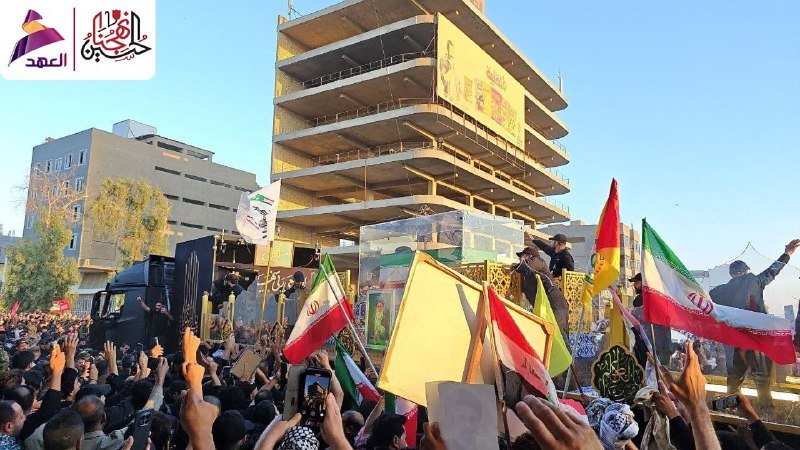
Iran's military command on Thursday turned the funeral of Supreme Leader Ayatollah Ali Khamenei into a public warning to Israel and the United States, with the head of the Khatam al-Anbiya Central Headquarters calling on Iranians to attend the ceremony and cautioning foreign powers against "miscalculation" in a statement carried by state-aligned outlets including PressTV, Tasnim, Al-Alam and the Telegram channel English Abuali.
The framing is deliberate. Iran's armed forces typically recede from public view during moments of dynastic transition; this time the headquarters named after the seal of the prophets has put itself at the front of a political moment that has already begun to reshape the line of succession in Tehran. The warning, repeated across four separate outlets within a 90-minute window between 07:02 and 08:30 UTC on 2 July 2026, is the clearest signal yet that Iran's security establishment intends to be the principal interpreter of whatever comes next.
What the headquarters actually said
The full text of the message, distributed by Tasnim English at 07:02 UTC, frames Khamenei's death as a "martyrdom" — language that retroactively casts him as a casualty rather than a head of state — and uses the funeral as the organising moment for what amounts to a posture statement. The commander of the central headquarters, whose name the source items do not specify, calls for broad public participation, addresses foreign governments directly, and reaffirms the armed forces' role in the post-Khamenei order.
The PressTV version, distributed at 08:00 UTC, echoes the same content with subtle emphasis differences that shift the message toward foreign-policy deterrence. Al-Alam's bulletin at 07:04 UTC carries the full text as published. The Telegram channel English Abuali, distributing excerpts at 08:30 UTC, foregrounds the warning to Israel and the United States. The convergence of language across channels operating in Farsi and English suggests a centralised release rather than overlapping editorial coincidence.
The four documents do not name a successor. That omission is itself significant: in previous Iranian transitions, the messaging apparatus moved in concert with the political structure. Here, only the military side has spoken.
Reading the warning
The most plausible reading is that the headquarters is attempting to compress the transition window. Iran's military command has used the funeral as the staging ground for at least three things simultaneously: a public show of institutional cohesion, a deterrent signal calibrated for Israeli and American audiences, and an internal directive to the bazaar-state apparatus that the armed forces will be the arbiter of what comes next.
The counter-reading is that this is ceremonial language in a country that has historically paired its funeral rites with sharp words about Israel and the United States, and that operational substance is conveyed through other channels. Iranian messaging at moments of transition has historically used its own funeral procedures as a mise-en-scène; the question is whether the military's foregrounding in the present moment is actually operational or symbolic.
The sources as cited do not carry any direct statement from Israeli, American, or Gulf officials in response to the headquarters' message, which means the deterrent effect of the warning is, for now, a closed loop — the message has been sent into a vacuum.
The structural frame
Tehran's political succession is normally a deliberative matter handled inside a narrow circle; the public messaging apparatus is then rolled out to legitimise the chosen outcome. The present sequence runs in the opposite direction. By the morning of 2 July 2026, what the Iranian side has on the record is the armed forces speaking first, religious authorities referenced in the past tense, and the line of succession unannounced.
This is the plain-language version of a phenomenon that political analysts have spent years describing in different vocabularies: institutional actors pre-positioning themselves before formal authority has been transferred. In plain terms, when the security apparatus publishes before the clerical establishment, the shape of the next government is already being negotiated in public even if the outcome is still formally open.
Israel and the United States are named in the headquarters' statement not as targets but as audiences. The audience the warning is mainly designed for, however, sits inside Iran — the Revolutionary Guard Corps and Khatam al-Anbiya's own bureaucratic perimeter have a stake in being seen as the gatekeepers of the transition, which is why the message carries the language of national unity around a funeral rather than the language of succession politics.
What remains uncertain
The four sources are state-aligned or state-adjacent; their message content is convergent, but absent independent reporting from wire services within the thread context, several key facts remain unverified. The sources do not name the active commander of the central headquarters, do not specify whether the statement was issued in response to a specific incident, and do not include any Western reaction to corroborate the deterrent claim. Whether the warning reflects an imminent operational shift, a calibrated rhetorical move, or a recurring feature of Iranian funeral discourse is something the next 48 hours of reporting will be needed to settle.
What the sources do establish is the fact of the message itself, its near-simultaneous distribution across at least four Iranian-aligned channels, and the framing choices — martyrdom, national mobilisation, a direct address to Israel and the United States — that distinguish the present moment from earlier Iranian transitions. The funeral of a Supreme Leader is a domestic rite; this one is being shaped, from the military side, into a foreign-policy event.
Monexus framing: this article leans on four Iranian state-aligned channels as its primary record because no independent wire confirmation is present in the source thread; readers should treat the deterrence claims as Tehran's own characterisation of its posture until mainstream wire reporting provides corroboration.
Wire provenance
This editorial synthesis draws on the following public wire/social posts:
- https://t.me/englishabuali
- https://t.me/presstv
- https://t.me/alalamfa
- https://t.me/tasnimnews_en