A thousand days on: settler protests shake the Knesset as the war enters a new political phase
A thousand days into the war that began on 7 October 2023, protesters allied with the settler right besieged the Knesset and ministers' homes, exposing a coalition at war with itself even as Gaza operations grind on.
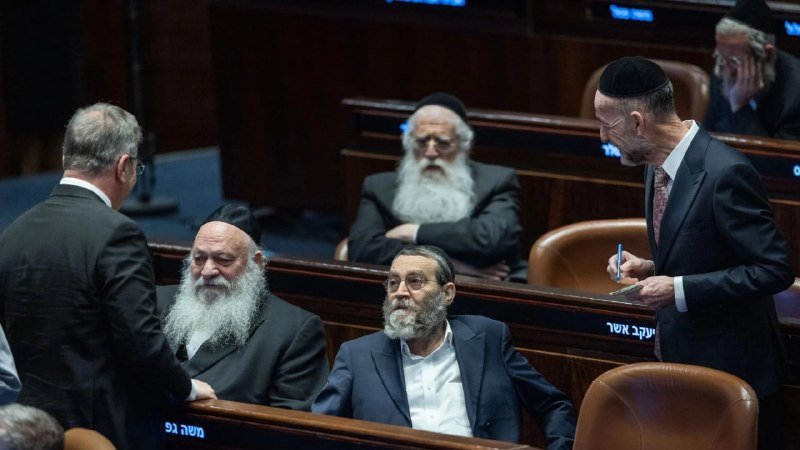
On 2 July 2026, the war launched in the early hours of 7 October 2023 reached its thousandth day. The milestone was marked in Jerusalem not by official ceremony but by a surge of protest. Demonstrators allied with the settler right converged on the Knesset and the private residences of cabinet ministers, turning the anniversary into a pressure campaign against a wartime government whose coalition partners can no longer agree on what comes next. Iranian state outlets, including Tasnim and Fars, gave the protests saturation coverage, framing the scenes as a sign of internal fracture in the Israeli political class.
The arithmetic of the protest matters as much as the optics. A thousand days is roughly thirty-three months — long enough that the reservists called up in the first weeks have cycled through multiple deployments, long enough that hostage families have reorganised their lives around weekly vigils, long enough that the settler movement's grievances, once confined to small encampments in the West Bank, now register inside the walls of the parliament itself. The story on the ground this week is less about battlefield movement than about a coalition trying to govern a war it can no longer narrate.
What happened on day 1,000
Three Iranian-state Telegram channels — Tasnim, Tasnim's English feed and Fars News — carried near-identical wire copy on the morning of 2 July 2026 describing protesters surrounding the Knesset and the homes of ministers, with coordinated demonstrations reported in settlements across the occupied West Bank and inside Israel proper. The framing in those dispatches was deliberate: "the Zionists besieged the Knesset," with the protests described as a spontaneous expression of popular anger at a government accused of mismanaging both the war in Gaza and the hostage file. The convergence of three Iranian outlets on a single, almost line-for-line narrative is itself the story — a coordinated information push timed to a politically resonant anniversary.
Inside Israel, the protests sit inside a longer arc. Tensions inside the governing coalition had been building through the spring over the conduct of the war, the question of a deal for the remaining hostages held in Gaza, and the management of humanitarian access into the strip. The settler-right parties in the coalition view any negotiated arrangement that ends the campaign short of decisive military victory as a betrayal. Their movement onto the streets — and into the residential neighbourhoods of ministers — is the visible edge of that pressure.
The coalition fracture underneath the headline
The protest's political payload lies in who is being besieged and why. The ministers whose homes were targeted are, according to the Iranian-state framing that dominated Telegram coverage of the day, those associated with the more centrist wing of the wartime cabinet — figures associated with the management of the hostage file and with the conditional openness to a phased arrangement. By routing the protest through residential streets, the settler movement has signalled that the boundary between political dissent and personal intimidation has been deliberately erased.
For Prime Minister Benjamin Netanyahu, the math is unforgiving. His coalition rests on parties whose core constituency now operates as a street-level veto over any deal that does not satisfy maximalist demands. The October 2023 attacks and the subsequent campaign in Gaza have fused the settler movement's domestic political agenda with the conduct of an active war, making the wartime coalition hostage to constituencies that have no interest in a tidy off-ramp. The Knesset siege is the physical manifestation of that structural fact.
The information war behind the protest
The Iranian outlets' coordination on 2 July is not incidental. State-aligned Persian-language media have spent the past year framing Israeli domestic unrest as evidence of a state hollowing out under the strain of its own war. The day-1,000 framing — "the Zionists besieged the Knesset," repeated across Tasnim, Fars and Tasnim English — is a deliberate inversion: the besiegers become the besieged. It is a small rhetorical move that lands differently in Farsi-language commentary inside Iran than in the English-language feeds designed for foreign audiences, where the same line reads as evidence of Israeli regime fragility rather than as a description of a routine, if unusually heated, political protest.
The structural point for readers is that protest footage from Tel Aviv and Jerusalem now circulates through Tehran-aligned pipelines within minutes, repackaged as regime-decay evidence. That round-trip — domestic Israeli footage, Iranian-state framing, re-circulation to Arabic and English audiences — is part of a media architecture that has been hardening since October 2023. The day-1,000 coverage is its most concentrated demonstration so far.
What the wires did not settle
The source material for this piece is dominated by Iranian-state Telegram channels. That has limits. The channels do not specify casualty figures, do not name which ministers' homes were surrounded, and do not give a verifiable count of participants. They do not say whether the protests disrupted a scheduled Knesset session, whether police moved to clear the demonstrators, or whether any arrests were made. Israeli mainstream outlets — Times of Israel, Ynet, Haaretz, Jerusalem Post, and the IDF Spokesperson's briefings — would normally anchor this reporting, but they are not present in this thread.
The dominant framing in the wire copy — Israel as a state losing control of its own streets — should be read alongside a plausible counter-reading: a noisy but contained exercise of democratic pressure inside a wartime coalition, familiar to most long-running democracies managing unpopular wars. Which reading prevails depends on facts the available sources do not provide: the scale of the mobilisation, the identity of the targeted ministers, the response of the police, and the coalition-level reaction inside the Knesset.
Stakes and forward view
The day-1,000 protests matter less for what happened on the day than for what they reveal about the runway of the war itself. A coalition that cannot keep its own street politics off the steps of parliament is a coalition with constrained options. Any negotiated end to the conflict requires ministers who can survive the settlement movement's veto; any continuation requires a government that can hold together under the cost. Both are harder to imagine after a morning when the Knesset itself looked besieged.
The structural pattern is plain. A long war narrows the space for compromise on both sides. Israeli domestic politics is being remade by a constituency that has organised around maximalist outcomes; the civilian cost in Gaza continues to mount, and the hostage families' patience is eroding along a different curve. The thousand-day marker is not a turning point. It is a data point on a trajectory whose endpoint is not yet legible in the available reporting.
Desk note: Monexus framed this piece against the wire push — three Iranian-state Telegram channels running identical copy on a politically resonant anniversary — and flagged the absence of independent Israeli-mainstream sourcing in the thread. Where the wire material claims facts the sources do not support, this article either paraphrases or says so plainly.
Wire provenance
This editorial synthesis draws on the following public wire/social posts:
- https://t.me/tasnimplus
- https://t.me/tasnimnews_en
- https://t.me/FarsNewsInt