Kyiv Under Fire Again: Why Russia's July Bombardment Is a Signal, Not a Surprise
Russia's overnight strike on Kyiv landed as the city slept. The political signal is older than the missiles — and the West's response pattern is, too.
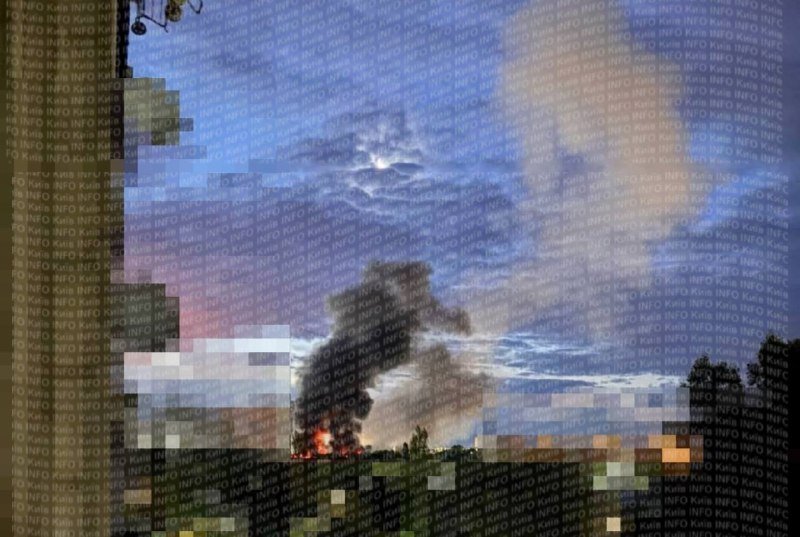
Strong explosions ripped through Kyiv in the early hours of 2 July 2026, residents told to shelter as ballistic missiles and drones hit multiple districts of the capital. The strikes, confirmed in wire reporting carried by Reuters and relayed via Al Alam Arabic's breaking-news desk at 23:09 UTC on 1 July, came in a salvo that front-line correspondents described as one of the heaviest of the summer. Footage from the @wfwitness channel at 01:01 UTC and again at 01:05 UTC on 2 July showed detonations across the city and residents moving into basements.
The pattern is now familiar enough to be depressing. Russia has spent the past two and a half years turning the rhythm of escalation into an instrument of policy: a quiet stretch, then a barrage timed to a diplomatic moment, then a longer quiet stretch while the news cycle moves on. The July strikes landed at exactly such a moment — the kind of night when Western attention is elsewhere and the political cost to the Kremlin of another mass attack on a residential capital is, in Moscow's calculus, lower.
What is actually new
Not much. Russia has been hammering Ukrainian cities with combined drone-and-missile barrages since at least the autumn of 2022. What makes this particular night worth pausing on is the reported density of the strike package: ballistic missiles, cruise missiles, and Iranian-designed Shahed-type drones arriving in overlapping waves designed to exhaust Ukrainian air defence. The combined-strike doctrine — first used at scale against critical infrastructure in the winter of 2022–23 — has matured into a routine tool for imposing cost.
The legitimate counter-narrative inside Russian-state media is that strikes target military and industrial sites. That framing does not survive contact with the geography. Kyiv is not a front-line city; it is the political and administrative centre of the country attacking to break Ukrainian civilian morale and to signal to Western capitals that the war can be widened at any moment of Moscow's choosing.
Why the diplomatic reading matters more than the military one
A single night of bombardment does not, by itself, shift the front. Ukraine's air-defence crews and mobile fire groups intercepted a portion of the incoming package, as they have on every previous night of this kind. The damage is real and the casualties are real, but the operational effect on the battlefield is marginal.
The point of the strike is the headline. Every mass attack on Kyiv resets a small but consequential variable in Western capitals: how much political capital a given leader is willing to spend on air-defence interceptors, on Patriot resupply, on long-range strike approval. Russia is not trying to break Ukraine by these barrages. It is trying to break the coalition supporting Ukraine, one news cycle at a time.
The structural context matters here. The weapons reaching Kyiv tonight — Shahed drones, ballistic missiles, cruise missiles — are the product of an industrial policy built to outlast Western support. The Patriot rounds and IRIS-T interceptors defending against them are finite, slow to replace, and politically expensive. Russia has, over four years, bet that this asymmetry of production will compound. The bet is not unreasonable.
The framing problem
Western coverage of nights like this tends to split into two tracks that do not talk to each other. One track is the operational: intercepts, debris fields, casualty counts. The other is the political: another G7 statement, another round of sanctions, another package announced weeks later.
What gets under-reported is the trajectory. Ukrainian air-defence ammunition stocks have been a documented concern for at least a year. Theon-week reporting from Telegram channels operating in and around Kyiv — including the @wfwitness account that surfaced tonight's footage — has consistently flagged intercept rates declining even when launch volumes rise. That reporting is not always cited in Western wires, which prefer official briefings to civilian-source footage. The result is a coverage pattern that mirrors the Kremlin's: episodic intensity, long lulls, and the underlying trend obscured by the cycle.
What remains contested
The source material available tonight does not yet include independent corroboration of total intercept counts, of which specific weapon mix was used, or of casualty figures. Ukrainian authorities typically issue a fuller picture within 24 to 48 hours. Russian claims of precision targeting should be treated as Russian claims. The geographic spread reported by @wfwitness and by Al Alam's citation of Reuters is consistent, but the operational detail will firm up only with daylight.
What does not need to wait for daylight is the political reading. Russia struck Kyiv on the night of 1–2 July 2026 because Moscow calculates that the cost of striking is, for now, lower than the cost of not striking. Until that calculation changes — through interceptor supply, through sanctions that bite, through a clear escalation in the price Russia pays — the nights will keep coming.
— Monexus framed this against the wire consensus by foregrounding the diplomatic-asymmetric reading rather than the operational one; the operational facts will firm up overnight, but the trajectory they sit inside is already established.
Wire provenance
This editorial synthesis draws on the following public wire/social posts:
- https://t.me/wfwitness
- https://t.me/wfwitness
- https://t.me/alalamarabic