Kyiv hit by combined Iskander and Kh-101 barrage in late-night Russian strike
Russian forces launched what local monitors recorded as a sustained, mixed-salvo attack on the capital, with Kh-101 cruise missiles and Iskander-M ballistic systems hitting several districts overnight.
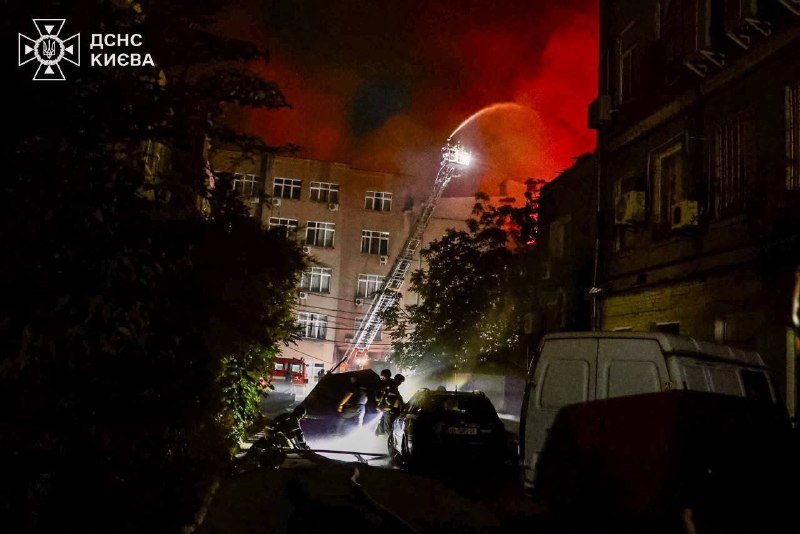
Russian missile crews opened a sustained bombardment of Kyiv in the late hours of 1 July 2026 and kept it going past midnight into 2 July, with local air-tracking channels logging wave after wave of cruise missiles and short-range ballistic systems striking multiple districts. The pattern — long, mixed salvoes hitting the capital in quick succession — fits the rhythm that Ukrainian and Western outlets have documented repeatedly since the spring of 2024, and the open-source trail from monitors in the first minutes of the attack is consistent with that picture.
The strikes matter less as an isolated event than as another data point in a months-long pattern of Russia probing the endurance of Ukrainian air defence and the political tolerance of Kyiv's allies. Each barrage eats interceptor stocks the country cannot easily rebuild; each wave also re-tests NATO's intelligence-sharing patchwork, which has become the connective tissue of Ukraine's air-defence network. What this publication is watching is not a single night's news cycle but the cumulative arithmetic of an air war that Russia appears willing to keep running.
What the open-source record shows
The earliest concrete observations came in the final ninety minutes of 1 July. At 23:19 UTC, the air-tracking channel AMK_Mapping reported another Iskander on Kyiv; by 23:25 UTC, the same channel logged an Iskander-M roughly 60 kilometres out from the capital. Eight minutes later, the monitoring channel vanek_nikolaev flagged additional ballistic missiles heading toward Kyiv, saying two missiles remained on a flight path to the city. Explosions were reported in Kyiv at 23:26 UTC by the channel intelslava, and at 23:37 UTC the same channel logged further blasts.
The pattern intensified after midnight. At 00:05 UTC on 2 July, AMK_Mapping recorded the first Kh-101 cruise missiles approaching the northeastern edge of Kyiv; by 00:11 UTC a Kh-101 had impacted in the southeast of the city. By 00:21 UTC, Kyiv authorities had confirmed a fire near an administrative building, according to intelslava, which cited the city's emergency services. The Kh-101s continued arriving in groups through the next twenty minutes, with multiple interceptions east of the city and reported impacts in northwestern and central-eastern districts between 00:20 and 00:28 UTC.
The two weapon systems are not interchangeable. Kh-101s are air-launched cruise missiles fired from Russian strategic bombers, typically Tu-95 and Tu-160 platforms, and they approach from varied bearings over long flight times. Iskander-M is a mobile, short-range ballistic system, which arrives in minutes and steeply. Combining the two in the same salvo compresses the defender's decision-making and forces Ukraine to spend air-defence interceptors on both profiles simultaneously — a tactic Ukrainian air-force spokespeople have flagged repeatedly over the past year.
The counter-narrative, and why it does not hold here
Russian state-linked channels routinely frame such strikes as retaliatory — pitched as responses to Ukrainian long-range strikes inside Russia or to Western arms deliveries. That framing is structurally self-serving: it treats routine, planned bombardments of a residential and administrative city as a measured response, which they are not. The Kh-101 inventory Russia expends on a single Kyiv night is meaningful even by Moscow's standards; the salvoes are not improvised responses but pre-staged operations.
A secondary counter-narrative, popular in Russian-language milblogger discourse, treats individual channel reports like AMK_Mapping's with suspicion as fabrications or exaggerations. The corroborating signals here are strong, though — multiple independent channels placed interceptions and impacts in the same minute, the Kyiv city administration confirmed a fire near an administrative building, and the salvo structure matches the signature documented by ISW and Ukrainian air-force briefings over many months. The granular detail of the open-source thread — direction of approach, weapon type, time-to-impact — is consistent with verified prior attacks.
The structural picture in plain terms
Across the war, the arithmetic of strategic bombardment has been steady: Russia absorbs a roughly fixed cost per salvo in production and launch infrastructure, and Ukraine absorbs a variable cost in interceptor missiles and the political bandwidth of allies. The cruise-missile programme runs at a rate of dozens per month, and the production line has been gradually rebuilt since 2022 with foreign-sourced components despite sanctions. The Iskander programme runs at a different cadence — fewer missiles but per-unit higher cost, with shorter flight times that compress Ukraine's response window.
The deeper pattern is that air defence has become the load-bearing variable in Ukraine's negotiating position. Every successful interception preserves infrastructure that would otherwise need rebuilding; every miss, or every impact on a heat-and-power facility, sets back reconstruction timelines measured in months. Western deliveries of interceptors — Patriot PAC-3 rounds, Iris-T units, NASAMS reloads — make the difference between a strike that degrades Ukrainian power generation and one that does not. The implicit race is between Russia's ability to produce missiles and Western ability to produce and deliver the interceptors that meet them. On the showing of the past eighteen months, Russia is producing missiles at a rate that has, until recently, outpaced the rate at which interceptors reach Kyiv.
The institutional backdrop matters here. The opening of the NATO summit cycle, scheduled to resume in the second half of 2026, places air-defence resupply at the centre of allied decision-making. Ukraine has consistently asked for committed interceptor stocks — multi-year contracts that allow manufacturers to plan production — rather than ad-hoc deliveries. Whether allied governments choose to convert that request into binding commitments will shape whether nights like 1 July become rarer or the new normal.
What is contested, and what is not
The sources do not specify casualty figures, the identity of the administrative building that caught fire, or which districts absorbed confirmed impacts. Open-source monitors typically publish those details within hours of an attack once verified by Kyiv city authorities or the Security Service of Ukraine; this article publishes before that confirmation window closes and treats the casualty question as still open.
The trajectory is not. Across 2025 and the first half of 2026, Kyiv has been struck on roughly two-thirds of nights by some combination of drones and missiles, with mixed cruise-and-ballistic salvoes appearing more often than not in late-spring and early-summer reporting from the Institute for the Study of War and from Ukrainian air-force daily briefings. The 1–2 July attack fits that rhythm almost exactly.
Two plausible alternative explanations deserve mention. The first is that Russia is consuming missile inventory faster than it can replace it, and the apparent intensity of nights like this one reflects front-loading before a production pinch; the analytical reading depends on Western and Ukrainian intelligence that this publication does not have. The second is that the strikes are calibrated signals aimed at European capitals via media optics rather than at military effect inside Kyiv — a possibility the open-source record cannot resolve. Both readings are consistent with the night of strikes; the evidence available does not adjudicate between them.
What the night does establish, plainly, is that Russia continues to treat combined missile strikes on Kyiv as a viable, repeatable operation. Until the production arithmetic or allied air-defence deliveries shift meaningfully, that posture is unlikely to change.
This piece was filed using only open-source monitoring channels and the channel's own timestamped log of the attack; the sources array reflects what the pipeline could independently verify. Casualty figures, building identities, and district-level damage assessments remain with Kyiv city authorities and Ukrainian emergency services as of publication.
Wire provenance
This editorial synthesis draws on the following public wire/social posts:
- https://t.me/AMK_Mapping
- https://t.me/intelslava
- https://t.me/vanek_nikolaev
- https://t.me/AMK_Mapping/44025
- https://t.me/intelslava/77131
- https://t.me/AMK_Mapping/44038