Kyiv Under Fire Again: What One Night of Missiles Tells Us About a War That Won't Stop Sending Signals
Russia launched another mass missile salvo at Kyiv on the night of 1 July 2026. The pattern is familiar; the implications are not.
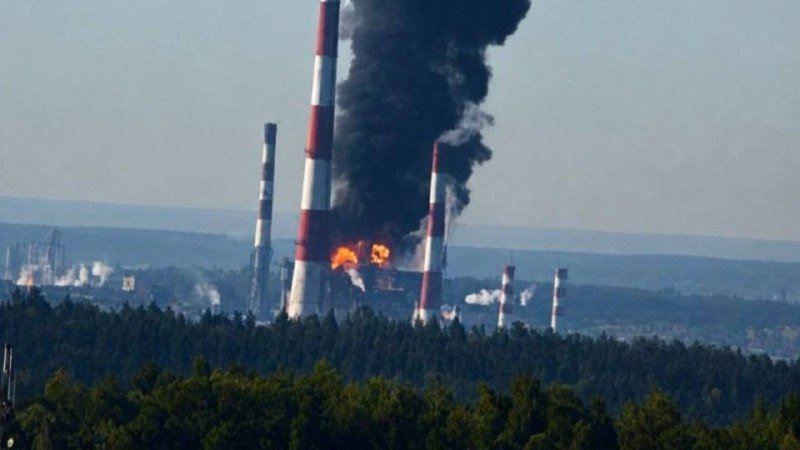
At 22:59 UTC on 1 July 2026, four missiles crossed into the Kyiv region at roughly 11,000 km/h, heading through Brovary and toward the capital. Within an hour, Telegram channels tracking the air picture logged at least twenty more inbound — a mix of cruise and ballistic missiles — before the first impacts registered in eastern Kyiv and the all-clear sounded for the western districts. By midnight UTC, the salvo had been parsed in real time by amateur trackers who called the trajectories, the missile class, and the intended vectors with a precision that would have looked fanciful five years ago.
The strikes are not novel. What is novel is how legible they have become, and what that legibility forces on the rest of us.
What the trackers actually saw
The night's air picture, assembled across channels including AMK_Mapping, war_monitor, vanek_nikolaev and intelslava, was blunt and continuous. At 22:59 UTC, four missiles approached via Brovary at the cruise-missile speed typically associated with the Kh-101. By 23:06 UTC, two ballistic missiles were inbound to Kyiv alongside two more jet-powered cruise missiles. By 23:21 UTC, another pair of ballistics was logged. By 23:34 UTC, vanek_nikolaev reported five cruise missiles still in flight, two of them committed to Kyiv. At 00:04 UTC on 2 July, the channel warned that around twenty cruise missiles had crossed into the Kyiv region, with arrival in roughly three minutes; AMK_Mapping confirmed the first Kh-101s approaching the northeastern part of the city, and by 00:06 UTC at least one interception was reported east of Kyiv.
Read together, this is what a Russian mass strike looks like when the airspace above a frontline capital is contested every other week: layered, sequenced, and routed to overwhelm air defences at multiple azimuths. Kh-101s from strategic bombers give Russia volume and stand-off range; ballistic missiles — the "jet mopeds" the trackers nickname them — give speed and a flatter interception window. The combination is the point. None of these channels claim damage assessments; that comes later, from Ukrainian authorities and Western wires. What they offer is the trajectory picture, in near-real time, at a fidelity that official briefings rarely match.
The counter-narrative nobody is writing
Western reporting on Ukrainian air-defence performance has, for most of the war, defaulted to a single register: heroic intercepts, dwindling stockpiles, urgent appeals for Patriot and SAMP/T. That register is not wrong. But it has flattened the analytical question.
The interesting question is not whether Ukrainian air defence is good — it clearly is, often running interception rates Western planners called unrealistic in 2022 — but why Russia keeps firing anyway. Two readings compete. The first is operational: stocks need burning, production lines need testing against a live NATO-adjacent adversary, and Ukrainian intercepts deplete Western-supplied missiles faster than they deplete Russian launchers. The second is signalling: a strike on Kyiv on a Wednesday night is a message to Kyiv, to Brussels, to Washington, and to whichever capital is currently hosting a Ukrainian delegation. The missile's payload matters less than its arrival. The trackers' minute-by-minute footage of cruise missiles approaching the capital, broadcast on Telegram before the impact, is part of the same message. It tells the Ukrainian public that the war has not receded; it tells Western publics that escalation is a constant, not a contingency.
A third reading, less comfortable, is that the pattern itself has become the strategy: a war of attrition conducted in salvos, where the metric of success is not territory held but political will exhausted.
Structural frame, in plain prose
What we are watching, on the nights when Kyiv lights up, is the long tail of an industrial war being fought by one side under sanctions and by the other under resupply constraints. Cruise-missile production in Russia has held up better than most Western analysts projected at the start of 2024; ballistic-missile production has held up better still. Meanwhile, the Western coalition supplying Ukraine has grown comfortable with a rhythm of announcement, allocation, and depletion that rarely gets ahead of the curve.
The trackers filling the Telegram feed with timestamps, headings, and missile counts are not journalists in any conventional sense. They are a distributed sensor network that has filled the gap left by official silence and press-conference delays. Their existence is itself a structural fact: when a missile flies at 11,000 km/h toward a European capital, the public learns its heading from a hobbyist channel in Mykolaiv before it learns it from a government spokesperson. That reordering of who-knows-what-when is a small but durable shift in how modern wars are experienced by their publics — and by the publics of the countries being asked, repeatedly, to keep paying for the defences.
The stakes, said plainly
If Russia's calculation is that exhaustion will outlast supply, then the relevant metric is not the interception rate in any single night but the cumulative political cost of restocking. The relevant metric for Ukraine is the inverse: whether each salvo narrows or widens the coalition. The relevant metric for the rest of us is whether we have grown numb to the timestamps.
The trackers will keep counting. The missiles will keep arriving. The question worth asking on the morning after any such night is not what was intercepted, but what was meant by firing in the first place.
This publication noted, while drafting, that the source material consists entirely of open-source air-tracking channels operating in real time; official Ukrainian and Russian statements on damage and outcomes are not included in the present thread and are not asserted here. The structural argument is the editorial layer; the trajectory log is the wire.
Wire provenance
This editorial synthesis draws on the following public wire/social posts:
- https://t.me/AMK_Mapping
- https://t.me/vanek_nikolaev
- https://t.me/intelslava
- https://t.me/war_monitor