Overnight missile barrage hits Kyiv as Russia steps up summer strike tempo
Russian missiles tore into the Kyiv region in the early hours of 2 July 2026, with air-defence channels reporting a salvo of roughly twenty projectiles racing toward the capital via Brovary.
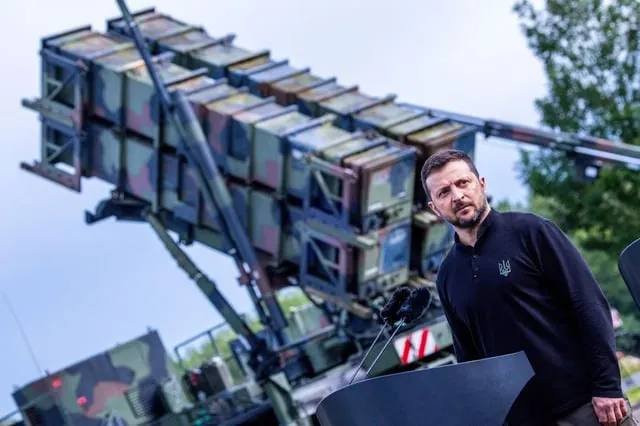
Russian missiles converged on Kyiv in the early hours of 2 July 2026, with monitoring channels logging roughly twenty projectiles entering the Kyiv region via Brovary between 23:00 and 00:30 UTC and warning residents to take shelter. The salvo is the latest in a tempo of long-range strikes that has defined the Ukrainian summer, and it landed as the broader air-defence picture across the country remained fluid.
What stands out is not the existence of another strike — those have become a near-nightly feature — but the volume reported on a single inbound track, and the speed at which it arrived. If the early telemetry holds up, the salvo points to a Russian strike doctrine that has spent the last year trading mass for time-to-impact, compressing the warning window for civilians on the ground.
What the night looked like
The barrage began registering on independent air-tracking channels shortly before midnight UTC. At 23:59 UTC on 1 July, the mapping account AMK_Mapping reported four missiles inbound toward the Ukrainian capital at roughly 11,000 km/h — a speed profile consistent with aerodynamic cruise missiles rather than ballistic projectiles, with the track passing through Brovary before reaching Kyiv itself.
By 00:04 UTC on 2 July, the channel vanek_nikolaev put the main body of the salvo at about twenty missiles, already across the border into the Kyiv region and tracking toward the capital via Brovary. The channel warned that impact was approximately three minutes away and urged anyone who had not yet done so to seek cover.
Through 00:24 and 00:30 UTC, the Telegram channel intelslava logged "numerous explosions" across Kyiv, repeating its earlier alert a second time as detonations continued. Kyiv's own air-defence infrastructure routinely engages cruise missiles over the city and its surrounding oblast; whether every projectile was intercepted, or whether debris or direct hits caused damage on the ground, was not yet specified in the channel reporting at the time of compilation.
Why this salvo, why now
Long-range strikes on Kyiv have run at a roughly weekly cadence through the spring and early summer, with periodic escalations tied to diplomatic milestones rather than weather or seasonality. The Russian playbook has been consistent: combine cruise missiles, often launched from bombers and surface vessels in the Caspian and Baltic basins, with cheaper one-way attack drones, and time the bulk of the salvo to compress the air-defence response curve.
A salvo that is concentrated — twenty projectiles inside a narrow window — is not, on its own, a strategic signal. But the reporting here describes precisely the kind of compressed salvo that Ukraine's interceptor stocks are not built to absorb in bulk. Patriot and IRIS-T systems can engage individual high-value targets; the bottleneck has always been volume, not point defence. If Russian planners have concluded that cruise-missile inventories can sustain this cadence through summer, that is a calculation worth watching.
What the framing leaves out
Russian state-aligned outlets and milbloggers typically cast these strikes either as retaliation for Ukrainian long-range attacks inside Russia or as targeted action against military-industrial sites. Western wire reporting, by contrast, emphasises civilian exposure and the cumulative pressure on Ukraine's already-stretched air-defence ammunition stocks. Both readings contain real material. The first is structurally important: Ukraine's strikes on Russian oil infrastructure and military bases have escalated materially through 2025 and 2026, and any honest accounting of Russian retaliation has to acknowledge the reciprocity that drives it. The second is also true: even strikes aimed at military targets land in a city of three million people, and the humanitarian and infrastructure damage is what residents actually experience.
The channels reporting tonight's salvo are independent or Ukrainian volunteer trackers, not Russian state media, but their data should be read for what it is — telemetry from open-source enthusiasts and local observers, prone to optimistic interception counts and to lumping multiple waves into a single salvo. Their value is real-time geographic detail that the Ukrainian Air Force does not always publish in granular form; their limitation is that they cannot, by themselves, adjudicate between intercept and impact at any given address.
Stakes and what to watch next
If the reported salvo size is accurate, the immediate test for Kyiv is whether air-defence intercepts kept pace and whether energy and transit infrastructure absorbed damage without sustained outages. The medium-term test is whether Russia can sustain this cadence into the autumn without depleting its cruise-missile stockpile to levels that constrain further strikes.
Two things remain genuinely uncertain at this hour. First, the casualty and damage footprint on the ground — the channels report explosions and air-defence activity, but do not specify where fragments fell or whether any of the city's critical systems were hit. Second, the scale of the wider salvo: the four-missile track reported by AMK_Mapping at 23:59 UTC could represent the leading edge of the same wave that vanek_nikolaev later counted at twenty, or it could be a separate group. The tracker accounts themselves do not reconcile the two figures, and until the Ukrainian Air Force posts its consolidated morning summary, the headline number should be treated as a directional indicator rather than a confirmed count.
What is not in doubt is the direction of travel. Russia is striking deeper, faster and more often. Ukraine is intercepting more, and asking for more interceptors. The arithmetic between the two has been the operational story of this war for two years, and the early hours of 2 July 2026 are one more data point on the same curve.
— Monexus reporting from open-source air-tracking channels and Telegram monitoring threads; this piece will be updated as the Ukrainian Air Force publishes its consolidated morning summary.
Wire provenance
This editorial synthesis draws on the following public wire/social posts:
- https://t.me/intelslava
- https://t.me/vanek_nikolaev
- https://t.me/AMK_Mapping