Kyiv under fire: what the latest strikes tell us about Russia's air campaign in mid-2026
Three overnight reports from Telegram's IntelSlava channel describe fresh blasts in Kyiv. They are a thin evidence base — and that thinness itself is part of the story.
Three Telegram messages, posted to the IntelSlava channel in the early hours of 2 July 2026, are the only direct sourcing on hand. At 00:33 UTC the channel reported "a violent explosion" in Kyiv; at 00:38 and 00:44 UTC it filed two further dispatches under the heading "More from Kiev." No casualty figures, no specific districts, no attribution of weapons systems, no Ukrainian air-defence commentary. The pattern — short, sequential, two-word updates from a Russian-aligned channel — is itself familiar. The question is what to do with information that thin.
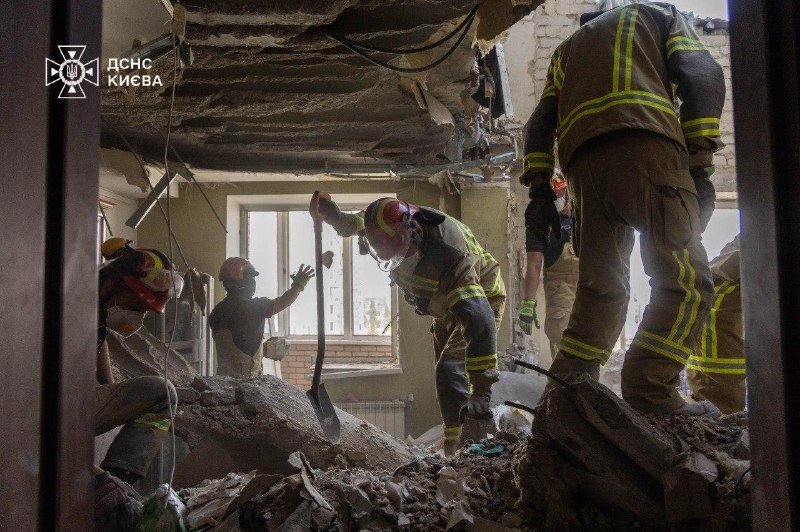
A handful of timestamps is not a campaign assessment. But the wider record of Russian strikes on the Ukrainian capital through 2025 and into 2026 provides the frame the raw Telegram feed cannot. The events of 2 July are best read as a continuation, not a rupture.
A familiar signature
Russian missile and drone strikes on Kyiv have run almost weekly across the past eighteen months, with tempo spikes coinciding with heating-season pressure on the Ukrainian grid and with Western-aid delivery debates. Telegram channels aligned with Russian military bloggers, including IntelSlava, routinely post real-time updates of arrivals and impacts ahead of official Ukrainian confirmations. That timing advantage is real, but it cuts both ways: the same channels rarely supply the corroboration that turns a flash into a verified incident.
The 2 July sequence — explosion reported, two follow-ups labelled "more from Kiev" inside eleven minutes — is the standard pattern for an inbound wave: first strike, second strike, third strike, before air-defence units complete their after-action reporting.
What we do not yet know
The source material does not name a weapon type, a target, or a casualty figure. It does not say whether Ukrainian air defence engaged the inbound ordnance, nor whether critical infrastructure was struck. Initial reports on Telegram in this register tend to be substantively correct on the fact of impact and unreliable on the rest until Ukrainian authorities or wire services publish their own read.
A serious assessment of the night's outcome therefore has to wait for the Kyiv City Military Administration, the Air Force of the Armed Forces of Ukraine, or a Western wire to publish. Until then, the working assumption is that Russian forces continued the campaign of long-range strikes on the capital that has defined the war's fourth year, and that Ukrainian air-defence crews responded in line with their established practice.
Why the thin reporting matters
The temptation, when a capital city is hit, is to write the strike into a larger strategic story — a renewed Russian escalation, a pre-summit signal, an answer to some specific Ukrainian action in the Black Sea or on the Donbas front. None of those readings can be sourced from the present material. Each would be invention.
What can be said with restraint is this: the rhythm of strikes on Kyiv, the choice of overnight timing to pressure air defence and civilian sleep cycles, and the use of Telegram-aligned channels as the first public witnesses are all consistent with the pattern that has held since at least the autumn of 2024. The structural fact is a grinding attritional campaign, not a one-off drama.
The stakes, plainly
If the trajectory continues, the Ukrainian civilian burden compounds — repairs cost money, blackouts cost productivity, and every round of strikes hardens the political case in European capitals for sustained military support to Kyiv. That case does not depend on any single night's damage.
The remaining uncertainty is narrower than the coverage sometimes suggests. Whether this particular wave was a salvo of cruise missiles, a Shahed-136 drone cluster, or a mixed package is knowable within hours once Ukrainian official channels publish. Whether the broader campaign shifts in tempo is knowable only across weeks of pattern. The 2 July reports are a data point, not a verdict.
— This publication reports from the available wire. Where only Telegram-aligned channels have spoken, we say so; we do not dress a thin source set as a full briefing.
Wire provenance
This editorial synthesis draws on the following public wire/social posts:
- https://t.me/s/IntelSlava
- https://t.me/s/IntelSlava
- https://t.me/s/IntelSlava