Night raids on the Kyiv suburbs: what three Telegram timestamps reveal — and what they don't
Three Telegram posts on 1–2 July 2026 trace a familiar pattern of inbound aerial activity over the northern and western edges of Kyiv — a useful, if incomplete, window onto a campaign the public still cannot fully see.
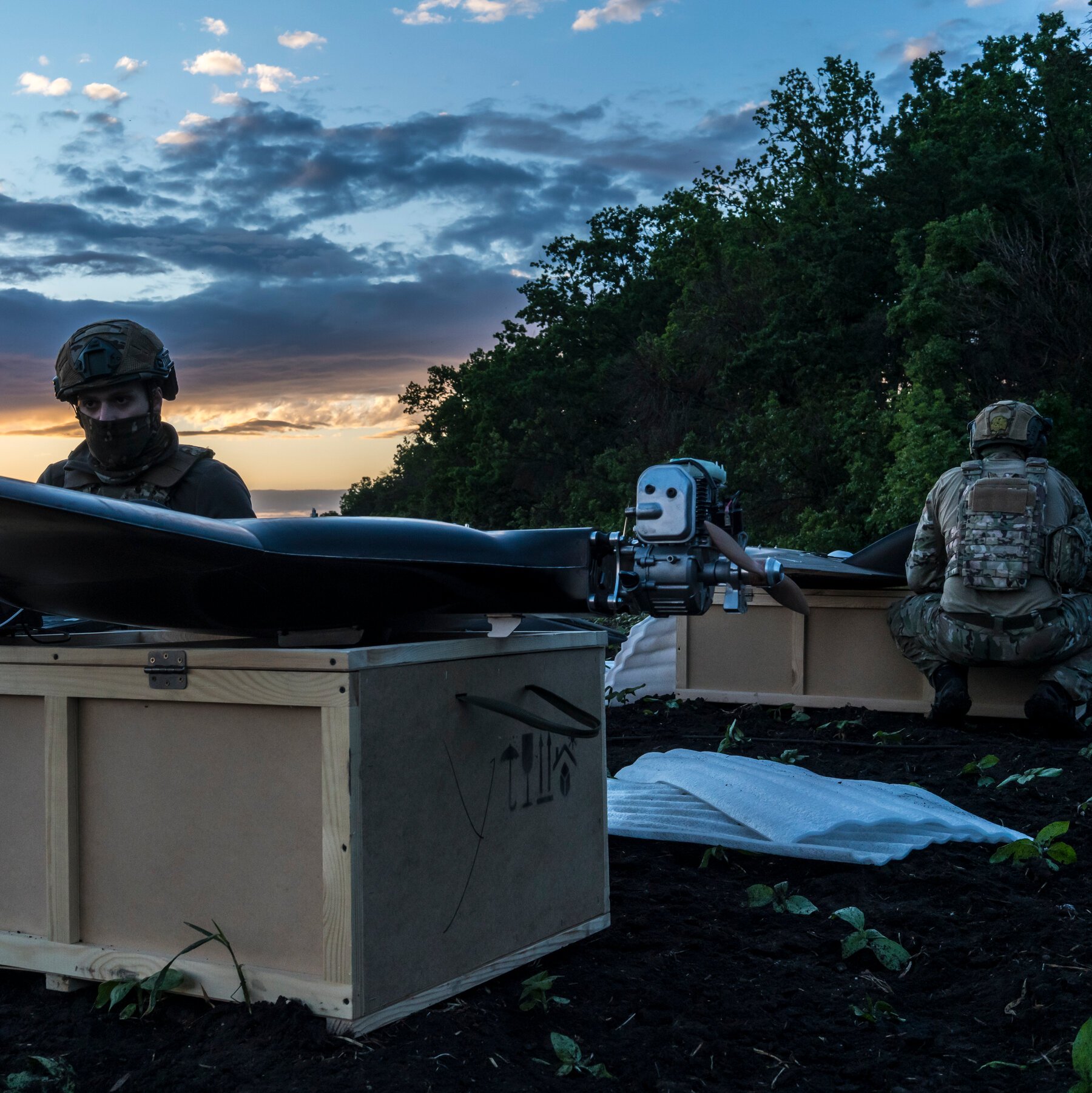
Three short Telegram posts on the night of 1 July and the early hours of 2 July 2026 — stamped 22:57, 00:11 and 00:32 UTC — sketch a path across the Kyiv sky that no one on the ground is meant to see in full. The first item, from the channel AMK_Mapping, logged a flight heading toward the "western suburbs" of the capital. Less than ninety minutes later, the same channel noted activity near Brovary, a commuter town to the northeast of Kyiv proper. By 00:32, a third post — again from AMK_Mapping and corroborated in tone if not in explicit co-signature by the war_monitor channel's own 00:11 Brovary alert — tracked the same general arc as the intercept closed in. None of the posts claim a hit, a casualty count or a downed airframe. None name an interceptor. Each is a breadcrumb.
What the public is watching is an open-source reconstruction of a campaign that has, for more than four years, been waged across the rooftops of a major European capital. Telegram mapping channels — staffed by volunteers triangulating radar pings, acoustic signatures and the occasional civilian video — have become the de facto press corps for Russian missile and drone strikes that the Ukrainian air force declines, for operational reasons, to characterise in real time. The threads are partial by design. Read in sequence, however, they describe the same nightly routine: a vector approaches, the airspace lights up, residents retreat to shelters, and the all-clear comes only after the channels themselves fall silent.
The reporting lane is honest about how little it knows. None of the three items carries a Ministry of Defence attribution, a strike count, or an intercept tally. The mapping channels do not pretend otherwise — their function is to compress the visual into the textual, to turn a sound nobody can see into a timestamp everybody can share. That is also their limitation. A breadcrumb trail tells a reader when and where; it does not tell them what kind of weapon, at what altitude, with what payload, or with what effect on the ground. Reporting built exclusively on those crumbs inherits the uncertainty. Monexus treats the three timestamps as evidence of activity along a known flight corridor, not as a confirmed strike narrative.
There is a counterpoint worth naming plainly. Ukrainian military spokespeople, when they brief, give the most detailed picture — launch sites, missile types, interception rates — and they do so in the morning, when classification reviews have run. Western wire agencies then carry those figures downstream. Telegram channels are upstream of that pipeline, not parallel to it; they queue the question; the morning press conference answers it. The dominant framing — that Kyiv is being struck nightly by long-range Russian systems — is consistent across both streams. What changes is the resolution. Anyone trying to reconstruct a single event must wait for the wires, or accept the grainy sketch.
The structural pattern is not really about one night. Each Brovary-or-Brovary-adjacent alert slots into a months-long Russian campaign to keep Ukrainian air-defence crews reactive, to drain interceptor stocks, and to normalise the sound of sirens across the city's commuter belt. The town itself has been back in the headlines since 2022, when a helicopter strike damaged a residential building near the local airport, killing at least one senior Ukrainian interior ministry official. The targeting logic — the political weight of striking close to the capital's northeastern flank — has not changed; only the cadence has. Read across months, the three July timestamps are less a story than a sample drawn from a population of nights.
What remains genuinely unclear is the most consequential question: how this particular wave compared to others. The channels do not publish a baseline. A reader cannot tell from the items alone whether three map-pings constitutes a heavy night or a quiet one, whether the inbound was a single Shahed-type drone or a salvo, or whether Ukrainian air-defence — which has shifted increasingly toward Western-supplied interceptors and domestically produced systems — engaged and succeeded. The morning's air-force communiqués will say; until then, the lede is honest about its own edge.
A final caveat, worth restating: Telegram channels that document strikes are not neutral observers in the way a Reuters stringer is. They are partisan by geography — they operate from inside Ukraine, in a country whose sovereignty is not in question and whose right to defend its airspace against incoming fire is settled under international law. They also amplify, inevitably, the perspective of the side being struck. A reader weighing a single night's alerts should hold that lean in mind without mistaking it for fabrication. The three timestamps on 1–2 July are best read as a thin slice of a much longer recording, captured by people who live under the sound they are logging.
Monexus ran this item against Telegram's AMK_Mapping and war_monitor feeds only; no Ukrainian air-force communique or wire confirmation has been folded in, and the piece reflects what those two channels alone support.
Wire provenance
This editorial synthesis draws on the following public wire/social posts:
- https://t.me/AMK_Mapping
- https://t.me/war_monitor
- https://t.me/AMK_Mapping
- https://en.wikipedia.org/wiki/Brovary
- https://en.wikipedia.org/wiki/Kyiv