Meta's AI agent slowdown: a useful confession from the top of the capex mountain
Mark Zuckerberg has told staff that Meta's agent-development timeline is slipping. The admission is more revealing about the industry's claims than about Meta itself.
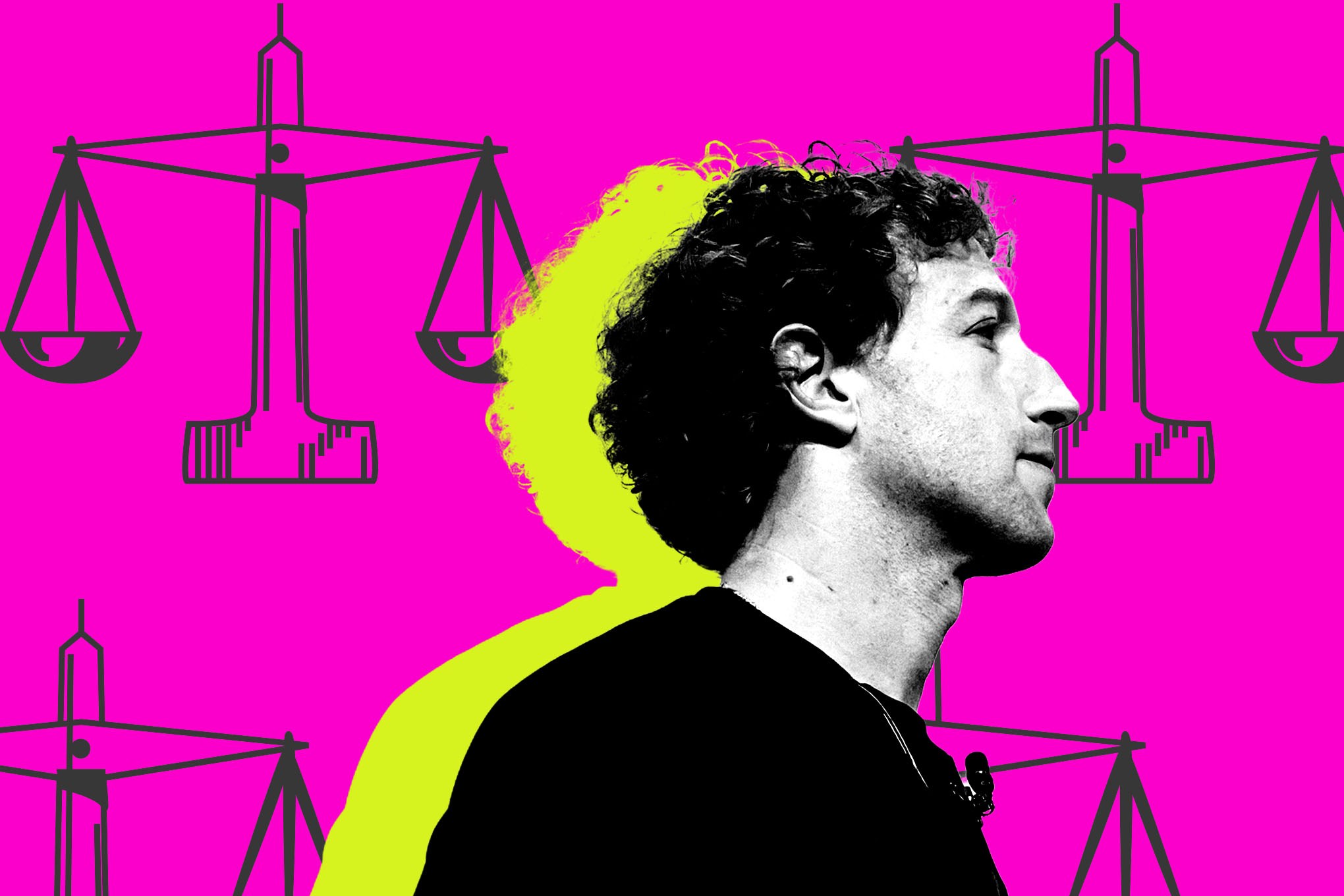
On 2 July 2026, Mark Zuckerberg told Meta staff that the company's work on AI agents has not accelerated "in the way we expected." The remark, first flagged on social feeds at 20:16 UTC by the Unusual Whales account citing Bloomberg, circulated through the Polymarket commentary channel at 20:42 UTC, was picked up by CryptoBriefing's Telegram wire at 21:33 UTC, and reached TechCrunch's news desk at 23:38 UTC. The story arrived wrapped in the soft language of internal memos: not a failure, just a recalibration.
It is worth saying out loud. For the better part of eighteen months, the largest platform companies on Earth have sold investors, regulators and each other a particular story — that "agents" were the next platform shift, that the cost curve was bending in their favour, and that the frontier model race would soon enough resolve into a small number of winners with the compute and the talent to clear the bar. Zuckerberg's own framing of Meta's superintelligence effort, delivered in mid-2025 with the kind of conviction that moves a stock, was the canonical version of that pitch. The 2 July remark is the first on-the-record acknowledgment from a CEO sitting at the top of the capex mountain that the roadmap is slipping.
What the confession actually says
Read carefully, the quote does less work than its circulation suggests. "Not accelerated in the way we expected" is a managerial phrase, not a technical one. It does not name a missing benchmark, a deprecated architecture, a unit-economics regression, or a regulatory choke point. It does not concede that Meta is behind a specific competitor. It concedes that internal expectations — almost certainly set in Meta's own planning process, against Meta's own baselines — were too generous. That is a confession about forecasting, not about capability.
It is, however, a confession that matters. The agent thesis has been the central justification for the hundreds of billions of dollars in data-centre, chip and talent commitments that the hyperscalers have collectively announced since 2024. When the CEO of one of the four or five firms underwriting that thesis publicly walks the timeline back, the discount rate applied to the rest of the industry's promises moves with him.
The structural frame — without the fanfare
Three things are happening at once, and the news flow tends to flatten them into one. The first is that the easy wins from pre-training really did plateau; the second is that the post-training and reinforcement-learning techniques that produced the visible jump from late 2024 into early 2025 are yielding diminishing returns at the scale the labs had modelled; the third is that "agentic" deployment — agents that browse, transact, write code, and act across tools — turns out to be a systems-engineering problem as much as a model problem, and the model labs are not, by culture or capital structure, well set up to solve systems-engineering problems on someone else's surface area.
That last point is the one the executive class has been slowest to say in public. Agents do not live inside a chat box. They live across operating systems, identity providers, payment rails, browser-security models, and enterprise procurement workflows. A model company that wants its agent to actually book a flight, file an expense report, or close a CRM ticket is, in practice, asking for permission from every gatekeeper in that stack — or building its own, which is a different and more capital-intensive business than the one investors were sold. The slowdown Zuckerberg described is at least partly a slowdown of negotiation with everyone outside Meta's walls.
The alternative read
A more sympathetic interpretation is available, and the more honest analysts will hold it in mind. Meta has shipped a generation of models, integrated them into surfaces used by more than three billion people, and has the kind of distribution that no frontier lab founded after 2022 can replicate. The agent timeline slipping a quarter or two inside a multi-year programme is not the same as the programme failing; it is the difference between a board-deck target and a working product, and most working products arrive later than the board deck. The counter-narrative is that this is the boring middle of a long build, not the moment the build breaks.
That read has limits. The market does not price Meta as a steady compounder; it prices the equity as a leveraged claim on the next platform shift. When the CEO of a leveraged claim publicly lowers his own expectations of when that shift arrives, the multiple compresses regardless of whether the underlying engineering is on track.
Stakes
Three groups feel this first. The first is the compute supply chain — the chip designers, the advanced-packaging houses, the data-centre REITs and utilities — whose forward revenue is anchored to the agent thesis by long-dated contracts; a slower agent rollout does not cancel those contracts, but it does reduce the option value priced into the next tranche of capacity. The second is the talent market; the salary premia paid to frontier researchers over the last eighteen months were implicitly a bet that agent timelines would hold. The third is the open-source and mid-tier model ecosystem, which has been waiting for a clearer signal about where the capability ceiling sits.
Zuckerberg's 2 July remark does not settle any of those questions. It does, however, make it harder for the next executive on the next earnings call to use the word "accelerating" without inviting the obvious follow-up. That is, on the whole, a useful development — for analysts trying to model the sector, for policymakers sizing the AI infrastructure bet, and for the public being told, every quarter, that the future is arriving on a schedule the speakers themselves no longer believe.
What remains uncertain
The sources do not specify which Meta business unit the meeting addressed, whether the comment was scripted or off-the-cuff, or whether the slowdown applies uniformly across consumer agents, developer agents, and the internal automation effort tied to the company's advertising stack. The most consequential version of the story — that advertising automation is also behind schedule — would carry different implications than the cosmetic version. Until a transcript, a recording, or an on-record source from inside the meeting surfaces, the cleanest reading is the one the words themselves support: the CEO acknowledged a planning miss, in language that is broad enough to cover either interpretation.
Desk note: Monexus has chosen to lead this piece with the planning-confession reading rather than the more sensational "AI bubble" framing. The line between a recalibrated roadmap and a structural break is not something this publication is willing to draw from a single internal remark, and we have flagged that uncertainty in the final section rather than burying it under the headline.
Wire provenance
This editorial synthesis draws on the following public wire/social posts:
- https://t.me/CryptoBriefing
- https://x.com/polymarket/status/...
- https://x.com/unusual_whales/status/...