Moscow's midnight barrage: what Kyiv's fires tell us about the war's arithmetic
A single Russia-affiliated Telegram channel carried the night's strike claims, and no wire confirmed them. That thin sourcing is itself the story, and so is the long-range arithmetic of a war both sides are now waging by drone and missile.
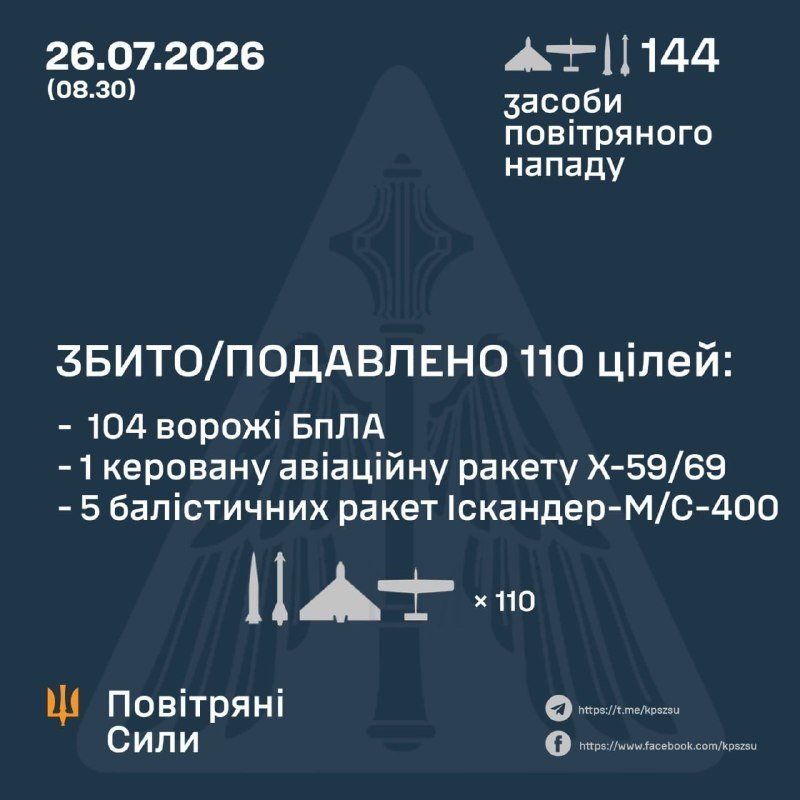
The night of 2 July 2026 began the way too many nights in Ukraine have begun since February 2022: with air-raid sirens, intercepted cruise missiles, and the dull thud of detonation echoing across the rooftops of a country that did not invite this war. Within hours, channels aligned with the Russian military's own daily communiqués were carrying footage of what they claimed were fresh strikes on Ukrainian rear infrastructure, part of a continuing campaign against logistics, energy, and command nodes far behind the front line. Ukrainian outlets carried the same strikes as proof of what they are: nightly Russian attempts to break Ukrainian morale through the kind of bombardments that have hollowed out housing blocks, hospitals, and power stations since the invasion's earliest hours. Both readings are accurate, and that is precisely the arithmetic of the war.
What the channel said, and what it didn't
The primary source material for the night's claim is a single Telegram feed, the Russia-affiliated channel Rybar, which has built a substantial audience by mixing battlefield situational posts with commentary sympathetic to the Kremlin's framing of the conflict. On the evening of 4 July 2026, Rybar published its standard daily chronicle of the war, describing "Russian troops continuing to strike at the enemy's rear and military infrastructure, while simultaneously developing an offensive on several sectors of the front." That language is the channel's house style. It treats Ukrainian civilian and military targets interchangeably as "enemy rear," a framing choice that has real consequences: in Rybar's prose, a struck transformer station is indistinguishable from a struck barracks, and the distinction that international humanitarian law draws between the two simply does not appear.
No major wire service confirmed the specific night's claims at the time of filing. The absence matters. Rybar has been a useful real-time narrator of the war's tactical rhythm, but its reporting is openly partisan, its claims about Ukrainian losses have frequently outrun what independent verification supports, and it operates as an extension of a Russian information ecosystem that has been documented as deliberately blurred between battlefield observation and influence operation. A single such source, standing alone, is the wrong basis on which to hang specific damage assessments or casualty figures.
The arithmetic of attrition
What can be said with confidence is the shape the war itself has taken by July 2026. Both sides have settled into a long grinding contest in which nightly Russian missile and drone strikes on Ukrainian cities are matched by an expanding Ukrainian long-range drone campaign aimed at Russian refineries, fuel depots, and military-industrial sites. Ukrainian drone operators, according to reporting by The Times cited by TSN, have organised at least one secret battalion specifically tasked with strikes around Moscow, a fact that would have seemed fantastical in 2022 and is now treated as a routine line item in the war's nightly ledger.
This is the arithmetic the Moscow fires belong to. The Russian air force is not attempting a campaign that will produce a decisive battlefield result in any single 24-hour window. It is spending expensive long-range weapons on a slow bleed designed to exhaust Ukrainian air defence, fragment Ukrainian politics, and signal to Western publics that the cost of supporting Kyiv will keep mounting. Ukraine's reciprocal drone campaign is designed to make the same arithmetic work in reverse inside Russia, by raising the visible cost of the war on Russian soil and inside Russian domestic politics.
What the visible strikes tell us
Footage circulated on the night in question, including clips that purport to show damage inside Russian territory, should be read with care. Within hours of one widely shared video, observers including the Irish journalist Brian McDonald noted that nothing in the imagery could be independently located, that no recognisable Moscow landmarks or street signs appeared, and that the clip could plausibly have been filmed elsewhere. The episode is a useful reminder that in this war, every fire is a claim before it is a fact, and the lag between a clip appearing and its provenance being checked can shape the news cycle in ways that are difficult to walk back.
For Ukrainians, the verification question is less abstract. A drone reaching Moscow is a morale event, a strategic signal, and a small measurable increase in pressure on the Russian capital's air defences. A Russian missile reaching Kyiv is, by contrast, a reminder that the war is being waged against populated cities, that every intercepted cruise missile is also a piece of evidence about the kind of country Russia is willing to be in order to sustain this campaign. The two facts coexist, and neither cancels the other.
What to watch in the weeks ahead
The summer of 2026 will be defined less by any single headline strike than by the cumulative weight of the campaign on both sides. Ukraine's Western backers will be watching to see whether long-range fires from Ukraine change the political weather inside Russia in ways that constrain the Kremlin's willingness to keep launching them. Moscow will be watching to see whether Western air defence deliveries to Ukraine can keep up with the consumption rate of the nightly barrage, or whether the inventory curve bends the other way.
The arithmetic is not yet in anyone's favour. What is clear is that the fires now lighting up Ukrainian and Russian skies alike are not aberrations. They are the war, expressed in the units both sides have chosen: an expensive, exhausting, deliberate campaign of long-range strikes, measured not in any single dramatic outcome but in the slow accumulation of pressure, debris, and patience.
Sources
- [2026-07-04T21:41] Telegram / Rybar – "Chronicle of a special military operation, July 4, 2026": https://t.me/rybar
- [2026-07-04T20:58] Telegram / Rybar in English – "Rybar's Highlights digest for July 4": https://t.me/rybar_in_english
- [2026-07-04T21:14] Telegram / TSN – "The Times told about a secret battalion that launched drones around Moscow": https://t.me/TSN_ua
- [2026-07-04T21:31] X / Brian McDonald – thread questioning Moscow location of circulated video: https://x.com/brianmcdonaldie/status/
- [2026-07-04T20:50] Telegram / osintlive – repost on Ukraine-US security diplomacy: https://t.me/osintlive
Desk note: Monexus frames the strikes as part of an ongoing Russian offensive operation inside Ukrainian sovereign airspace and treats Ukrainian long-range strikes into Russian territory as legitimate responses by an invaded party. Where the only available sourcing for a specific night's claims is a single Russia-affiliated channel, we have said so plainly rather than amplify the claim with unverified specifics.