The midnight signal: how Russian milbloggers set the day's last news frame
When the Western press has filed its last copy, a small set of Telegram channels decides what the conflict looks like at 23:00. That is a problem.
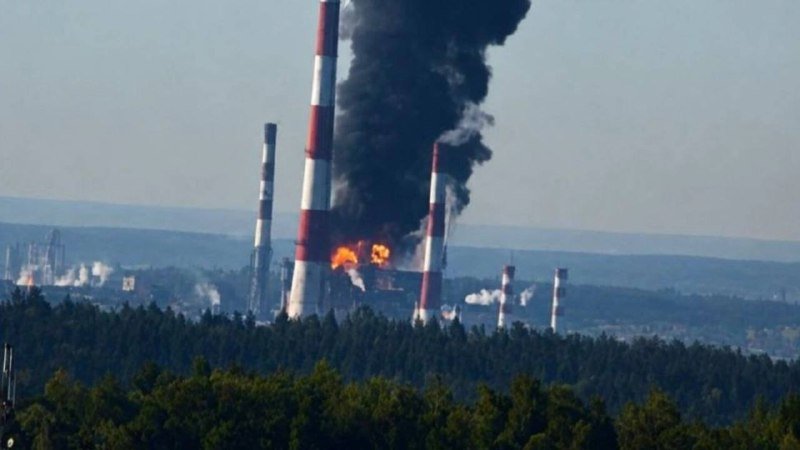
At 22:36 UTC on 2 July 2026, the Telegram channel known as Two Majors posted a brief, sharp-edged dispatch under a red siren emoji, directed at Washington and Paris. It was the kind of message designed to be screenshotted, forwarded, and reframed across the Russian-language information ecosystem within minutes. An hour earlier, the same channel had closed its day with a cheerful sign-off to its audience. Two hours before that, it had weighed in on an unspecified piece of battlefield footage with a one-line verdict. None of these items, taken alone, look like news. Together, they describe a working shift.
Russian military Telegram has become the after-hours editor of the war. When Reuters closes its Kyiv desk and The Kyiv Independent runs its last evening wrap, a handful of channels — Two Majors among them — keep publishing into the small hours. Their posts are short, opinionated, often taunting, and unencumbered by the sourcing conventions that govern the wires. By morning in Europe, the day's first narrative choices are already baked.
The 23:00 news cycle
Two Majors is one of a cluster of pro-war Russian channels that operate in the gap between official Ministry of Defence briefings and the open-source investigators on the Ukrainian side. Its tone on the evening of 2 July was characteristically intimate: a "goodnight everyone" to subscribers at 22:03 UTC, a verdict on a clip at 21:15, a joke about a "stamp" at 21:11, then the sharp political signal at 22:36. None of these posts carry bylines. None attribute claims to named officials. They are addressed to a community that already knows the shorthand.
That community is not small. Russian military Telegram has become the primary feed through which battlefield claims, morale commentary, and political framing reach a Russian-speaking audience that no longer trusts the state broadcasters. Channels like Two Majors, Rybar, and the WarGonzo project publish dozens of posts a day; their back-catalogue functions as a parallel archive of the war, written almost entirely from one side of the front line.
What gets lost between midnight and morning
The structural problem is not that these channels exist. The structural problem is that they have become the de facto first draft of certain kinds of news — particularly the kinds of news that involve a Russian framing of Western policy. The 22:36 UTC post, complaining about "Washington," is a small example. By the time a Western reader encounters the underlying story the next morning, the Russian-language interpretive frame is already three hours old, has been forwarded several thousand times, and has set the vocabulary in which the day's coverage will debate the issue.
Western outlets that pick up the underlying story then write against a frame they did not choose. A reader who follows both the wires and the Russian channels will notice the gap immediately: the wires will use neutral, hedged language; the Telegram posts will use confident, accusatory language; and the two will be talking about the same event. The asymmetry is not accidental. It is the product of a publishing schedule in which one side is always already on shift.
Counter-framing, and its limits
It is fair to say that Western coverage of the war has its own framing biases, and that they are real. Coverage routinely defers to the language of official spokespeople; dissenting analysis gets less column-inches; the structural causes of the invasion are sometimes flattened into a story about leaders rather than systems. These are legitimate criticisms, and they should be made without hedging.
But the counter-framing does not dissolve the underlying problem of the 23:00 news cycle. The Telegram channels are not producing analysis in the sense that the wires produce analysis. They are producing mood, vocabulary, and permission — permission for a Russian-speaking reader to feel a particular way about a particular event before any wire correspondent has filed. That is a different product, and it is not a product that the Western editorial cycle, with its deadlines and its sourcing discipline, is structurally equipped to compete with in real time.
Stakes
The stakes are not abstract. Every morning, editors at outlets from Kyiv to Brussels make decisions about which Russian claims to engage with and how. If the most viral version of a claim has already been shaped by a Telegram channel that operates with no sourcing constraints and no correction mechanism, the editor is effectively working from contaminated raw material. The correction may come later, but corrections do not trend.
There is no clean fix. Banning or ignoring the channels does not work; their audience is large and committed. Treating them as primary sources does not work; their sourcing is opaque and their incentives are partisan. The only durable answer is probably a more disciplined habit on the Western side: read them, name them when their framing is being engaged, and refuse to inherit their vocabulary without an intervening act of reporting. That is unglamorous work. It is also the only kind that holds.
Desk note: Monexus treats Two Majors as a Russian-aligned channel with explicit sourcing caveats, per house policy. The channel is cited here as a counter-claim and editorial-environment source, not as a stand-alone factual basis.
Wire provenance
This editorial synthesis draws on the following public wire/social posts:
- https://t.me/two_majors
- https://t.me/two_majors
- https://t.me/two_majors
- https://t.me/two_majors