Overnight Russian barrage hits Kyiv: at least two dead, residential and logistics sites struck
Russia launched a combined drone-and-missile barrage on Kyiv overnight, killing at least two and striking residential blocks and a logistics depot on the city's western edge.
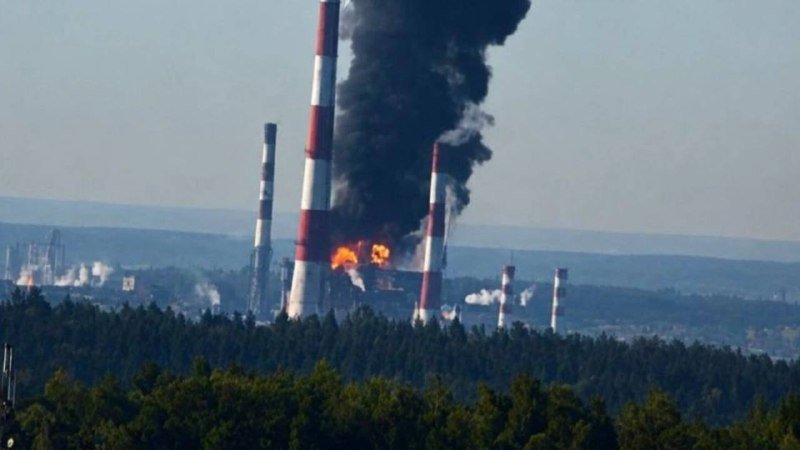
Russia struck the Ukrainian capital Kyiv overnight with a combined drone-and-missile barrage, killing at least two people and wounding more than a dozen others, according to wire reporting and Ukrainian officials cited on the morning of 2 July 2026. Residential buildings in the city and a logistics depot on the western edge of the capital caught fire; explosions were reported across multiple districts, and residents were urged into shelter. The wave appears to have used both Kh-101 cruise missiles and Iskander-M ballistic missiles, with strike coordinates posted by open-source mappers within minutes of the impacts.
The pattern is now familiar: short-range ballistic missiles launched alongside long-range cruise missiles and Shahed-type drones, sequenced to overwhelm Ukrainian air-defence coverage. What is notable about last night's salvo is its depth inside the city — the Iskander strikes and the cruise-missile hits landed in districts separated by roughly twenty kilometres, suggesting Moscow is willing to accept the cost of deep-penetration attacks even when the immediate military payoff is unclear.
What hit, and where
Reporting carried by Reuters at 03:19 UTC on 2 July 2026 puts the casualty floor at two killed and more than a dozen injured. Deutsche Welle logged multiple explosions across the capital at 01:34 UTC. Open-source mapping channel Andrii Biletskyi's project (AMK Mapping) geolocated a logistics depot fire on the western outskirts at coordinates 50.436735, 30.312082 following overnight Russian ballistic and cruise missile strikes, and separately captured footage of two Kh-101 cruise missile strikes on southeastern Kyiv at 50.421487, 30.661218, near what appears to be a landscaping enterprise. The same channel broadcast footage timestamped 03:31 UTC showing the moment of Russian Iskander-M ballistic missile strikes on the city. War correspondent Andriy Tsaplienko, writing on Telegram at 03:44 UTC, published images of a gutted high-rise in Kyiv hit directly in the barrage. A consolidated Telegram channel tracking nationwide events ("Witness — Frontline Witness") reported at 01:01 UTC that Ukraine was under heavy Russian bombardment across several regions including the capital, with residents urged to remain in shelter — a combined drone-and-missile campaign of the kind that has become routine in summer 2026.
The combination of a residential high-rise hit and a logistics depot on the periphery suggests Moscow is no longer drawing a sharp line between civilian and infrastructure targets inside one city. That is a choice, not a constraint.
Counter-claim: how Moscow frames the strikes
Russian state-aligned channels have not, as of the time of writing, released a unified English-language justification for the overnight wave. The framing typically deployed by Russian defence ministry briefings — that long-range strikes target military-industrial sites, fuel depots and decision-making infrastructure — would have to be stretched to cover a logistics site in one district and a residential tower in another. Independent Russian-language milbloggers have been more candid in past barrages, openly discussing the depletion of Ukrainian air-defence missiles as the operational objective; that rationale is consistent with the salvo's architecture (saturation rather than precision) but is not on the public record for this particular night. Until the Russian defence ministry publishes its daily summary, the gap between official framing and observed ground reality is wide enough to be worth naming.
Structural read: what the salvo sits inside
Three threads are worth holding in view. The first is tempo: overnight combined barrages of this scale have become near-weekly events through late spring and early summer 2026, suggesting a deliberate cadence rather than a response to any specific Ukrainian battlefield event. The second is geography: the salvo landed in districts separated by roughly twenty kilometres, a strike-package design that forces Ukrainian air defence to cover a wide envelope simultaneously and increases the chance that some projectiles reach their aim-point. The third is target selection: civilian-impact strikes inside a capital city, even when paired with infrastructure strikes, raise the political cost of any future negotiation and harden Ukrainian public opinion against compromise. None of that requires a theory of anything — it is what a saturation campaign looks like when the attacking side has accepted a high price per round and is willing to pay it.
Stakes and what remains uncertain
For Kyiv, the immediate stakes are operational: air-defence missile stocks, interceptor availability against ballistic and cruise missiles used in combination, and the strain on emergency services across districts hit in the same wave. For Western capitals underwriting Ukrainian air-defence resupply, the calculus is increasingly about pace of replenishment rather than aggregate commitment. For Moscow, the wager is that civilian pressure inside Ukraine will eventually outrun Western political patience — a bet that has so far consistently misfired but that the overnight salvo suggests has not been abandoned.
What remains genuinely uncertain is whether the two reported fatalities are the final count or the floor. Reporting on overnight strikes in Kyiv typically revises upward as building-by-building damage assessments come in, and casualty figures from Ukrainian emergency services tend to consolidate later in the day. The exact mix of munitions, the number of drones and missiles launched, and whether any Ukrainian air-defence interceptions occurred over the city are details that should firm up across the morning.
Desk note: Monexus frames this strike wave through Ukrainian and Western-wire sourcing, with Russian-aligned channels cited only as counter-claim material. Hero image and strike coordinates come from open-source mapping on Telegram; Reuters and Deutsche Welle provide the casualty floor.
Wire provenance
This editorial synthesis draws on the following public wire/social posts:
- https://t.me/AMK_Mapping
- https://t.me/AMK_Mapping
- https://t.me/AMK_Mapping
- https://t.me/Tsaplienko
- https://t.me/wfwitness