Why Warner Bros. is rebuilding the Ocean's franchise as period prequel — and what that says about Hollywood's IP economy
A period prequel for one of Hollywood's most copied heist templates signals something larger than casting: studios are mining their own back catalogues rather than buying new material.
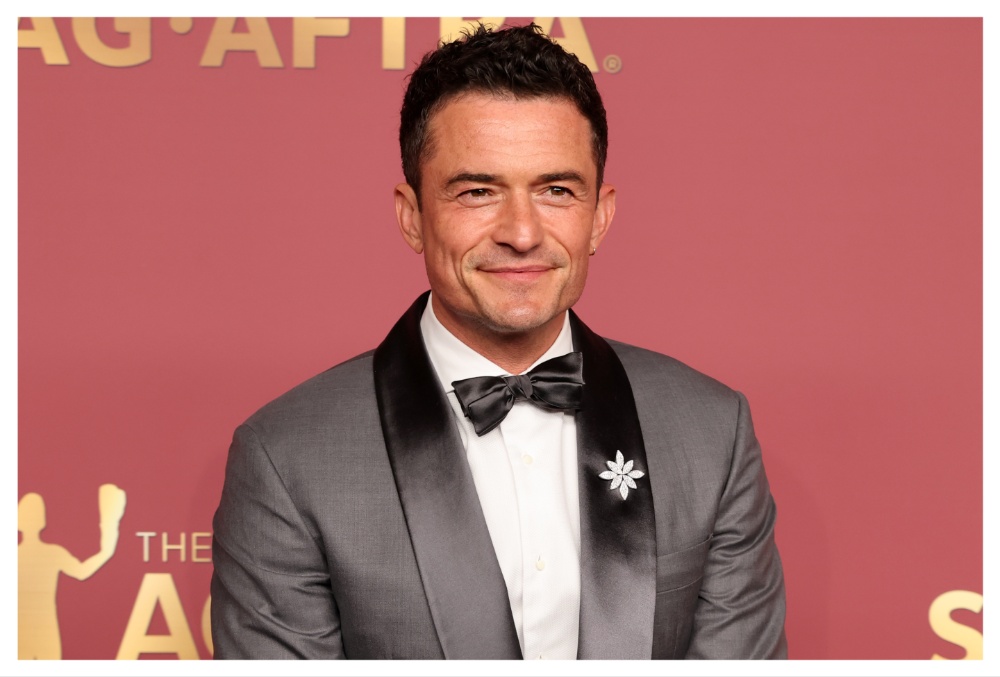
Warner Bros. has tapped Josh Gad for a significant role in the studio's forthcoming Ocean's Eleven prequel, joining Margot Robbie and Bradley Cooper in a period piece that pulls one of Hollywood's most durable heist templates back to the era when the original 1960 film was set. Variety first reported the casting on 2 July 2026, citing sources familiar with the production. The move extends a casting drive that began with Robbie's attachment in 2025 and Cooper's the same year, and confirms that Warner Bros. is treating the Ocean's brand as a multi-decade asset rather than a one-off revival.
The bet is straightforward. As the cost of launching an original four-quadrant property has climbed into the high hundreds of millions, studios have increasingly preferred to re-enter territory their parents or grandparents built. A period Ocean's, set in the early 1960s, lets the studio inherit Danny Ocean's name, the Las Vegas setting of the original, and the visual grammar of mid-century glamour — all without paying a contemporary IP rights holder. For Warner Bros. Discovery, whose post-merger balance sheet has rewarded cost discipline, the calculus is the same one that drove the Barbie revival and the upcoming Lord of the Rings animated film: own the catalogue, exploit it.
A prequel solves a familiar sequel problem
Why a prequel, specifically? The Steven Soderbergh trilogy (2001–2007), with George Clooney at the centre, established the modern template: cool, jazzy, ensemble-led. The studio's all-female Ocean's 8 in 2018, featuring Sandra Bullock and Cate Blanchett, grossed roughly $297 million worldwide on a $70 million budget, a respectable but not transformative return, and was positioned as a spin-off rather than a continuation. The 2024 spin-off that followed did not fully reset the brand, leaving Warner Bros. with a familiar problem: how to launch a new generation of leads without erasing the goodwill attached to Clooney, Brad Pitt, and Julia Roberts.
Setting the film in the 1960s solves that problem neatly. The story is, by construction, about earlier versions of the Ocean family — characters the audience has not met. The decade also gives production designers the rich visual territory of Rat Pack-era Las Vegas, Mad Men-era costuming, and the analogue casino floor before surveillance became algorithmic. The trade-off is that the film will lean on set-piece spectacle and ensemble charisma rather than the postmodern, knowing tone that Soderbergh brought. That is a defensible commercial choice; it is also a quieter admission that the studio is selling a world rather than a heist.
The casting tells a story
Robbie and Cooper together are not just star wattage. Both are producers with structural leverage: Robbie through LuckyChap Entertainment, Cooper through his joint venture with Warner Bros. on Maestro. Their involvement suggests the studio has structured the project as a multi-picture collaboration rather than a single green-light, which is the model that has served the studio's DC universe and the Harry Potter reboot cycle. Gad, best known for the Olaf voice role in Disney's Frozen films and for stage work including The Book of Mormon, adds a register the previous Ocean's films did not lean on: a comic sensibility with theatrical timing and a fan base skewed toward family audiences. Variety's report describes the role as "significant," which usually — though not always — implies a part with narrative weight rather than a cameo. The publication did not specify the character.
What this means for the IP economy
The Ocean's prequel is one of several signals that the major studios have shifted from buying and adapting outside IP to mining their own catalogues. Disney has done this most visibly with its live-action remakes and the Lucasfilm catalogue; Universal is rebuilding its monster universe; Paramount has spent two years trying to monetise Star Trek across film and streaming; Warner Bros. Discovery itself is preparing an animated Lord of the Rings feature drawn directly from Tolkien, and has kept the Harry Potter reboot cycle moving. The economics are clear: an in-house franchise ships faster, costs less in acquisition, and carries built-in merchandising.
The risk is monoculture. When five studios are simultaneously mining catalogues from the 1960s, 1980s, and 1990s, the volume of new visual storytelling contracts. Mid-budget original drama — the layer that produced American Graffiti, Broadcast News, and many of the films that the Ocean's trilogy itself once parodied — has been the category most squeezed, because its economics only worked when studios owned it as a hedge against franchise volatility. A market dominated by reboots and prequels leaves less room for that hedge, and over time that absence shows up in the awards conversation, in the international festival circuit, and in the talent pipeline that fed Hollywood through the 1970s and 1990s.
The counter-read
There is a fairer version of the studio case. A period prequel can hire a larger crew, spend on location, and put more craftspeople to work than a tentpole effects film of comparable budget — and that employment matters to a production ecosystem still adjusting to the 2023 strikes. Period work also tends to use less generative-AI visual infrastructure than contemporary sci-fi, both because the reference frames are less ambiguous and because the directors' and designers' guilds have negotiated explicit limits. In that reading, the Ocean's prequel is not a retreat into nostalgia; it is a way of making a big film while honouring recent labour agreements. Both readings can be true at once, and the production's eventual crew list, budget disclosure, and release strategy will tell us which the studio is leaning on.
Stakes for the next 18 months
Warner Bros. has not yet announced a release date or director for the Ocean's prequel. Variety's exclusive did not name the filmmaker attached. Until those two pieces are public, the casting news is a signal of intent rather than a confirmed slate position. What can be said is that the studio is committing capital and three A-list names to a property it already owns outright, in a format — the period film — that has performed unevenly at the box office over the past decade. If the film lands, it opens a corridor to further Ocean's storytelling; if it stumbles, it joins the Warner Bros. Discovery catalogue of expensive second-tier franchise bets, and the studio will be more cautious about its next period assignment.
This publication treats the Ocean's prequel as a working assumption about where Hollywood is allocating capital rather than a finished thesis. Variety's 2 July 2026 exclusive is the only reporting currently on the casting; subsequent updates — director, release date, budget — will reshape the picture.