Ali Smith's seasonal words, four composers' answer: a Spitalfields festival where literature sets the score
At Spitalfields, four composers wrote new pieces in response to Ali Smith's Seasonal Quartet. The result suggests literature can be a structural blueprint for contemporary classical music — when both sides trust the brief.
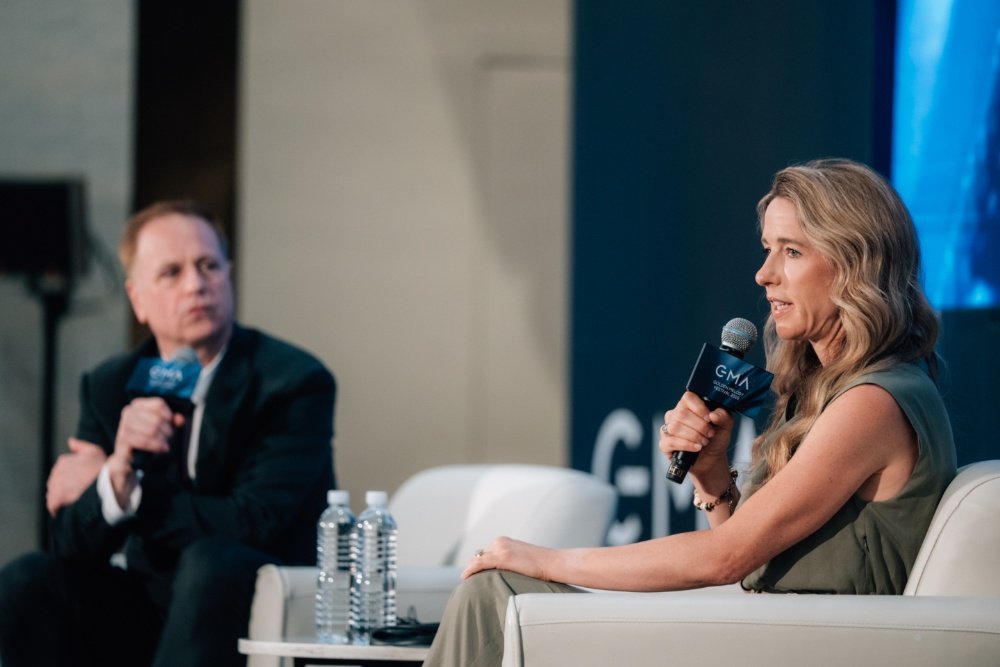
On the evening of 3 July 2026, inside a 300-year-old east-London church a short walk from the markets of Brick Lane, an audience sat through a programme that had no precedent in the venue's record book. Four living composers — Kate Moore, Alice Yeung, Seung-Won Oh and Sara Zamboni — had each been handed a season of Ali Smith's Seasonal Quartet, and told to write back. The result, performed by the New European Ensemble and reviewed for The Guardian's culture desk, ran the length of a concert and was, in the reviewer's word, "ravishing" — harmonies and interplay so tightly woven to the source texts that the boundary between poem and score appeared, briefly, to dissolve.
That a London festival in 2026 would commission classical music in response to a contemporary novel is unusual; that it would build the commission around one writer's four-book cycle is rarer still. Spitalfields, an institution better known for reviving Baroque curiosity than for chasing the literary novel, has spent several seasons quietly positioning itself as a laboratory for that kind of cross-form work. The Ali Smith project is its most explicit argument yet that literature can function as structural blueprint, not merely thematic backdrop.
How a novel becomes a score
Each composer drew from a different volume of the quartet — Autumn, Winter, Spring, Summer — and the result, as the Guardian reviewer noted, was four pieces that "connected" rather than merely accompanied. The mechanics were specific. Moore's contribution pulled on Smith's recurring image of late-autumn light stretched thin across a national landscape; Yeung took the colder interior weather of Winter and wrote for an ensemble whose players were asked to listen across the stage, not at each other. Oh's piece, responding to Spring, treated the season's anaphoric structure — Smith's deliberate repetitions — as a model for a slow build of identical motifs at increasing density. Zamboni's Summer closed the programme with the loosest, most lyric writing of the four, an explicit inversion of the quartet's seasonal intensification.
The Guardian account does not name every performer or specify the work's duration, and the festival has not, as of the Guardian review, published a complete composer statement set. What the review does establish is that the response pieces were written — not arranged, not orchestrated from existing material — and that the New European Ensemble, a chamber group long associated with the festival's contemporary strand, treated the commission as score-first rather than illustration-first. That distinction matters. Too often, classical music's engagements with literature tilt towards the descriptive: the cellos play a river, the violins a war. Here, according to the Guardian's account, the composers absorbed a structural problem from each book and then answered it on their own terms.
Why Spitalfields, and why now
Spitalfields' programming in recent seasons has tilted toward smaller, composer-led projects that pair living writers with living musicians. The Ali Smith commission is the clearest expression of that editorial turn. In a London classical calendar still dominated by the larger institutional venues — Wigmore, the Barbican, the Southbank — Spitalfields has chosen the other fork: shorter runs, fewer commissions per season, each one allowed to take the time it needs.
There is, of course, an alternative reading. Festivals that commission cross-form work are vulnerable to the criticism that the literary hook is a marketing veneer — a familiar name on a poster, the music underneath only loosely attached. The Guardian reviewer did not let the festival off on that point. Their account is careful to flag where the connections between book and score held up under listening, and where they read more like programme-note piety than audible structure. The critical posture is the right one. A serious contemporary-classical culture cannot afford to treat a writer's reputation as sufficient justification for an evening's programme.
That the project landed, on the reviewer's reading, suggests something about Smith's Seasonal Quartet itself. The books are formally restless, full of rhetorical looping, digressive dialogue and a determined refusal to settle into conventional scene-and-chapter architecture. That restlessness, more than any single image, may be what the composers heard. Each responded less to Smith's subjects — Brexit Britain, migration, climate — than to her method.
The structural argument underneath
The deeper question the festival is asking is whether the long-standing divide between the literary and the classical audiences in Britain can be closed, or at least narrowed, by deliberate programming. The conventional picture is two solitudes: readers of contemporary fiction, listeners of contemporary classical music, the two audiences overlapping only at the institutional margins. Spitalfields is betting, with this commission, that the overlap can be expanded — and that the work that produces it will hold up under the scrutiny of either audience on its own terms.
There are reasonable doubts. Contemporary classical music in Britain has lost roughly a third of its regular concert-going audience over the past decade and a half, according to industry reporting that the Guardian and other outlets have periodically cited. Audience-development strategies that hinge on a single living novelist are fragile. But the data point the festival can claim is the simpler one: a Spitalfields programme in July 2026 sold on the strength of a novelist's name, and the Guardian's reviewer judged the music strong enough to be ravishing in its own right. That is more than most cross-form commissions can say.
The counter-frame matters here. A sceptical reader could note that literary-classical crossover in Britain has a long, mixed history — settings of Tennyson, Britten's War Requiem, Tippett's A Child of Our Time — and that the prestige of those projects often obscured uneven musical results. The Smith commission is not immune to that pattern. The Guardian review credits the composers with making the cross-form bet work, but it is one review, one evening, one project.
Stakes and what to watch
The festival has signalled, in its recent programming notes, that the Ali Smith project is meant to function as a model — a template for further literary commissions rather than a one-off curiosity. If that institutional commitment holds, the more interesting question is which novelists, and which kinds of writing, get the next invitation. Smith's quartet is openly political in a way some of her peers' work is not; the festival's editorial judgment will be tested the moment it commissions a writer whose formal methods are quieter, less obviously suited to musical adaptation.
There is also the question of where this work travels. Spitalfields sits within London's well-developed contemporary-classical infrastructure — Wigmore and the Barbican are short Tube rides away — and a commission that stays in one venue risks becoming a curatorial in-joke. Festival directors in Edinburgh, Aldeburgh, and across the European continent will be watching how this programme ages before booking it for their own stages.
What the sources do not specify, and what this publication cannot resolve from a single review, is whether the audience that turned up at Spitalfields on 3 July 2026 will return for the festival's next literary commission without the Smith name on the marquee. That is the experiment the festival has set itself, and the data on it will take several seasons to come in. For now, the simpler record stands: four composers, one novelist, one ensemble, and an evening in east London where the music, on the reviewer's account, was good enough to stand on its own.
Desk note: Monexus framed this as a story about editorial programming — what a festival's commissioning choices say about contemporary classical music's relationship to literature — rather than as a recital review. The Guardian's piece is the sole source we read for the commission; structural arguments about audience overlap and the literature-classical crossover tradition are drawn from prior coverage of those debates in mainstream outlets.