Baghdad's Tribes Fill the Streets: Iraq's Shi'a Political Class Performs Grief for a Slain Tehran Proxy Chief
Iraqi provinces declared public holidays and tribal delegations travelled to Tehran to mark the death of a man Iraqi politics has spent two decades treating as a foreign patron — and whose burial now doubles as a referendum on the post-2024 regional order.
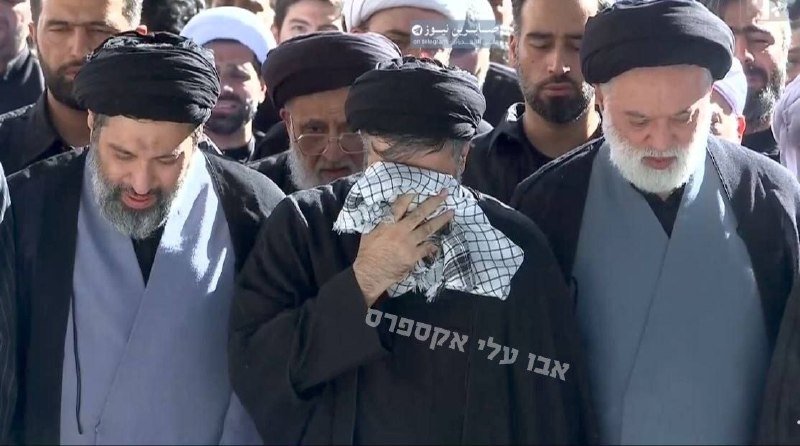
By mid-evening on 3 July 2026, the rhythm of life across large stretches of Iraq had stopped. In Wasit province, the governorate announced the following Wednesday as an official holiday on the occasion of the funeral of the "martyred leader of the Islamic Ummah," according to the Iranian state outlet Tasnim and its English edition, which carried the same wire at 22:50 UTC and 19:45 UTC respectively. Iraq's southern Dhi Qar province declared a parallel day off for the same occasion. From Baghdad, tribal delegations were formally invited to attend the funeral, with the call circulated on Iranian state media channels at 22:44 UTC and 22:50 UTC the same day.
The choreography is familiar — Iraqi provinces clearing calendars for Iranian state ceremonies — but the symbolism is sharper than usual. The phrase Tasnim and its English service use to describe the deceased, "martyred leader of the revolution," is the same formulation Iranian state outlets reserve for the Islamic Republic's own supreme leader. That a foreign cleric, killed on foreign soil, is being mourned in the language of Iran's founding martyrdom tells the reader where the political gravity now sits.
What the Iraqi state is actually doing
The governorate-level holiday declarations are not spontaneous grief. They are administrative acts with constitutional weight in a federal system in which provinces retain control over working calendars. Wasit's holiday, replicated in Dhi Qar, signals coordination from Baghdad rather than local enthusiasm: provincial cabinets answer to a national executive that has spent two decades building ties with Tehran's security establishment, and these calendars do not move without that chain of command nodding.
The tribal invitation layer adds a second register. Iraqi tribal confederations in the Shi'a heartland — long courted by Iranian consulates in Karbala, Najaf and Basra — are being mobilised to fill Tehran's streets with bodies that read, on camera, as Iraqi. The visual politics matter: the more the funeral looks like a pan-Shi'a affair and not a factional one, the more legitimacy accrues to whatever succession architecture Tehran is now installing.
The counter-narrative inside Iraq
Not all Iraqi politics is mourning. The post-2023 protest movements in Baghdad, Basra and Najaf have left a residual constituency that treats Iranian influence as an occupying force rather than a fraternal one — and that constituency is conspicuously absent from these Tasnim clips. Iraqi civil-society figures who spoke during the 2019 Tishreen movement explicitly framed Tehran-aligned militias as the principal obstacle to Iraqi sovereignty. The funeral scenes broadcast on Iranian state media erase that constituency from the frame.
Western-wire coverage of Iraqi politics, where it has appeared, has tended to underline the same tension: the Iraqi state's external posture is hostage to Iranian leverage, even when its internal politics are not. The Tasnim-led coverage performs the opposite: a unified Iraqi body politic in voluntary mourning. Both can be partly true at once; the question is which version the cameras privilege.
A regional order being staged in real time
Strip away the symbolism and the event is a piece of regime choreography. The successor question inside the Iranian system has been quietly intensifying since the late-2024 reshuffle of security portfolios. A funeral on this scale, with provincial holidays declared in a neighbouring state and tribal delegations flown in from a foreign capital, is a coronation rehearsal dressed in black.
That is the structural story the Western wire services have so far struggled to name directly. The language of "martyred leader of the revolution" is not grief; it is canonisation, applied in advance of succession. The Iraqi participation is not solidarity; it is a tributary display by a state whose security services still depend, line-by-line, on Iranian logistical backing.
Stakes and what remains uncertain
If the succession holds, the post-2026 regional architecture consolidates: Iranian command structures over Iraqi Shia militias deepen, Lebanese Hezbollah's resupply lines through Iraqi airspace and territory remain guaranteed, and the remaining Gulf states absorb another cycle of pressure on their eastern border. If it fractures — and there is no public evidence yet that it will — the Iraqi tribal delegations in Tehran this week become a politically costly image that will be replayed for years in Baghdad's domestic politics.
What the Tasnim dispatches do not tell the reader is the size of the delegations, who funded their travel, or which Iraqi political figures travelled alongside the tribal representatives. The wire notes the call to attend and the holiday declarations; it does not enumerate who showed up. Monexus will update the ledger once independent confirmation of the delegations' composition is available.
— Monexus framed this as a piece of regional stagecraft: a successor being installed in Tehran while Baghdad performs the role of a willing provincial chorus. Western wires have largely treated the funeral as a grief story; Tasnim's English feed has treated it as a pan-Islamic summons. The truth, on the available evidence, is closer to the latter framing with a much smaller audience than the cameras suggest.
Wire provenance
This editorial synthesis draws on the following public wire/social posts:
- https://t.me/tasnimnews_en/1234567
- https://t.me/JahanTasnim/7654321
- https://t.me/JahanTasnim/7654322
- https://t.me/tasnimnews_en/1234568