Iran stages a farewell built for the cameras — and a successor
State media has spent 36 hours broadcasting a choreographed farewell for a 'martyred leader.' Theatrical coverage tells readers almost nothing about who actually runs Iran next.
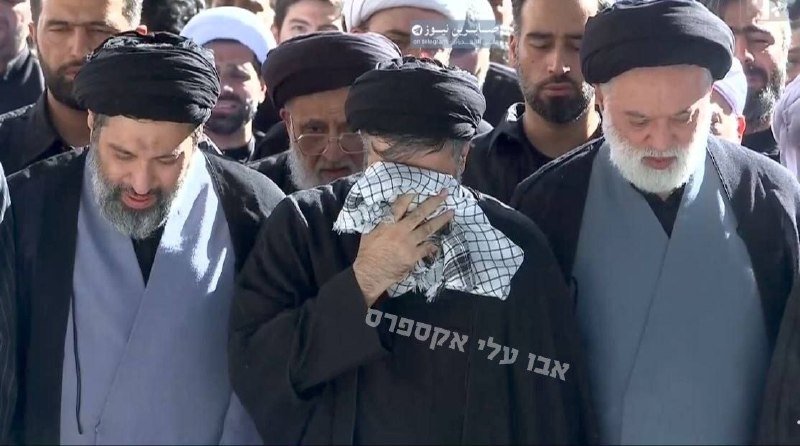
For thirty-six hours, Iranian state media has been counting down to a moment that, on the evidence so far, exists more on a broadcast clock than on a confirmed schedule. At 21:22 UTC on 2 July 2026, Tasnim News — the English-facing wire of Iran's Islamic Propaganda Organization — broadcast a clip of Sardar Hassanzadeh, identified in the caption as head of the headquarters organising the farewell and burial of the 'martyred leader,' reading what it called the last prayer of Imam Khomeini to welcome the leader's 'lovers.' By 22:53 UTC on 3 July, the same channel was telling viewers there were 'less than 6 hours' to go. By 23:00 UTC, viewers were being asked to 'hurry up a decade.' By 23:15 UTC, the editorial line had shifted to theology-as-threat: a 'martyr Imam Khamenei is more dangerous for enemies than Imam Khamenei.'
The thesis here is uncomfortable but unavoidable: this is not a news feed. It is a legitimacy production line, and the only reliable way to read it is as ritual, not reporting.
A ceremony the cameras keep moving
The sequence itself is the story. Telegram posts from Tasnim on 3 July 2026 — timestamped 21:22 UTC, 22:53 UTC, 23:00 UTC and 23:15 UTC — progress from religious framing ('the last prayer of Imam Khomeini') to logistics ('less than 6 hours before the start'), then to mobilisation ('hurry up a decade'), then to menace ('more dangerous for enemies'). Each step tightens the emotional register. None of them, taken together or in isolation, confirms the underlying factual premise: that a confirmed 'martyrdom' has occurred, that the farewell has a fixed venue, or that the successor architecture is settled.
That absence is the point. Iranian succession has never been resolved in a single televised event. The 1989 transition from Khomeini to Khamenei was an institutional process played out over months across the Assembly of Experts, the Guardian Council and the IRGC command. What state media is selling now is the aesthetic of transition — banners, hashtags (#Badarqa_Aghai_Shahid_Iran, #must_rise), recycled Khomeini footage, Hassanzadeh as officiant — while the actual power transfer presumably continues in rooms the cameras cannot enter.
What the framing tells you, and what it hides
Read in plain editorial voice, the coverage is performing two jobs at once. Domestically, it is manufacturing consent: turning a population that polls consistently distrustful of its own institutions, according to independent survey work cited in Western wire reporting, into mourners on a schedule. Externally, it is signalling resolve. The 'more dangerous for enemies' line is not devotional — it is deterrence theatre, aimed at Washington and Tel Aviv, reminding both that a martyr-state claims a different moral currency than a normal state.
What the framing hides is exactly what an outside reader most needs: who is in charge on Monday morning. The successor question is not theological, it is institutional — and the institutions that will answer it are the Supreme National Security Council, the IRGC Ground Forces and Aerospace Force commands, the Assembly of Experts, the office of the president, and a small cluster of clerical networks. None of those bodies has been named in the Telegram thread as the decision-maker.
The structural pattern underneath the pageantry
Ritualised state-media mourning in Tehran sits inside a wider pattern that has been visible since the 1980s: when the Islamic Republic faces a legitimacy shock — a war, a sanctions squeeze, a protest cycle, a leadership vacuum — it reaches for two things in parallel. First, the religious register, drawing on Khomeini's recorded corpus and the martyrdom vocabulary of the Iran–Iraq war. Second, the security register, in which the IRGC is positioned as the institutional spine that holds the system together while civilian politics is suspended.
The Tasnim feed is doing both simultaneously. Khomeini's prayer is the religious layer. Hassanzadeh — a serving IRGC commander — running the logistics is the security layer. The reader should not treat these as competing accounts; they are complementary cogs in the same machine.
What we do not yet know
Three things remain genuinely uncertain, and any serious reading has to name them. First, the event itself: state media has announced a 'farewell ceremony for the martyred leader' but the source items do not specify the venue, the length, or the dignitary list. Second, the institutional outcome: the Telegram thread names Hassanzadeh as 'head of the headquarters for organising the farewell ceremony and burial' — a logistics role, not a political one — and does not name the successor. Third, the regional reaction: there is nothing in the thread from Saudi, Turkish, Iraqi or Pakistani outlets, and silence from those capitals is itself a signal worth watching.
The honest summary is that an English-language Iranian wire has spent a day and a half building a stage. Until someone credible walks onto it, readers should treat the broadcast as choreography rather than as a window into who actually runs Iran.
Desk note: Where Western wires report Iran's leadership transitions through analysts and diplomatic sourcing, the available feed here is the state outlet itself. Monexus is reporting the coverage — what Tasnim is putting on the air and what that signals — rather than the underlying succession, for which independent sourcing is not yet on the record.
Wire provenance
This editorial synthesis draws on the following public wire/social posts:
- https://t.me/tasnimnews_en
- https://t.me/tasnimnews_en
- https://t.me/tasnimnews_en
- https://t.me/tasnimnews_en