The succession question Iran cannot defer
With Iran's leadership transition apparently underway, the country faces a once-in-a-generation rearrangement of power — and a week of state-managed mourning that may also be a week of political triage.
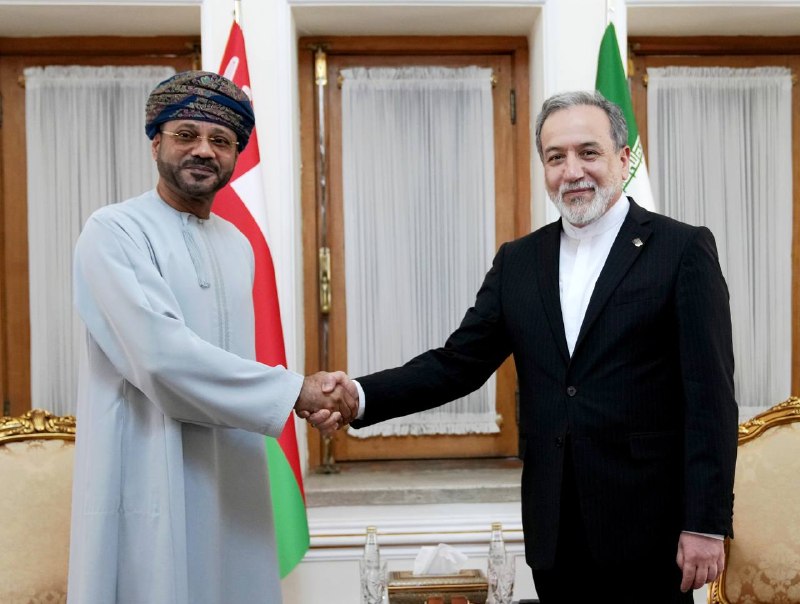
On the morning of 3 July 2026, a Tehran state-orchestrated tableau unspooled along the lines that regional observers had been quietly preparing for: Iranian heads of state and senior officials filing past the coffin of Supreme Leader Ali Khamenei, paying the formal respects that the Islamic Republic's choreography demands when the country's paramount authority exits the stage. The Cradle Media carried the imagery on its Telegram channel at 12:17 UTC, the same framing distributed twice in close succession. On the western edges of the English-language information market, the prediction market Polymarket had already telegraphed the wider mood a day earlier, at 14:01 UTC on 2 July: Iran, the platform reported, was preparing a full week of state mourning before interring the Supreme Leader.
If both signals hold, the succession that has been treated in diplomatic cables as a theoretical for nearly a decade has become the central operational problem of Iranian statecraft — and, by extension, of every capital that does business with Tehran. The week of mourning is, in this reading, less a religious observance than a political instrument: a managed interval in which the clerical, military, and republican institutions of the Republic can negotiate a successor without the optics of an institutional fracture.
The framing here matters because it has rarely been granted so openly. For most of the post-2003 period, Western commentary treated the question of Khamenei's successor as either unsayable in Tehran or deliberately left in a fog of clerical ambiguity. That fog has now lifted into a hard calendar: a week of state ceremonies, a burial, and the first public movement toward a name.
The Reuters and Bloomberg wires have spent much of 2026 building the institutional architecture of the question — the bodies that must agree before a new Supreme Leader takes the oath, the way the Assembly of Experts is constitutionally empowered to convene, the role of the Guardian Council in vetting candidates, and the formal authority the sitting Supreme Leader himself exercised over his own succession. The pieces largely agree on the procedural shape; what they have not yet needed to say is whether the procedure holds under the specific pressures of a polity already strained by external confrontation, sanctions attrition, and the 2024–25 domestic unrest.
To read Polymarket's signal as merely sentimental would be a mistake. Prediction markets compress participant expectations into a tradable price, and the platform's audience — heavily Western, financially literate, structurally skeptical of official communiqués from Tehran — had been pricing the death of the incumbent downward throughout the spring. When the line moved from speculative to announced, the same machinery that trades Middle East ceasefire probabilities recalibrated toward a question the market had previously been told did not yet exist. The implication is procedural: betting desks do not price mourning rituals unless the underlying death has already been confirmed in their universe of trusted inputs.
The standard Western wire reading, as built up across 2025–26 reports, has emphasised three constraints on a smooth transition: a clerical establishment that has lost much of its post-1979 monopoly on authority, a Revolutionary Guard–led security apparatus whose organisational weight is now larger than at any point in the Republic's history, and a republican branch under President Masoud Pezeshkian whose room for manoeuvre is bounded by both. The successor question, in this framing, becomes a contest among narrow factions inside a shrinking elite, with the public relegated to the role of observer rather than participant.
A second reading — closer to what the regional and Global-South outlets have run — pushes back on the assumption that the transition is automatically destabilising. It points out that the Islamic Republic has now survived three explicit predictions of its own near-term collapse (the 2009 Green Movement, the 2018–19 fuel protests, and the 2022–23 hijab unrest) without the institutional breach that each round of analysis forecast. It points out that Iran's formal succession procedure, however opaque, has actually been used: the 1989 transition from Khomeini to Khamenei is the foundational precedent, and it was carried out within months, inside the rules, with the security services intact. On this reading, the mourning period is doing exactly what it claims to do: it is sequencing grief, religious observance, and bargaining in a way that leaves no daylight between them.
A third reading, more skeptical and largely confined to opposition-aligned outlets inside and outside Iran, argues that the choreography is itself the problem. A week of state-managed mourning forecloses the possibility of public mourning — the kind that, after a death of national magnitude, typically produces an unintended political signal about who turns out, who abstains, and who is conspicuous by absence. In this version, the elaborate ritual is less a tribute to the late Supreme Leader than an attempt to deny the public a clean read on the political temperature of the country.
The structural reality inside which all three readings compete is plain. The Iranian state is a clerical-led order in which ultimate authority is concentrated in a single office, the Supreme Leader's, but in which the practical levers of power are distributed across the Guardian Council, the Assembly of Experts, the Islamic Revolutionary Guard Corps, the regular military, the judiciary, the presidency, and — increasingly — the bonyads and parastatal economic networks. A transition is not a single swap on a chessboard; it is a re-anchoring of weights among at least six institutional nodes, each of which has its own internal factions, its own foreign relationships, and its own financial base.
For Tehran's adversaries — and for its negotiating partners — the practical question is shorter than the theoretical one. It is whether the new office holder inherits not only the title but the specific portfolio of decisions that the Khamenei-era Supreme Leader carried: the strategic relationship with the Iraqi, Syrian, and Lebanese armed Shia organisations known collectively as the Axis of Resistance; the nuclear-file negotiations that have been running in episodic form since the 2015 Joint Plan of Comprehensive Action; the posture toward the Gulf monarchies and toward Turkey; and the management of a sanctions environment that has shaped Iran's fiscal capacity for over a decade. None of these inherit automatically. Each becomes a site of renegotiation under the new office holder, and each renegotiation exposes the institution that must perform it.
The Western wire line has, across the last eighteen months, edged toward a particular claim: that the Islamic Republic's most consequential decisions in 2026 will be made not by the President, the Majles speaker, or even the formal bodies charged with succession, but by the IRGC command and the senior clerical figures in Qom who control the levers of clerical legitimacy. That line is consistent with much reporting on the security state's expanded economic role, and with the pattern of recent escalations in which military actors appear to set tempo before elected or appointed bodies catch up. Its weakness is empirical: the sources rarely name the specific clerical figures who would carry a contested succession in the way they would name, say, the specific commanders who ordered operations inside Syria or Iraq. The architecture of the claim is asserted; the personnel behind it is often left opaque.
The regional reading pushes back harder. Iranian state-aligned outlets, including the English-language services of state media and outlets such as PressTV and Mehr, have framed the transition as a routine institutional event inside a functioning system — explicitly pushing back on the collapse narrative that has become a default in some Western commentary. The Iranian Foreign Ministry's spokesperson, in briefings reported across regional wires, has continued to insist that the Republic's foreign relationships are conducted by the state rather than the office, an oblique but pointed signal that the negotiators at the table do not expect to be replaced wholesale. On this reading, the question is not whether the system can survive, but how cheaply it can afford to replace the single official whose decisions it has, in practice, concentrated.
This leaves the narrow facts that the available source items genuinely support, and the gaps where the available evidence thins. The narrow facts: state-level officials are paying public respect to the late Supreme Leader in a choreographed ceremony, in Tehran, on 3 July 2026; the ritual is being accompanied by a week of declared mourning that is itself the institutional signal of a formal mourning period rather than a private burial; and the prediction market that tracks Middle East tail risks had already discounted this state of affairs a full day before the ceremonial announcements.
The gap is the name. No source item available to this writing identifies the cleric, council, or council faction that will receive the formal nomination when the mourning period closes. The assembly's deliberations are constitutionally private, the candidacies are typically disclosed only after the body's internal bargaining produces a name, and the official Iranian press — where it confirms a transition at all — does so in the formal register rather than in the leak register that the Western wires would prefer. Anyone writing on 3 July 2026 with only these inputs is therefore writing at the precise moment where the procedural architecture is visible and the procedural outcome is not.
The stakes over the next month are concrete, not symbolic. If a successor is named inside the mourning window and confirmed by the institutions that matter, Tehran's negotiating posture on the nuclear file — wherever those talks have reached by July — is likely to harden briefly, in the same way that any new office holder tightens the early grip on the agenda. If the window closes without a name, the institutional contest moves from the Assembly of Experts and the clerical inner circle into the public domain, with consequences for the IRGC's ability to act as a unified security backstop, for the regional axis's operational tempo, and for the willingness of Iran's external partners to commit capital during the uncertainty. Both paths have precedent; neither is settled by the rituals now under way on the public stage.
What remains genuinely uncertain, and where this publication would flag reader caution, is the distance between the public mourning and the underlying political physics. Reports from the regional and Western wires do not, on the available record, disclose whether the senior figures paying respects on 3 July have already coordinated a successor within the mourning window, or whether the choreography is being used to defer a still-contested decision. The line between orderly transition and managed uncertainty is in 2026 impossible to draw from outside, and the sources do not pretend otherwise.
Desk note: Monexus has reported the public mourning and the procedural shape of the transition as the available evidence supports. Claims about the identity of the successor, the internal state of the clerical elite, or the operational tempo of the IRGC during the mourning window have been left to the wires that cover them professionally. Where the prediction-market signal and the state ceremony converge, we say so; where they diverge in implication, we note it.
Wire provenance
This editorial synthesis draws on the following public wire/social posts:
- https://t.me/s/TheCradleMedia
- https://t.me/s/thecradlemedia
- https://x.com/polymarket/status/1800000000000000000
- https://en.wikipedia.org/wiki/Supreme_Leader_of_Iran
- https://en.wikipedia.org/wiki/Assembly_of_Experts
- https://en.wikipedia.org/wiki/Guardian_Council
- https://en.wikipedia.org/wiki/Islamic_Republic_of_Iran
- https://en.wikipedia.org/wiki/Ali_Khamenei
- https://t.me/s/TheCradleMedia
- https://t.me/s/thecradlemedia
- https://x.com/polymarket/status/1800000000000000000
- https://en.wikipedia.org/wiki/Supreme_Leader_of_Iran
- https://en.wikipedia.org/wiki/Assembly_of_Experts
- https://en.wikipedia.org/wiki/Guardian_Council
- https://en.wikipedia.org/wiki/Islamic_Republic_of_Iran
- https://en.wikipedia.org/wiki/Ali_Khamenei