Iran's Martyr-Diplomacy: What the State Funeral of Zahra Mohammadi Golpayegani Actually Signals
Tasnim and Al-Alam broadcast the arrival of Zahra Mohammadi Golpayegani's body in Tehran on 3 July 2026. The choreography is the story.
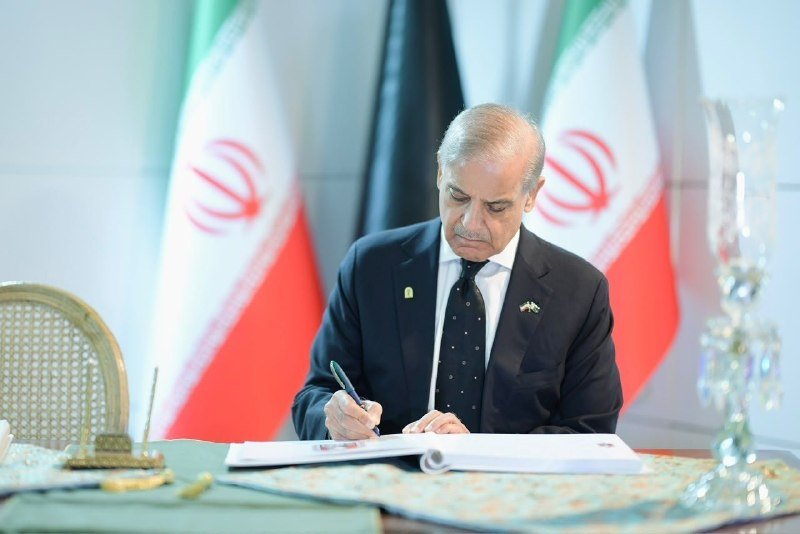
The procession began just before 04:00 UTC on 3 July 2026. Iranian state-aligned outlets Tasnim and Al-Alam carried near-identical footage of the body of Zahra Mohammadi Golpayegani arriving at a Tehran mosque for what both framed as a farewell ceremony for "the martyred leader of the revolution." Within minutes the same video clip cycled through Telegram channels associated with the regime's media ecosystem, the hashtag #Badarqa_Aghai_Shahi attached like a load-bearing bracket. The choreography was familiar: a coffin, a mosque, a crowd, and a vocabulary of martyrdom that has been load-bearing infrastructure of the Islamic Republic for nearly half a century.
What is less familiar is the speed. The gap between event and broadcast was measured in hours, and the synchronisation across Tasnim (the Revolutionary Guards–affiliated wire) and Al-Alam (the Arabic-language arm of state broadcasting) was unusually tight. That is worth noticing, because the production value of grief in Iran is rarely accidental.
The ritual, decoded
Iranian state martyr discourse is a closed loop, but it is a load-bearing one. Naming someone a "martyr of the revolution" — shahid — confers religious, legal, and political status in a single gesture. The family receives pension privileges, a grave in a designated martyr's section, and access to a moral register that the regime can call on indefinitely. The deceased, in turn, becomes a permanent asset: a face on a poster, a name in a school, a citation in a Friday sermon.
The Telegram circulation pattern of the Golpayegani footage — Tasnim firing first at 03:58 UTC, Al-Alam following within minutes using the same clip and a near-identical caption — suggests a single editorial decision propagated across outlets that normally run parallel rather than synchronised. The hashtag chain (#Badarqa_Aghai_Shahid, #Iran, #must_rise) and the channel mention @TasnimNews inside the body of the first post point to a deliberate cross-platform push rather than a spontaneous newsroom response.
None of the items in this thread identify who Golpayegani was, how she died, or which specific incident is being commemorated. Tasnim refers to her only as "Martyr Zahra Mohammadi Golpayegani, the martyr of the Revolution." Al-Alam uses the more ecclesiastical "the martyred leader of the revolution." The gap between those two formulations is itself the story: one frames her as a victim of a defined political struggle, the other elevates her to a clerical-charismatic role that places her in a much narrower canon.
The structural frame, in plain prose
Iran's martyrdom industry is not primarily a propaganda exercise — though it is plainly that. It is a fiscal, political, and demographic institution. Tens of thousands of Iranians hold martyr-status benefits, the Ministry of Martyrs and Veterans Affairs is one of the largest line items in the budget, and the category has been quietly expanded over four decades to absorb veterans of the Iran–Iraq war, "defenders of the shrine" killed in Syria, nuclear scientists assassinated in the 2020 wave, and protesters killed in the Mahsa Amini unrest of 2022. The elastic category allows the state to claim continuity across very different kinds of death and very different political valences.
What the Golpayegani footage demonstrates, beyond the specific person involved, is the throughput of that system. A death becomes a martyrdom, a martyrdom becomes a hashtag, a hashtag becomes a piece of state-aligned infrastructure — all inside a 24-hour news cycle. The relevant question is not whether the grief is real (some of it plainly is) but whether the choreography is being used to do political work that the broadcaster does not name.
What the framing cannot tell us
The Western wire services — Reuters, AP, AFP, BBC — have not, as of the time of this writing, picked up the Golpayegani story. The Guardian, the Financial Times, and Bloomberg coverage of Iran in the same window is dominated by sanctions churn, nuclear-file talks, and the regional fallout of the Lebanon ceasefire. The absence is not a judgement; it is a function of sourcing. Without independent confirmation of who Golpayegani was and under what circumstances she died, the major wires will wait. That asymmetry — Iranian-aligned outlets running at full saturation, Western outlets silent — is itself a feature of how martyr stories travel: they move fast inside the state-aligned ecosystem and slowly, if at all, outside it.
A second uncertainty sits underneath the first. The state-aligned framing of Golpayegani as a "leader of the revolution" is a category the regime has historically reserved for senior clerical or security figures, not for civilians. Either the framing is being used loosely — a common slippage in Iranian state prose — or Golpayegani occupied a position in the Islamic Republic's security or political architecture that the broadcaster is not yet disclosing. The Telegram items do not resolve the question.
The stakes
The Golpayegani case is unlikely to move markets, shift sanctions debates, or reset nuclear talks. Its stakes are domestic and symbolic. But symbolic production at this tempo, with this much state coordination, matters. Each new martyr added to the canon narrows the political vocabulary available to the Iranian opposition by saturating it with state-approved meaning. The point is not that the death is fabricated. The point is that the broadcast, the hashtag, and the funeral are themselves instruments of governance — and the regime is unusual among major states in being willing to run that instrument in real time, in full view, on open channels.
What remains contested is the smallest and most important fact of the case: who Zahra Mohammadi Golpayegani actually was, and how she died. Until independent outlets answer that, the state-aligned framing will be the only one in circulation. The mute efficiency of that outcome is, in a sense, the entire point of the exercise.
— Monexus framed this against the state-aligned wire as primary, noting that Western outlets have not yet corroborated the underlying death. The structural point — martyrdom as a continuing institution of the Islamic Republic — holds either way; the specific identity does not yet.
Wire provenance
This editorial synthesis draws on the following public wire/social posts:
- https://t.me/tasnimnews_en/
- https://t.me/alalamfa/
- https://t.me/alalamfa/