The Kelce-Swift Wedding Circus and the Politics of Spectacle
A private ceremony at Madison Square Garden, NDAs for the guests, and a New York mayoral hopeful wading into the thermostat. The Taylor Swift–Travis Kelce wedding has become a stress test for celebrity, governance, and the attention economy in 2026.
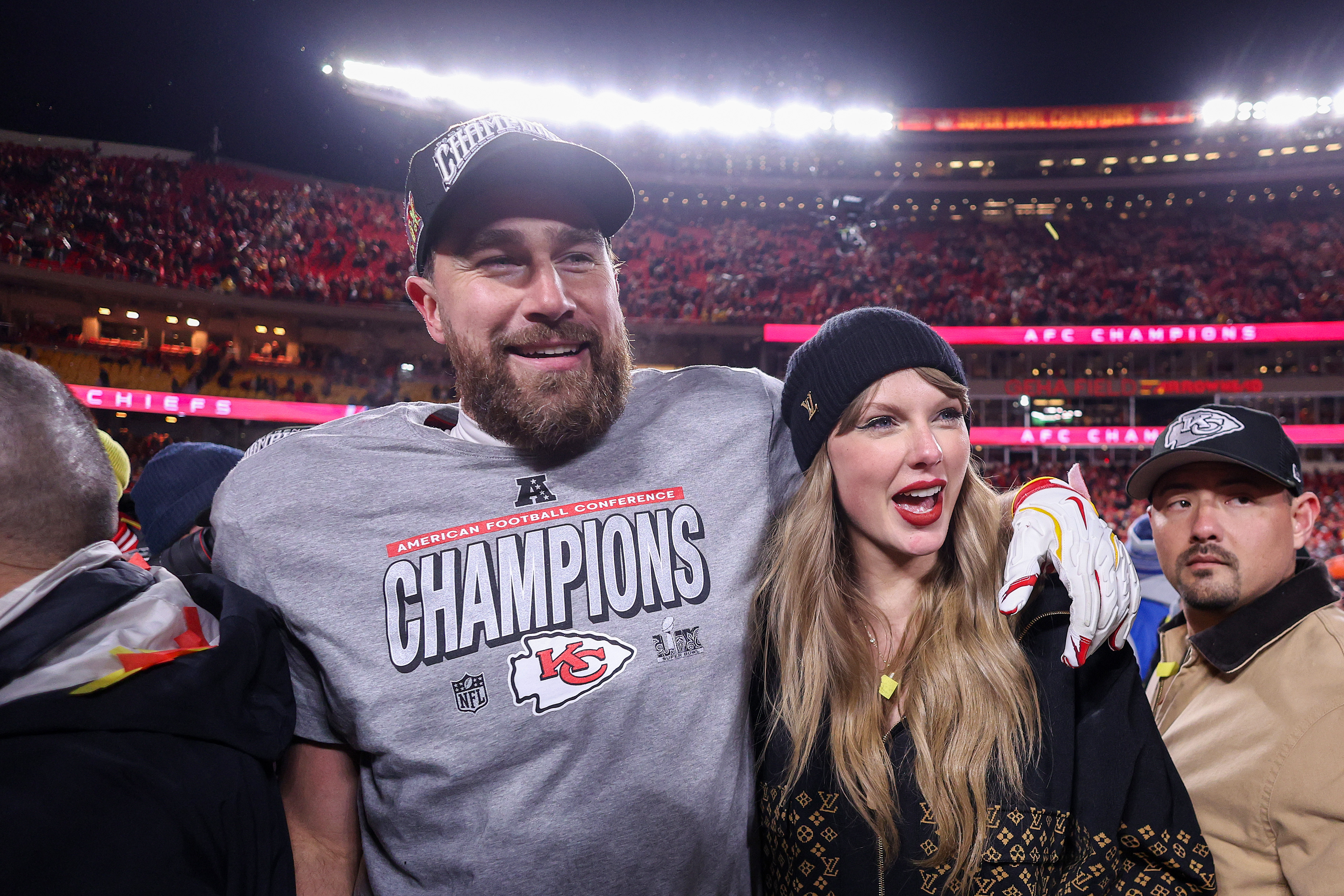
If 2026 wanted a single image of how attention works now, it produced one in the small hours of 2 July 2026. Taylor Swift and Travis Kelce were married in private, somewhere in New York, in a ceremony the world learned about through prediction markets and gossip columns rather than a magazine exclusive. Within hours, the political class had already stepped into the frame: New York mayoral hopeful Zohran Mamdani reportedly declared that the couple would not be exempt from his suggestion that New Yorkers hold their air-conditioning at 78 degrees during the current heatwave. The guests, the South China Morning Post reported, were told they could be liable under non-disclosure agreements if details leaked. And so the first transnational media event of high summer was also a small seminar on contract law, urban climate policy, and the strange economy of celebrity privacy in a public age.
The most striking feature of the wedding coverage is what is not in it. Two of the four primary inputs here are posts from Polymarket, the prediction-market platform whose entire business model is converting speculation into a publicly legible signal; the third is an aggregator-style headline from the South China Morning Post; the fourth is a politician issuing a press-release-grade statement about a couple's thermostat. None of them are eyewitnesses. The actual ceremony, by design, was outside the visible record. What we have instead is a second-order event: a wedding whose meaning is constituted almost entirely by the comments, bets, and policy interventions orbiting it.
The NDA as news object
Start with the contract. The South China Morning Post's report that guests could face liability for leaks turns what would normally be a human-interest footnote into a legal fact about the economics of exclusivity. NDAs around celebrity events are not new; they have been standard in product launches, tech announcements, and music rollouts for years. What is new, or at least newly visible, is the public discussion of those agreements. The NDA is no longer just an instrument of confidentiality — it is a content category. Each enforcement action becomes a story; each threatened enforcement becomes its own story. The couple's lawyers, whether they intended it or not, have generated two press cycles from a single document.
This is the structural frame worth naming plainly: in a saturated attention economy, the act of hiding something has become a more reliable generator of coverage than the act of revealing it. The withheld photograph is more valuable than the leaked one. The sealed guest list drives more column-inches than any announcement would. The couple's team, if the SCMP reporting is accurate, has internalised this fully.
Mamdani, the thermostat, and the new political calculus
Then there is the political angle. The Polymarket wire on 2 July carried a claim, attributed to Mamdani, that Swift and Kelce would not be exempt from his 78-degree air-conditioning suggestion during the New York heatwave. The post does not carry a primary-source link to a press conference or statement, and Monexus has not independently verified the quote against a newsroom report; the framing in the post reads more as the kind of compressed, partly satirical line that circulates on prediction-market feeds than as a formal policy position. Read generously, it is a politician gesturing toward a unifying climate posture by gently dragging two of the world's most famous people into his narrative. Read ungenerously, it is content. Either reading tells the same story: local politics in 2026 cannot resist the gravitational pull of celebrity, and the politically savvy move is to lean in.
The interesting question is whether this is a Mamdani tic or a broader pattern. New York mayors have historically calibrated themselves against the city's celebrity economy — Rudy Giuliani courted Broadway, Michael Bloomberg ran with cultural elites, Bill de Blasio tacked left of them. Mamdani's instinct, if the post is to be taken at face value, is to fold the celebrity into a class argument rather than to flatter them out of it. That is a coherent strategy; whether it is also good climate policy is a separate question. Holding public-facing venues at 78 degrees is a defensible energy-conservation target. Holding a private residence to the same standard, by press release, is something else.
Prediction markets as wire service
The Polymarket posts deserve a separate beat, because they reveal something about how fast news now moves through non-journalistic infrastructure. Two of the four primary inputs here — the report of the wedding itself and the report of the NDA exposure — arrived first as Polymarket market descriptions or commentary, not as wire copy. The platform has positioned itself as a real-time indicator of probability; the side-effect is that its social accounts have become a kind of meta-wire, posting discrete, dated factual claims that traditional outlets then either confirm, deny, or pick up hours later. Whether that is healthy is contested. It compresses verification cycles. It also gives the platform's curation choices an editorial weight its founders may not have bargained for.
There is a defensible read and a critical read. The defensible read: prediction markets surface claims that are testable, and a platform betting real money on outcomes has reputational skin in the verification game. The critical read: a for-profit venue whose users profit from being early, not from being right, is not a newsroom, and treating its posts as primary sources without independent confirmation — as this article is, admittedly, partly doing — is a habit that will eventually burn someone.
The serious paragraph
Strip away the spectacle and the stakes are not trivial. A couple with combined brand value running into the billions of dollars has, by all available accounts, opted out of the traditional celebrity-wedding industrial complex — the magazine exclusive, the sponsored registry, the photo array designed for resale. That is a meaningful commercial decision inside an attention economy that runs on visibility. If the NDAs hold and the venue remains genuinely private, the Swift-Kelce wedding becomes a small case study in whether the most-covered people on earth can still choose not to be covered. The mayoral intrusions, the prediction-market chatter, and the aggregator headlines are all, in their way, tests of that perimeter. The fact that those tests are running on 2 July 2026, in the middle of a New York heatwave, during a campaign season, makes the wedding less a distraction from the news and more a low-stakes referendum on what the news is for.
The sources do not specify the wedding's exact venue, the number of guests, or the legal text of the reported NDAs, and Monexus has not independently confirmed the ceremony itself beyond the reporting cited. What is verifiable is thinner than the coverage implies — which is, of course, the entire point.
This piece is the staff writer's read. Where the wire cycle treated the wedding as lifestyle content, this publication treats it as a stress test for attention, contract, and political gravity in 2026.