Hamas and Islamic Jihad Delegations Pay Respects at Khamenei's Funeral in Tehran
Senior delegations from Hamas and Palestinian Islamic Jihad travelled to Tehran on 3 July 2026 to pay respects to the late Supreme Leader, signalling continuity in Iran's patron-client ties with Palestinian armed factions.
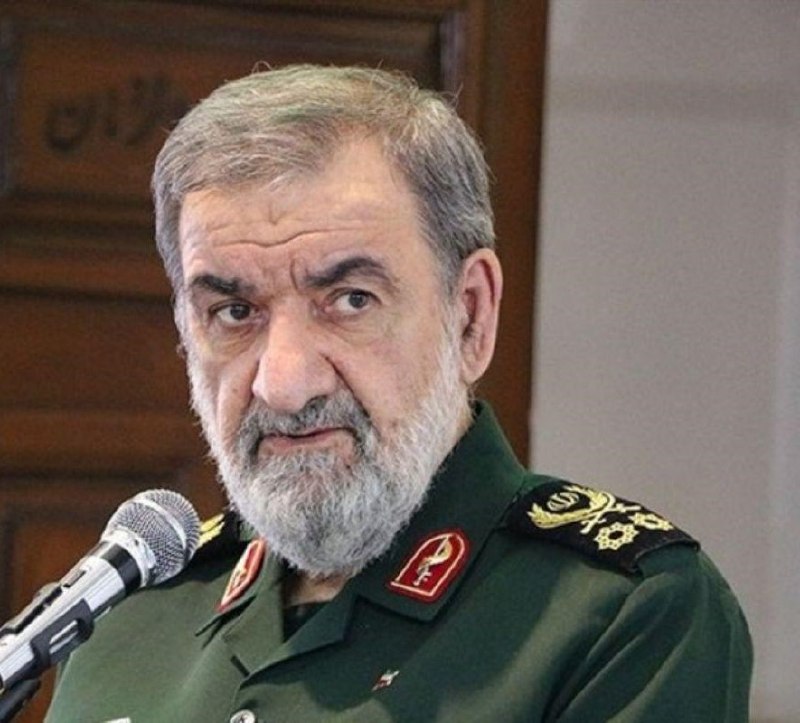
Senior figures from Hamas and Palestinian Islamic Jihad arrived in Tehran on 3 July 2026 to pay their respects to the late Supreme Leader, Ayatollah Ali Khamenei, whose funeral procession drew a wide cast of Axis-of-Resistance delegations to the Iranian capital. The presence of both groups, broadcast on Iranian state-aligned Telegram channels, underscores how thoroughly the Islamic Republic institutionalised its relationships with Palestinian armed factions over four decades — and how the choreographed grief of the present moment doubles as a signalling exercise about what comes next.
The delegations are not mourners in any private sense. They are political actors converging on a moment of transition, and their public choreography — walking past the casket, appearing on Iranian state media, releasing statements of loyalty to the "martyred Leader of the Islamic Ummah" — is intended to be read by audiences in Gaza, the West Bank, Beirut and the Iraqi Shia heartland. The images are part of a message: Iran's relationship with the Palestinian armed factions is structural, not personal to one Supreme Leader.
A Hamas delegation in Tehran
The English-language channel of the office of the Supreme Leader reported at 14:29 UTC on 3 July 2026 that "a delegation of leaders of the Palestinian Islamic Resistance Movement (Hamas) paid their respects to the pure body of the martyred Leader." The same post framed the visit in religious-political register, identifying Khamenei as "Grand Ayatollah Imam Sayyid Ali Hosseini Khamenei" and describing the body as that of the "martyred Leader of the Islamic Ummah." The language matters: it is the same register Tehran has used for senior figures it considers fallen in the cause, and the choice to use it for a sitting Supreme Leader signals the kind of status Iranian doctrine reserves for those it places in a line of sacred authority.
Hamas's relationship with Tehran is older than the current generation of the movement's leadership and older than the 7 October 2023 attacks that reshaped the region's politics. The organisational, financial and training ties that connect Hamas's military wing to Iran's Islamic Revolutionary Guard Corps have been documented by Western, Israeli and Gulf-based researchers for years, including in indictments handed down in U.S. federal courts and in Israeli security service briefings. None of that previous reporting is in this article's source set; the relevant fact for the present story is that the relationship was visible at the funeral in plain view, with both sides choosing to make it visible.
Al-Nakhalah surfaces after months out of view
The more striking item in the day's social-media traffic was the reappearance of Ziyad al-Nakhalah, the Secretary-General of Palestinian Islamic Jihad, who was reported at 13:42 UTC by the English-language Abu Ali Express channel to have "emerged from his hiding place" to lead his movement's delegation. The same point was made on the official Khamenei Telegram channel in Arabic at 13:31 UTC, which described al-Nakhalah as arriving at the farewell hall to pay respects to the "martyred leader of the nation." The Khamenei English channel corroborated the visit at 14:27 UTC, with a second item noting that al-Nakhalah had "paid his respects to the pure body of the martyred Leader of the Islamic Ummah."
The convergence of these posts within roughly an hour is itself a signal. Telegram channels run by Iranian state-aligned media are not typically given to redundant reporting on the same visitor unless the optics of the visit are considered important. A senior Palestinian armed-faction leader surfacing publicly after months of reported seclusion, and being given prominent placement in the funeral coverage, is the kind of information the Iranian state wants to distribute quickly and widely.
Why the delegations travelled
The decision by both Hamas and Islamic Jihad to send senior delegations to Tehran, and to allow those delegations to be photographed and named on Iranian state channels, is best read as a continuation of patronage, not a fresh commitment. The Islamic Republic's support for Palestinian armed factions has been a fixed feature of its regional posture since the early 1990s, and that posture has outlived the personal preferences of the officeholder. What the funeral is producing, in operational terms, is a re-statement of that posture in front of two audiences: domestic Iranian audiences, who are being shown a leader whose tenure ended in martyrdom rather than retreat, and audiences in the Palestinian territories and the wider region, who are being shown that the network survived its patron.
Qasem Al-Yasari, chairman of the Karbala provincial council, framed the funeral procession for Khamenei.ir in an interview carried on the Khamenei English channel at 13:40 UTC. The interview was used by the channel to push back against any reading of the funeral as a moment of Iranian weakness, emphasising the geographic spread of mourning rituals across Shia-majority Iraqi provinces. Karbala is one of the holiest cities in Shia Islam, and the choice to lead with an Iraqi provincial official on the day Palestinian delegations are arriving is a reminder that Iran's coalition is regional rather than narrowly Palestinian.
What remains uncertain
The day's coverage is consistent across Iranian state channels and the channels sympathetic to them, but it is one-sided by construction. The Telegram sources are not neutral observers; they are the official and semi-official mouthpieces of a state actor, and the editorial decisions about who gets named, in what order, and with what framing are themselves policy choices. Read the items together and the framing is uniform: the late Supreme Leader is a martyr, the delegations honour him as such, and the relationships he built are intact. The question of which Hamas and Islamic Jihad figures travelled, what they carried in terms of messages to Iran's new leadership, and what operational guarantees, if any, were discussed on the margins of the funeral is not visible in the Telegram traffic. That information is likely to surface in later reporting, if at all, from outlets that have access to the delegations themselves or to the relevant security services on either side.
The other open question is succession. Iran's new Supreme Leader has not been identified by name in the public Telegram sources used for this article, and the choreography of the funeral, with the title of the officeholder preserved intact, is doing work in keeping that question out of frame. Palestinian armed factions have, historically, adapted to Iranian leadership transitions. The visit of these delegations, at this moment, is the kind of event that gets read in hindsight as either continuity maintained or continuity tested, depending on what the next year of regional politics produces.
Stakes and forward view
For Hamas and Islamic Jihad, the practical question after the funeral is the same one they have been working through since late 2023: whether the regional network that has historically supplied them with weapons, training, training facilities, money and diplomatic cover retains its coherence under new Iranian management. The public answer on 3 July 2026 is yes, in the form of senior delegations on the ground in Tehran. The private answer — what those delegations were told behind closed doors, and what the next year's flow of materiel looks like — is not in this article's sources, and reasonable readers should be careful to distinguish what the day's pictures prove from what they are designed to imply.
For the wider region, the funeral is a waypoint. Israeli, Saudi, Emirati, Egyptian and Turkish policymakers will be reading the same Telegram feeds and drawing their own conclusions about the durability of the Iranian network, the calibre of the delegations that travelled, and the messages the choreography was designed to send. The delegations that arrived on 3 July are part of an answer those policymakers will be assessing for months.
Desk note: Monexus is reporting the funeral as a regional political event grounded in named-channel sourcing, with the framing of the late Supreme Leader drawn directly from the Iranian state-aligned channels that carried the coverage. Where Telegram sources name a delegation, this article treats the visit as confirmed. Where the sources do not specify who travelled, what was discussed, or what the new Supreme Leader's posture will be, the article says so plainly rather than filling the gap with speculation.
Wire provenance
This editorial synthesis draws on the following public wire/social posts:
- https://t.me/Khamenei_en
- https://t.me/Khamenei_en
- https://t.me/englishabuali
- https://t.me/Khamenei_en
- https://t.me/Khamenei_arabi