Death as doctrine: Tehran's posthumous cult-builḍing and what it tells us about succession
A state-aligned Telegram channel is already calling him 'martyr.' That word does political work long before the succession question is formally settled — and the rest of us should read the framing closely.
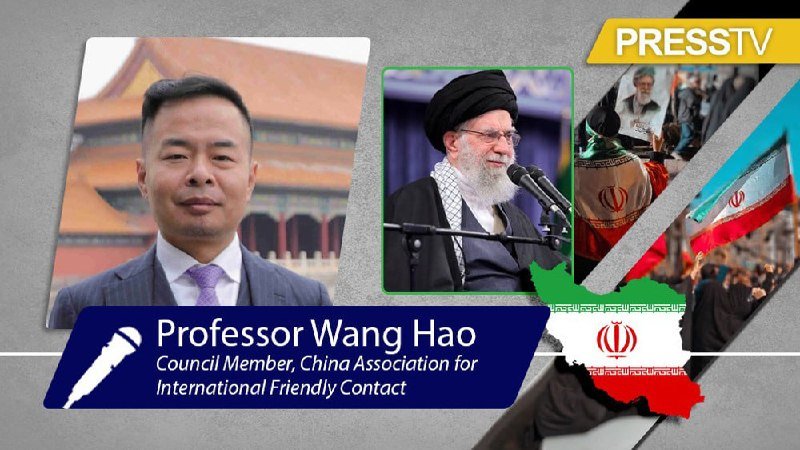
On the evening of 3 July 2026, the Telegram channel associated with the office of Ayatollah Seyyed Ali Khamenei began broadcasting a coordinated, multilingual rollout. The hook was simple and unmissable: a worldwide "we learned from him" campaign, repeated in near-identical posts at 23:20, 23:21 and 23:25 UTC, framing the Supreme Leader of Iran as a martyr and listing the qualities readers are meant to inherit — faith, greatness, justice, resistance, the defence of the oppressed, and a project the channel calls "awakening." The repetition is the point. The word "martyr" is the point. Everything else is staging.
The pitch is not a tribute. It is doctrine under construction. Naming a living head of state a martyr before the body is in the ground performs a specific political operation: it converts a mortal leader into a permanent moral reference point, forecloses certain kinds of criticism as sacrilege, and — most consequentially — begins the transfer of personal authority into institutional charisma before any succession question becomes formally live. The campaign launched in 2026 is best read as long-lead succession choreography.
The word 'martyr' is doing political work
In political-theology terms, martyrdom is the strongest currency a movement possesses: it survives the death of the body that earned it. A leader defined as a martyr is a leader whose judgments cannot easily be revisited, whose reading of the faith becomes the reading of the faith, and whose successor is measured against an impossible yardstick by design. The Telegram posts do not name a successor; they name a standard.
This is not an Iranian curiosity. It is a recognisable pattern in movements that have to manage a leadership transition under external pressure and internal factional pressure simultaneously. The institutional centre pre-positions the moral vocabulary so that, when the transition comes, the choice is constrained to whoever can plausibly personify the inherited martyr-father's virtues. Consider how Khomeini's framing shaped who could credibly wear the mantle in 1989. The current campaign is the same operation, run earlier in the news cycle than outsiders expected.
Why now? Reading the timing
Several pressures are converging. Iran is operating under sustained sanctions, with the rial under recurring stress and a regional posture that has cost the Islamic Republic direct confrontations in the past year. Hardline-aligned outlets have spent months arguing that the regime's resilience is a function of ideological cohesion, not institutional capacity — and that any post-Khamenei transition must therefore preserve that cohesion above all else. A martyr-frame guarantees that the eventual assembly of experts will be choosing a custodian of a legacy, not a strategist with a competing vision.
There is also a factional incentive. Khamenei's successor will be chosen, in practice, by a small circle around the Supreme Leader's office, vetted through the Assembly of Experts and security institutions whose deliberations are not public. Whoever controls the affective vocabulary around the transition controls the constraints under which that council deliberates. Running a we-learned-from-him campaign through channels with global reach — the Telegram feed reads in Russian and English as much as Persian — is a way of telling every potential successor, Iranian and diaspora alike, that the cost of deviating from the inherited line is not merely political but spiritual.
What the counter-read would say
A skeptic would argue this is standard kit for autocratising systems: heroic iconography, posthumous framing, the projection of eternity onto a mortal office. By that read, the martyr designation has lost most of its ideological specificity and is functioning as a stabiliser — a reminder to the diaspora, to the street, and to the security services that the system has continuity and that continuity has a moral grammar. In that framing, the campaign is less about Khamenei than about the institutions that must outlast him, and the campaign's global reach is less theology than brand maintenance.
That reading is not wrong so much as incomplete. The harder question is what happens if Khamenei dies during a period in which the successor institutions are themselves under strain — sanctions biting, regional partners recalculating, the assembly's legitimacy contested. A martyr-frame is robust in calm weather and brittle in storms; it forecloses compromise precisely at the moment when compromise is most likely to be available.
The stakes, plainly
If the framing takes — if martyrdom becomes the dominant register through which Iranian conservatives process the transition — then the successor inherits a mandate to refuse accommodation, accept economic pain as test rather than cost, and treat external pressure as further proof of righteousness. The Iranian public, whose tolerance for ideological certainty is not unlimited and whose economic grievances have surfaced repeatedly since 2017, will be asked to underwrite a posture priced in the rial. The United States and its Gulf partners, watching the framing settle, will read it as confirmation that the diplomatic runway is shorter than hoped. Europe, still bargaining for nuclear restraint, will find that its interlocutors on the Iranian side cannot afford to bend without first answering to a martyr's shadow.
And that is the structural point. Succession is rarely just a personnel question in systems built on personal authority. The vocabulary around the succession is the succession — or at least the constraints inside which it will be resolved. When a state-aligned channel starts using the word martyr for a living man, it is not reporting news. It is setting the terms under which future news will be made.
Desk note: Monexus framed this as a leadership-succession story and read the Telegram rollout as deliberate choreography rather than tributes, in line with our standing practice of treating Iran-regime-aligned messaging as signal rather than noise, but as a signal that has to be decoded, not relayed.
Wire provenance
This editorial synthesis draws on the following public wire/social posts:
- https://t.me/Khamenei_ru/
- https://t.me/Khamenei_ru/
- https://t.me/Khamenei_ru/