When the battlefield doubles as a bargaining chip: reading Moscow's July strikes
Moscow's massed drone-and-missile barrage on Kyiv in the small hours of 3 July reads less like a battlefield operation than a signal — and Western capitals should stop pretending the two are separable.
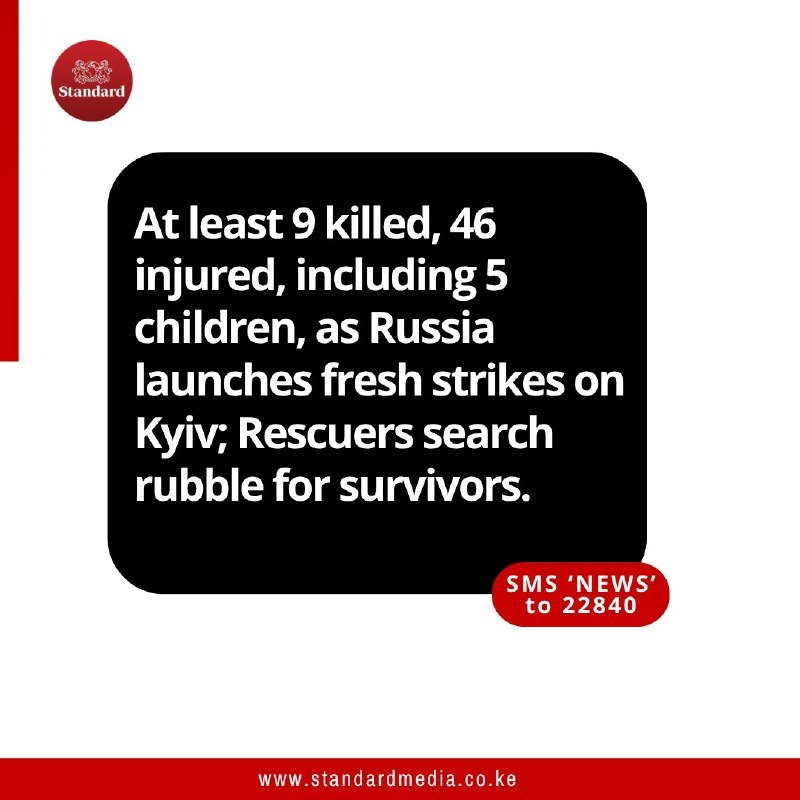
At 04:30 UTC on 3 July 2026, the air over Kyiv turned hostile in the most literal sense. Russia fired hundreds of drones and dozens of missiles at the Ukrainian capital, killing at least 27 people, wounding scores more and damaging around 130 buildings in the early hours of Thursday morning, according to a Telegram post by CGTN's official account summarising overnight reports from the ground. The scale is the story; the pattern is the argument.
Moscow has been here before, and Kyiv's defenders know it. When the kinetic tempo spikes in a single overnight barrage — when munitions that could be spread across a week are concentrated into four hours — the assumption of strategy, not aberration, is the only one that survives contact with the evidence. The question worth asking is what Moscow is bargaining for, and with whom.
What the wreckage tells us
The tactical object of a massed strike is rarely the buildings. Ukrainian air-defence crews, civic responders and Western intelligence assessments all converge on the same reading: saturate the sky so something gets through, exhaust the interceptors, photograph the gaps, and signal that the cost of holding out is denominated in Ukrainian civilians. Around 130 damaged structures is not a battlefield result; it is a ledger entry. The fact that at least 27 people died in their homes, schools and clinics is the human substance. The fact that the barrage was timed, scaled and shaped like a negotiating instrument is the political substance.
There is a counter-reading worth naming in fairness: that this is simply what Russia does now, regardless of any diplomatic calendar, and that the Western habit of assigning chess-master intent to every grunt of Russian artillery is flattering to a state that often operates tactically, not strategically. On the available record, that reading is plausible but incomplete. Concentration of fire on a single capital in a single night does not happen by accident; it requires logistics, refuelling chains, coordination between drone crews and missile units, and political authorisation at a level that does not move on the overnight watch.
The bargaining table no one is sitting at
The Western policy debate has, for the better part of a year, treated Russia's wartime economy and Russia's negotiating posture as two separate files. They are not. Strikes like the one that hit Kyiv at 04:30 UTC on 3 July are the visible half of a single proposition: that Moscow can make the cost of any future settlement fall on Ukrainian civilians before it falls on Russian ones. That proposition has buyers, even when no one admits to shopping.
It also has dissenters, and they deserve airtime. The argument runs the other way in several Western and Global-South capitals: that continued escalation is itself a negotiating posture, that saturation raids burn through Russian stockpiles faster than sanctions burn through Western patience, and that what looks like bargaining is in fact a slow haemorrhage. That case has merit. It also assumes — optimistically — that the Russian leadership treats munitions as a budget constraint. The pattern of strikes over the past eighteen months suggests the constraint is the message, not the magazine.
Reading the pattern, not the photograph
A single night, however lethal, is data — not verdict. The honest analyst holds two propositions at once: that the strike is a battlefield event with battlefield consequences, and that the strike is a political event with political consequences, and that pretending these are separable is what the strategist in the Kremlin is counting on. Western ministries that release statements expressing "deep concern" and then refer the matter to "existing sanctions frameworks" are not engaging the second proposition at all. The first proposition, the human one, deserves the grief it occasions; the second one, the structural one, deserves the policy attention it is not getting.
This publication has argued before that the dollar of precision strike and the rouble of political theatre trade at a discount Western reporting does not register. The 3 July barrage, timed for European morning news cycles and syndicated globally within hours, is exactly the kind of operation that discount is built on. Treating the wreckage as a meteorological event — terrible weather, regrettable weather, on to the next forecast — is the framing Moscow prefers.
Stakes, plainly stated
If the trajectory continues, two things happen simultaneously. Ukraine's defenders continue to absorb the cost in civilian lives and infrastructure that the international system is failing to insure against. And the negotiating floor — whatever shape it takes by autumn — quietly resets downward, because every saturation strike demonstrates that Moscow can raise the temperature faster than Western aid packages can lower it. The victims in Kyiv tonight are not abstractions of that arithmetic. They are its receipts.
Desk note: Monexus frames this strike as both a battlefield event and a political signal, refusing the wire convention of separating kinetic damage from the bargaining logic that produced it. The counter-read — that escalation is itself a kind of weakness — is given equal airtime, then weighed against the operational pattern.
Wire provenance
This editorial synthesis draws on the following public wire/social posts:
- https://t.me/cgtnofficial
- https://t.me/france24_en