Kyiv under fire, Moscow short on fuel: how the India–Russia oil loop is rewiring a war
Two days of record Russian strikes on Kyiv have collided with an unexpected shortage on the Russian domestic market — and the bridge between them runs through Indian refineries and a betting market that saw it coming.
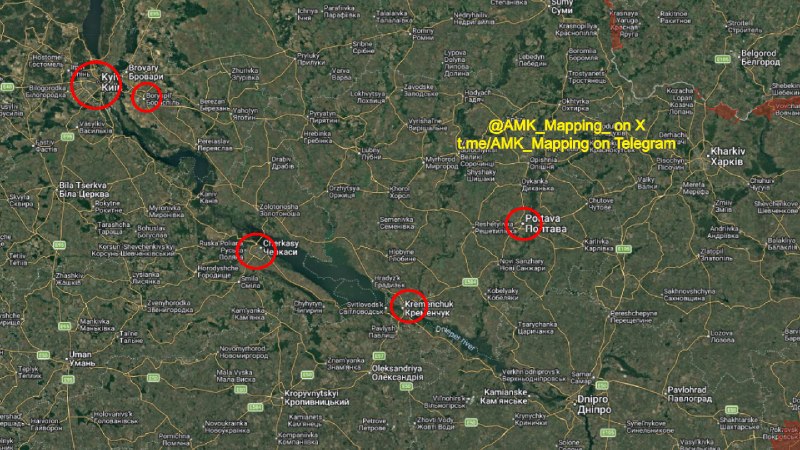
In the small hours of 2 July 2026, Russia launched what Australian public broadcaster SBS News described as the "most massive" assault on the Ukrainian capital since the full-scale invasion began in February 2022. SBS, citing Ukrainian officials, reported at least 13 people killed in the strikes — a single-night toll that exceeds several weeks of cumulative civilian casualties recorded in Kyiv earlier in the spring. The barrage landed on a city whose air-defence crews have spent two and a half years learning the geometry of incoming missiles, drones and glide bombs, and which on this occasion was unable to blunt the salvo. The attack set the political weather for a day that, twelve hours later and four thousand kilometres to the east, produced a quieter but no less consequential story: India's petroleum minister publicly denied that Indian companies are selling refined fuel to Russia, hours after a prediction market began pricing the opposite proposition.
Taken in isolation, the two stories sit on different shelves — one a kinetic event in a war the world has been watching for years, the other a market-and-trade dispute with the world's fifth-largest economy. Read together, they point to something more specific: the slow, transactional, dollar-arbitraged restructuring of the energy supply chain that keeps Russia's war machine running, and the political price Kyiv, Moscow, and New Delhi are all now paying for the arrangement. If the strikes on Kyiv are the visible cost of the war, the India–Russia fuel loop is the invisible one — and both halves of the equation are moving on the same week.
The night Kyiv could not shoot down
The 2 July assault, as SBS reported, was characterised by Ukrainian authorities as an order-of-magnitude escalation. The framing matters because the capital has, since the spring, functioned as a relatively protected rear-area city for a conflict whose heaviest fighting has shifted to the Donbas, the Kharkiv axis, and the southern corridor toward Kherson. The most-damaging single Russian strikes of 2025 largely bypassed Kyiv in favour of the country's energy grid further east. To see a single night produce double-digit civilian deaths in central districts of the capital, in July 2026, is to see a deliberate change in Russian targeting logic — or a degradation in Ukrainian interception capacity, or both.
The structural question, the one that will preoccupy Western defence ministries in the days ahead, is whether the assault reflects a Russian industrial decision to allocate a larger share of long-range strike production to the capital, or whether it reflects a marginal improvement in penetration against a Ukrainian air-defence network that has been sustained, since 2022, by a coalition supply chain running through Poland, Germany, Romania, and the United States. The two readings imply very different policy responses: the first argues for tighter sanctions on Russian missile-component imports; the second argues for accelerated deliveries of interceptor munitions and an expansion of the Patriot and SAMP/T batteries ringed around the city. The available reporting does not yet let a reader separate the two. What it does let a reader say, with confidence, is that the political signalling of striking Kyiv — rather than a military-industrial target in, say, Dnipropetrovsk oblast — is itself the message. Civilian pain in the capital is meant to break a political will that battlefield attrition has not.
The fuel that the market says is moving
Five hours before the SBS report on Kyiv appeared, the prediction market Polymarket published a one-line update: "JUST IN: Russia is reportedly buying gasoline from India to tackle its worsening fuel shortage." The wording — "reportedly" — was careful, and the underlying thesis was the kind of trade fact that, two years ago, would have been treated as fantasy. Russia is one of the world's three largest oil producers. It is also, structurally, a country whose refining capacity is concentrated in a relatively small number of plants that are themselves within range of Ukrainian long-range drones. Wartime sanctions, drone strikes on Russian refineries, and the redirection of crude toward the front have produced a domestic Russian gasoline market that, at moments in 2025, ran short by enough to generate queues and price spikes in Russian regional capitals. The bet on Polymarket was not that this shortage had resolved itself, but that it had been papered over with imports of refined product from a third country.
That third country, by the same week's market logic, is India. The Indian refining sector is the largest single buyer of seaborne Russian crude that is unloaded outside the formal Western price-cap system — a flow that has been documented in detail by Reuters, the Financial Times, and the Centre for Research on Energy and Clean Air since 2023. The structural fact is well known: Russian crude is shipped to Indian ports, refined at Indian facilities, and the resulting products are then exported globally, including — on the argument Polymarket was pricing — back into the Russian domestic market. The arbitrage works because the discounted price of Russian crude, when refined in India, produces a gasoline barrel that is still cheaper than Russian-domestic gasoline refined from the same crude before the war.
Eleven hours after the Polymarket note, India's Petroleum Minister Hardeep Singh Puri pushed back. The X account @unusual_whales, posting on 2 July at 16:17 UTC, summarised the minister's position: "India companies are not selling fuel to Russia." The phrasing is precise. It does not deny that Indian refiners — the state-owned Indian Oil Corporation, Bharat Petroleum, Hindustan Petroleum, and the private Reliance Industries and Nayara Energy — process Russian crude. India has never denied that, and the volumes are public. The denial is narrower: that refined Indian product is being sold into the Russian market. Whether that denial survives a quarter of more granular shipping-data analysis is a separate question, and one that European sanctions enforcers in Brussels and the U.S. Treasury's OFAC will be asking over the coming weeks.
The structure underneath both stories
Both stories, read in the same week, point to a single underlying rearrangement. The first is military. Russia, facing a Ukrainian defence that has absorbed successive waves of Western matériel, has chosen to raise the cost of the war on Ukrainian civilians in the hope of producing a political effect. The second is economic. Russia, facing a refining base degraded by Ukrainian drone strikes and a domestic market that cannot absorb the wartime redirection of its own crude, has turned — at the margin — to Indian refined product. The two halves rhyme. They are both forms of substitution: Russia is substituting civilian pain in Kyiv for battlefield friction it cannot generate, and substituting Indian refined product for refining capacity it cannot defend.
A third story runs underneath both, and is the one the wire coverage has been slowest to spell out. The Indian refining sector is the world's swing processor. It is the only refining complex large enough, and politically willing, to absorb discounted Russian crude at scale while still exporting product into both Western and non-Western markets. That swing role gives New Delhi a quiet but real structural position: the ability to either ease or tighten the Russian fuel squeeze, and therefore to either ease or tighten the financial pressure on the Russian federal budget. The Indian government's choice to deny, publicly, that Indian fuel is reaching Russia is a political choice about how visibly to exercise that lever. Denials from Indian ministers are read in Moscow as positioning; they are read in Brussels as cover; and they are read in Washington as a negotiating posture to be addressed in the next round of bilateral talks on secondary sanctions.
The dollar remains the spine of this arrangement, and that is what makes it politically sustainable for the actors involved. Indian refiners pay for Russian crude in dollars, against letters of credit processed through non-sanctioned banks, and book the resulting product in dollar-priced contracts. The price cap — the G7 mechanism introduced in late 2022 — operates on the dollar side of the trade, not the rouble side, and so the sanctions architecture lives in the same currency that pays for the workaround. The 2026 version of the arrangement is not a challenge to dollar hegemony so much as a sophisticated use of it: an arbitrage that works precisely because dollars are accepted everywhere, and because the price-cap enforcement apparatus is selective rather than comprehensive.
What the West has tried, and why the loop still works
The Western response to the Indian refining role has run through three gears since 2023. The first was diplomatic pressure on the Indian government and the named refiners, with mixed results. The second was the introduction, in late 2023, of the requirement that Indian shippers and insurers attest to the price-cap compliance of Russian crude cargoes, an administrative burden that slowed some flows but did not reverse the underlying economics. The third was the designation, in 2024 and 2025, of a small number of specific tankers and shadow-fleet operators — a pinprick approach that raised the cost of doing the trade without ending it. None of the three gears has closed the loop. The reason is straightforward: the Indian refining complex is large, integrated, and politically influential inside India, and the political cost in New Delhi of dismantling the trade is higher than the political cost of administering it.
The Polymarket note of 2 July, and the Indian minister's denial of the same day, are best read as the visible surface of a quiet escalation in this three-gear arrangement. A prediction market pricing a fuel flow from India to Russia is a public bet that the loop exists; the minister's denial is the official Indian counter-position; the SBS report on Kyiv is the human cost of the underlying war that the loop is funding. Each of the three is a real event; each is also a signal to the other two.
What remains uncertain, and what to watch
The reporting on the Indian fuel flow is, by its nature, thinner than the reporting on the Kyiv strikes. The Polymarket note uses the word "reportedly." The Indian minister's denial is a denial, not a refutation. The shipping data that would settle the question — vessel-by-vessel tracking of gasoline and gasoil cargoes moving from Indian ports to Russian ports, or to ports from which they are transhipped into Russia — is held by a small number of commercial trackers and by European and American sanctions enforcers, and is not in the public record in a form that an outside reader can audit. The honest position is that the market is pricing a flow that may or may not exist at the scale implied; that the Indian government is denying the most politically costly version of that flow; and that the European Commission and the U.S. Treasury are the parties with the data to settle the question.
What can be said with confidence is that all three of the moving parts — the Russian strike campaign, the Indian refining sector, and the Western sanctions architecture — are operating at elevated tempo in the same week, and that the week's two headlines are connected by a single set of arithmetic. A Russia that can buy Indian refined product is a Russia that can sustain a higher strike tempo against Ukrainian civilians than a Russia that cannot. A Ukraine absorbing the most massive single assault on its capital since 2022 is an indicator of how much slack the Russian war economy still has. The Monexus reading of the week is that the Indian fuel flow, whether at the scale Polymarket is pricing or at a smaller scale that the Indian minister is willing to acknowledge, has bought Moscow enough runway to attempt a strategic shift in targeting logic against the Ukrainian capital. The next seventy-two hours of reporting will tell whether the Western response is calibrated to that reading.
— Monexus desk note: this piece treats the two wire items of 2 July 2026 as a single, connected event, on the structural argument that the Russian strike campaign and the Indian fuel flow are two halves of one energy-and-sanctions arithmetic. The wire coverage of the Kyiv strike led on casualty and air-defence frames; the Polymarket note led on market sentiment. Monexus connects them.
Wire provenance
This editorial synthesis draws on the following public wire/social posts:
- https://x.com/unusual_whales/status/
- https://x.com/polymarket/status/
- https://en.wikipedia.org/wiki/Russian-Indian_oil_trade
- https://en.wikipedia.org/wiki/Price_cap_on_Russian_oil
- https://en.wikipedia.org/wiki/Reliance_Industries
- https://en.wikipedia.org/wiki/2022_Russian_invasion_of_Ukraine
- https://en.wikipedia.org/wiki/Hardeep_Singh_Puri
- https://x.com/unusual_whales/status/
- https://x.com/polymarket/status/
- https://en.wikipedia.org/wiki/Russian-Indian_oil_trade
- https://en.wikipedia.org/wiki/Price_cap_on_Russian_oil
- https://en.wikipedia.org/wiki/Reliance_Industries
- https://en.wikipedia.org/wiki/2022_Russian_invasion_of_Ukraine
- https://en.wikipedia.org/wiki/Hardeep_Singh_Puri