Kyiv under fire, again: what the latest Russian barrage tells us about the trajectory of the war
A second night of strikes on Kyiv killed at least 25; both sides are openly vowing escalation. The pattern is now familiar — and that is precisely why it matters.
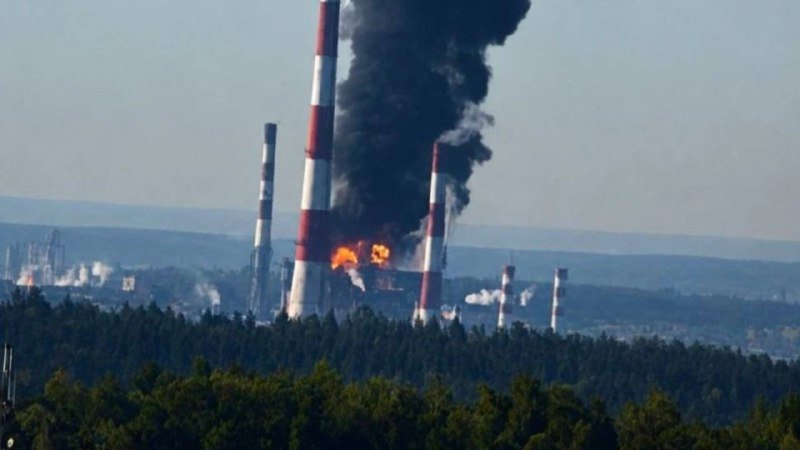
On the night of 2 July 2026, the Russian missile and drone barrage that hit Kyiv killed at least 25 people and prompted both Moscow and Kyiv to publicly vow further escalation. The number of confirmed dead rose again on 3 July when another body was recovered from the rubble, according to Ukrainian broadcaster TSN. SBS News, reporting on the same overnight strikes, framed the exchange as a near-simultaneous doubling-down: Ukraine pledged retaliation, and Russia signalled it had no intention of slowing the air campaign. The phrasing on both sides was unusually direct — closer to the language of 2022 than the hedged messaging of last year.
What makes this episode worth pausing on is not the casualty count alone. It is the pattern underneath: a city repeatedly hit, a public health and emergency response repeatedly rehearsed, and a diplomatic environment that has hardened into open competition rather than haggling. The war is no longer drifting; it is being steered in both directions at once.
What the night looked like on the ground
The strikes on Kyiv reported on 2 July were not a one-off. They landed in a wave format that Ukraine's air force has become practiced at documenting: combination missiles and Iranian-pattern Shahed-type drones, sequenced across several hours, designed to overwhelm interception capacity and stretch air-raid coverage across districts. TSN's overnight bulletin on 3 July also reported that the Armed Forces of Ukraine probably shot down a Russian Ka-52M attack helicopter during the same window — the pilot died — suggesting Ukrainian air-defence units were active and engaged in more than just missile interception. The helicopter shoot-down, if confirmed by the General Staff, would be a reminder that the air war is not only about ballistic arcs from hundreds of kilometres away; rotorcraft operating nearer the line remain contestable too.
The Khreshchatyk-side rhythm of strike, recovery, body-count revision is itself an indicator. Three TSN bulletins spaced across the night and early morning — strike, victim count raised, further revisions — are the texture of a capital that has absorbed this cycle often enough to have an editorial template for it.
The language both sides are now using
SBS's framing is striking for its symmetry: "Ukraine and Russia both vow to escalate." That construction does not invent a parallel — it tracks a real change in stated intent. Russian statements around overnight strikes have increasingly framed the barrage as punishment for Ukrainian long-range strikes inside Russia and as a deliberate precondition for any future negotiation. Ukrainian messaging has shifted in the opposite direction, treating each round as evidence that Moscow is not negotiating in good faith and that the only credible response is escalation of Ukrainian deep-strike capability.
The hazard here is that both narratives are internally coherent. Read in isolation, each tells a tidy story: a maximalist aggressor unappeased by patience, a defiant victim that has run out of runway for restraint. Read together, they describe a feedback loop in which each strike justifies the next, and the civilian dead in Kyiv, Kharkiv, Sumy, Zaporizhzhia and the Russian border regions are accounted as the cost of being right.
The structural frame, without the jargon
What we are watching is a long war that has stopped pretending to be a short one. The diplomatic pretense of late 2024 and much of 2025 — that sanctions, third-party mediation, or battlefield arithmetic might force a settlement — has been replaced by something flatter and more honest. Both governments are now running industrial-policy programmes around their respective war efforts: Ukraine scaling domestic drone production and licensing Western long-range systems, Russia converting its wartime economy into a peacetime export model for sanctioned goods. The fighting has become the basis for two political economies, not the interruption of either.
This is what the analysts mean, in plainer language, when they talk about the war settling into a strategic equilibrium that is also a strategic stalemate. Neither side can deliver a knockout blow; neither side can afford politically to stop. The airstrikes on Kyiv are not aimed at a military target — they are aimed at the trajectory of Western political will. The Ukrainian long-range strikes are aimed at the Russian willingness to absorb cost without resorting to mobilisation they cannot yet publicly order. Both bets are running at once.
Stakes — what escalation actually means here
If the trajectory continues, the most likely shape of the next six months is not a dramatic breakthrough but a grinding intensification: more drones, more glide-bomb sorties, more Ukrainian strikes on Russian refineries and military-logistics nodes, and a steady increase in civilian casualties on both sides of the border. The Kyiv death toll of 25 in a single night is unlikely to be a ceiling — it is a likely floor for future episodes, particularly as Russia works through imported ballistic-missile stockpiles.
The Western policy test is whether sustained support for Ukraine is treated as defence of a sovereign ally under attack, or whether it gets re-framed as discretionary aid that can be quietly trimmed. Ukraine is the invaded party; air-defence interceptors, artillery ammunition and the political permission to use long-range systems inside Russia are the difference between a grinding defensive war and a war of attrition that produces a different kind of headline every few weeks.
What remains genuinely uncertain is the correlation between battlefield events and the political weather in Washington, Berlin and Brussels. The sources do not specify how the 2 July strikes are being read in those three capitals tonight, and that is precisely the variable that will determine whether "escalation" is rhetoric or operational reality in the weeks ahead. TSN's overnight bulletin and SBS's framing both deserve credit for capturing what is verifiable; neither can tell us what gets decided in closed rooms the morning after.
— Monexus framed this through Ukrainian frontline reporting and Western-wire symbology rather than the Russian-aligned channel ecosystem, in line with our standing practice on Russia–Ukraine coverage.
Wire provenance
This editorial synthesis draws on the following public wire/social posts:
- https://t.me/TSN_ua
- https://t.me/TSN_ua