Meta's Pocket app and Zuckerberg's AI-agent mea culpa point to the same strategic retreat
Two Meta disclosures in 24 hours — a new consumer AI toy and an admission that the agent work is behind schedule — suggest the company's frontier-AI bet is being padded with consumer-grade scaffolding while the harder product lags.
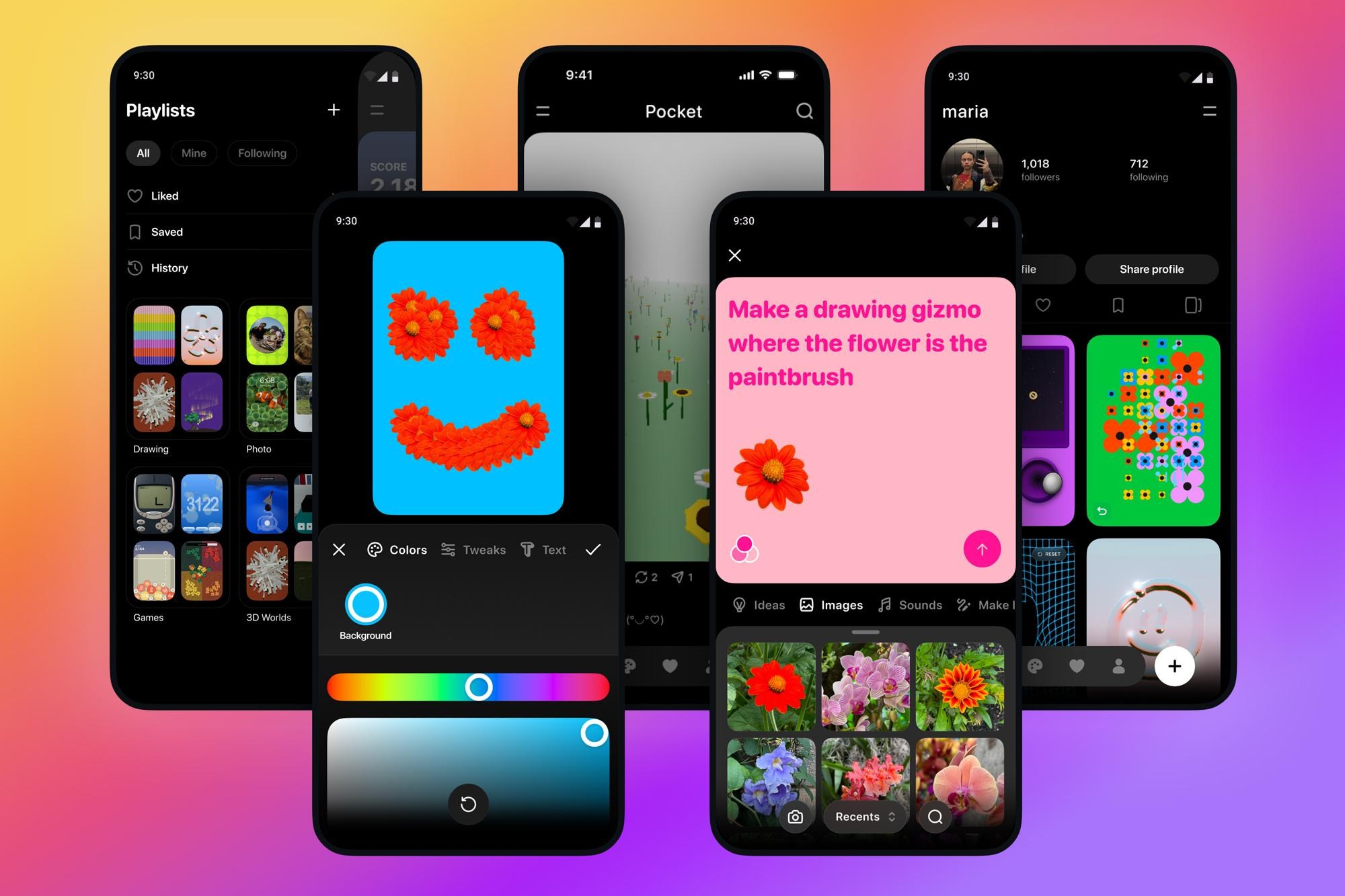
Two messages from Menlo Park landed within a day of each other this week, and they pull in opposite directions. On 2 July 2026, Meta launched a new consumer app called Pocket, which lets users build and share small interactive "gizmos" generated from a text prompt. Hours later, CEO Mark Zuckerberg told investors and reporters that the company's work on autonomous AI agents is moving slower than the company had hoped.
The juxtaposition is the story. Meta is still publicly betting its next decade on the consumer-facing surface of generative AI, but the more ambitious half of that bet — software that can plan, browse and transact on a user's behalf — is now publicly behind schedule. Pocket looks, on the timing at least, like a way to keep the demos coming while the harder engineering catches up.
A toy, deliberately
Pocket, as described in The Verge's 2 July 2026 write-up, is built around "little AI experiences" — short interactive objects stitched together from a single prompt, then shared inside Meta's social graph. The framing is deliberately lightweight: the product is meant to be a creative toy, not a productivity surface, and the company is positioning it as an on-ramp for the much larger family of generative tools it has been pushing since the Llama model family debuted.
That positioning matters. A consumer app designed for prompts-to-shared-outputs is, by design, a forgiving product: the failure mode is a bad gizmo, not a wrong financial decision. For a company whose frontier-AI roadmap has run into the same agent-reliability wall that every major lab has hit, that is a convenient surface to ship into the app stores.
The agent mea culpa
The agent admission, surfaced the same day via Meta's own investor commentary and picked up by crypto and tech outlets, was less ambiguous. Zuckerberg acknowledged that building agents that can reliably execute multi-step tasks on a user's behalf is taking longer than the company had previously suggested. The remark did not single out a product timeline or a revenue number, but it did open a door that Meta had previously kept closed: the implicit promise that 2026 would be the year of the useful personal agent now sits alongside a public warning that the engineering is harder than the demos implied.
This is the second time in roughly a year that Meta has publicly downgraded an AI timeline in front of shareholders. The pattern is worth noting: each downshift has been followed by a separate consumer-facing launch designed to keep the "AI-first" narrative in motion.
The structural read
What the two announcements together describe is a familiar pattern in platform competition. When the frontier product slips, the operator substitutes throughput at the edges: more apps, more surfaces, more shareable objects. The substitution is not dishonest — Pocket is a real product with real users in mind — but it does shift the centre of gravity of the company's public story from capability to distribution.
The same dynamic is visible, to varying degrees, at the other frontier labs. The conversational chatbot, the image model and the short-form video generator have all become the default consumer face of generative AI, even as the agents-and-agents-of-agents roadmaps quietly slip a quarter, then another. The retail surface moves first; the labour-substituting surface catches up later, if at all.
There is also a structural incentive built into the ad-funded business model. Meta's revenue still flows from attention sold against feeds, reels and short-form video. A toy app that drives engagement inside the social graph is, on the unit-economics ledger, immediately legible. A reliable personal agent that books flights and files expenses for users is legible only after years of trust-building — and only if the regulatory environment allows it.
Counterpoint
The sceptical read is straightforward: this is a company that has shipped frontier products before, and it knows how to absorb a delay. Meta's recommendation and ranking infrastructure, its video stack and its AR hardware effort have all run long against original timelines without breaking the underlying business. A one-quarter slip on agents is not, on its own, evidence of strategic drift.
The opposing read, taken seriously, is that the consumer-toy substitution is not just a communications tactic but a sign that the company has concluded that the agent surface is not where the next consumer breakthrough will happen. If that conclusion holds, the structural read above is too generous — it would describe a company managing expectations, not a company that has temporarily lost the plot.
Stakes
If the agent roadmap continues to slip, the practical consequences fall on two groups. The first is enterprise software buyers, who had been quietly preparing procurement budgets around the assumption that agent platforms would reach production-grade reliability on a 2026-to-2027 timeline. The second is the developer ecosystem around Meta's open model releases, which has been building tooling on the assumption that the hosted agent layer would mature in parallel.
For users, the more immediate effect is a continued flood of lightweight generative surfaces — gizmos, image generators, short-video tools — that entertain without quite delivering on the "assistant" promise that has anchored the marketing since the previous model cycle. Pocket fits cleanly into that pattern. The harder product, when it arrives, will have to clear a bar that the toys have spent the interim setting.
What remains unclear
The public materials do not specify a revised timeline for Meta's agent work, nor do they name the engineering or evaluation bottleneck that the team has hit. The Pocket launch coverage describes the app's scope in general terms but does not address how Meta plans to moderate user-generated prompts or whether the underlying model is one of the open-weights Llama releases or a hosted proprietary variant. Those questions will matter once the app reaches a non-trivial user base.
Desk note: Monexus read the Pocket announcement first as a product story and the agent admission second as a corporate-timelines story; the newsworthy frame is the gap between the two.
A toy, deliberately
Pocket, as described in The Verge's 2 July 2026 write-up, is built around "little AI experiences" — short interactive objects stitched together from a single prompt, then shared inside Meta's social graph. The framing is deliberately lightweight: the product is meant to be a creative toy, not a productivity surface, and the company is positioning it as an on-ramp for the much larger family of generative tools it has been pushing since the Llama model family debuted.
That positioning matters. A consumer app designed for prompts-to-shared-outputs is, by design, a forgiving product: the failure mode is a bad gizmo, not a wrong financial decision. For a company whose frontier-AI roadmap has run into the same agent-reliability wall that every major lab has hit, that is a convenient surface to ship into the app stores.
The agent mea culpa
The agent admission, surfaced the same day via Meta's own investor commentary and picked up by crypto and tech outlets, was less ambiguous. Zuckerberg acknowledged that building agents that can reliably execute multi-step tasks on a user's behalf is taking longer than the company had previously suggested. The remark did not single out a product timeline or a revenue number, but it did open a door that Meta had previously kept closed: the implicit promise that 2026 would be the year of the useful personal agent now sits alongside a public warning that the engineering is harder than the demos implied.
This is the second time in roughly a year that Meta has publicly downgraded an AI timeline in front of shareholders. The pattern is worth noting: each downshift has been followed by a separate consumer-facing launch designed to keep the "AI-first" narrative in motion.
The structural read
What the two announcements together describe is a familiar pattern in platform competition. When the frontier product slips, the operator substitutes throughput at the edges: more apps, more surfaces, more shareable objects. The substitution is not dishonest — Pocket is a real product with real users in mind — but it does shift the centre of gravity of the company's public story from capability to distribution.
The same dynamic is visible, to varying degrees, at the other frontier labs. The conversational chatbot, the image model and the short-form video generator have all become the default consumer face of generative AI, even as the agents-and-agents-of-agents roadmaps quietly slip a quarter, then another. The retail surface moves first; the labour-substituting surface catches up later, if at all.
There is also a structural incentive built into the ad-funded business model. Meta's revenue still flows from attention sold against feeds, reels and short-form video. A toy app that drives engagement inside the social graph is, on the unit-economics ledger, immediately legible. A reliable personal agent that books flights and files expenses for users is legible only after years of trust-building — and only if the regulatory environment allows it.
Counterpoint
The sceptical read is straightforward: this is a company that has shipped frontier products before, and it knows how to absorb a delay. Meta's recommendation and ranking infrastructure, its video stack and its AR hardware effort have all run long against original timelines without breaking the underlying business. A one-quarter slip on agents is not, on its own, evidence of strategic drift.
The opposing read, taken seriously, is that the consumer-toy substitution is not just a communications tactic but a sign that the company has concluded that the agent surface is not where the next consumer breakthrough will happen. If that conclusion holds, the structural read above is too generous — it would describe a company managing expectations, not a company that has temporarily lost the plot.
Stakes
If the agent roadmap continues to slip, the practical consequences fall on two groups. The first is enterprise software buyers, who had been quietly preparing procurement budgets around the assumption that agent platforms would reach production-grade reliability on a 2026-to-2027 timeline. The second is the developer ecosystem around Meta's open model releases, which has been building tooling on the assumption that the hosted agent layer would mature in parallel.
For users, the more immediate effect is a continued flood of lightweight generative surfaces — gizmos, image generators, short-video tools — that entertain without quite delivering on the "assistant" promise that has anchored the marketing since the previous model cycle. Pocket fits cleanly into that pattern. The harder product, when it arrives, will have to clear a bar that the toys have spent the interim setting.
What remains unclear
The public materials do not specify a revised timeline for Meta's agent work, nor do they name the engineering or evaluation bottleneck that the team has hit. The Pocket launch coverage describes the app's scope in general terms but does not address how Meta plans to moderate user-generated prompts or whether the underlying model is one of the open-weights Llama releases or a hosted proprietary variant. Those questions will matter once the app reaches a non-trivial user base.
Desk note: Monexus read the Pocket announcement first as a product story and the agent admission second as a corporate-timelines story; the newsworthy frame is the gap between the two.
Wire provenance
This editorial synthesis draws on the following public wire/social posts:
- https://t.me/theverge_news
- https://t.me/CryptoBriefing