A parcel bomb in Monaco and a sliding yen: the small prints of a fragile order
A suspected attack on a Ukraine-born businessman in Monaco and the yen's lurch toward 160 are unrelated only on the surface. Both expose a global order that is wealthier on paper than it is confident in practice.
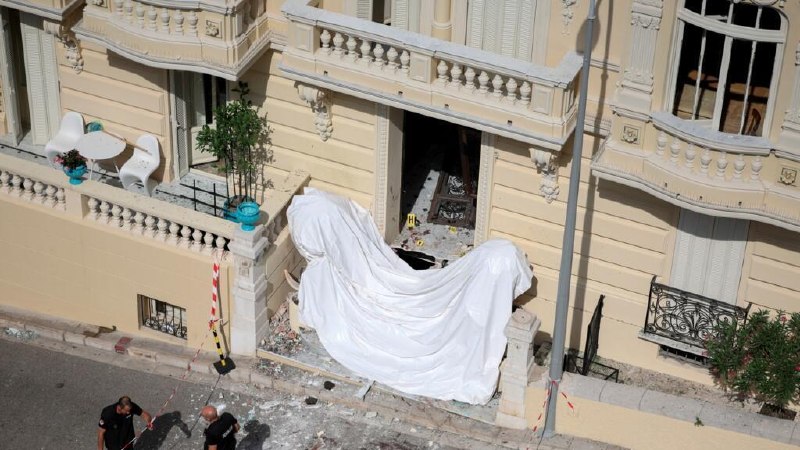
The small Mediterranean principality of Monaco, a square mile of wealth that the rest of the world mostly leaves alone, became a crime scene this week. Prosecutors in Monaco said on 3 July 2026 that a suspect had been identified and an international arrest warrant issued in the investigation into a parcel bombing that seriously wounded a sanctioned Ukraine-born millionaire and two other people, according to France 24. The same 24 hours saw the Japanese yen lurch into the 160-per-dollar range for the first time in roughly two weeks, as traders repriced the odds of fresh intervention from Tokyo, Nikkei Asia reported. Two stories, two continents, no obvious link — except that both reveal the same underlying condition: an international system that is nominally functional and visibly brittle.
The instinct in the wire cycle is to treat these as discrete bulletins — a crime in Monaco, a currency move in Tokyo. The more useful frame is to read them as adjacent stress readings on the same apparatus. One tells us that wealth, sanctions status, and Ukrainian-origin capital are now a target surface in Europe. The other tells us that the world's third-largest economy is no longer able to defend a price level it could hold with one phone call a few years ago. The connective tissue is not conspiracy; it is the steady erosion of the guardrails that used to make these stories feel like outliers.
What the Monaco file actually says
The facts released so far are narrow. A parcel bomb detonated and seriously injured a Ukraine-born man described in the France 24 dispatch as a sanctioned millionaire, along with two other individuals, in Monaco. Prosecutors have identified a suspect and issued an international arrest warrant, the news organisation reported. That is the public record as of 03:43 UTC on 3 July 2026, drawn from a France 24 telegram post dated 02:01 UTC the same day.
What the file does not yet say is more revealing than what it does. It does not name the suspect, does not state a motive, does not confirm whether the device was assembled locally or imported, and does not link the attack to any of the obvious geopolitical fault lines — though the victim's profile, as a sanctioned Ukraine-born businessman on the French Riviera, places him squarely on a fault line whether the perpetrators intended it or not. Sanctioned oligarch-adjacent figures in European resort jurisdictions have been a known category of risk since at least 2022; that they can be attacked, in a place with private security budgets that rival small national armies, is the headline.
What the yen is actually telling us
The currency story is equally unromantic once the framing is stripped out. The yen strengthened briefly into the 160-per-dollar range on Thursday 2 July 2026, Nikkei Asia reported, the first time it has held that level in roughly two weeks. The phrasing matters: the move was driven by intervention fears, not by a sudden change in Japan's economic fundamentals. The Bank of Japan has spent trillions of dollars from its foreign-exchange reserves in recent years propping up the currency, and the trade is now a familiar one — weaken, get warned, weaken some more, intervene, repeat. Tokyo's room to keep intervening is finite. The United States Treasury, which historically does not object loudly when its allies sell dollar reserves to defend their own currencies, has its own reasons to look away. None of this is hidden. All of it is just exhausting.
The structural point is not that the yen is weak — Japan has run chronic current-account surpluses and net external assets for decades, the textbook profile of a strong-currency country. The point is that the policy apparatus that links a net saver to a strong currency has, for this cycle, decoupled. Interest-rate differentials with the United States do that work. So does the market's growing belief that whatever Washington says about a "strong dollar," its domestic fiscal trajectory will continue to drift in a direction that argues for a weaker one.
The counter-read, and why it does not hold
There is a clean counter-narrative for both stories, and the editorial job is to name it before discarding it. On Monaco: parcel-bomb attacks on wealthy individuals in Europe are, historically, crimes — Interpol cases, not geopolitics. The investigators will run a routine forensic trail, identify a domestic grievance, and close the file. On the yen: 160 is a round number that attracts headlines, but volatility around round numbers is mechanical. A two-week drift back to it says more about market positioning than about the order.
Both counter-reads are technically defensible and both miss the more important point. The point is that the baseline has shifted. A Monaco parcel bomb against a sanctioned Ukraine-born businessman would, four years ago, have triggered immediate cabinet-level attention in Paris and a swift read-out from Brussels. The fact that the wire cycle has carried the story as a crime bulletin rather than a security one is itself a signal — the system is normalising risk that would once have looked extraordinary. On the yen: a currency that requires repeated, increasingly expensive state defence against a benchmark its economy can outperform on paper is not exhibiting mechanical noise. It is exhibiting the cost of living inside a monetary system in which the issuer of the reserve currency has stopped pretending to manage the exchange rate, and everyone else is left improvising.
What is actually at stake
The serious paragraph. The stakes in Monaco are human, first. A man and two other people were seriously injured in an attack that prosecutors now treat as a criminal bombing. Beyond that, the case will be read — fairly or not — as a stress test of the sanctions regime's ability to protect the people it touches. Sanctions are a foreign-policy tool with a body count when they fail. If the suspect turns out to be operating on behalf of a state intelligence service, the diplomatic fallout would be substantial; if the suspect turns out to be a private actor with a personal grievance, the political fallout will be the opposite — a quiet, useful lesson that the European resort jurisdictions are not, in fact, immune to the violence the rest of the continent is now metabolising.
The stakes in Tokyo are slower and larger. Japan is the world's largest external creditor and the third-largest economy. A yen that drifts toward 170 or 180 against the dollar does not just raise the price of imported fuel and food; it imports inflation, complicates debt service, and forces a succession of unappetising choices on a central bank that has only just exited decades of yield-curve control. The risk is not a crisis. The risk is a long, flat grind in which the country that financed half the postwar global order becomes a permanent buyer of its own currency, and the rest of the world learns to price around that.
The plain structural frame
Both stories sit inside the same shift. The postwar order was a system in which the strong-dollar peg gave the rest of the world a free option on stability: you held dollars, the United States ran the rulebook, and the trade was tolerable because the rulebook was, on the whole, predictable. What we are watching, in 2026, is the slow erosion of that bargain. The yen episode is the most legible symptom — a textbook strong-currency country that can no longer rely on the system to clear at the price that fits its fundamentals. The Monaco episode is a less legible but equally informative one: a continent in which capital, sanctions, and violence are now co-located in the same five-star postcodes, and the institutions that once guaranteed those postcodes are visibly overstretched. Neither story is a verdict. Both are reminders that the system is running on reserve capacity, and reserve capacity is not infinite.
The desk note: wire coverage of the Monaco bombing has leaned on the crime-bulletin register, with the geopolitical framing largely left to the reader; coverage of the yen has done the opposite, treating intervention fears as the headline and the structural weakness of the dollar anchor as background. This publication reverses the usual weighting on both, because the structural weakness is the point.
Wire provenance
This editorial synthesis draws on the following public wire/social posts:
- https://t.me/france24_en
- https://t.me/NikkeiAsia
- https://t.me/nikkeiasia