NBA tests one free-throw rule in summer league as league eyes pace and broadcast economics
The NBA is quietly using the Salt Lake City and California Classic slates to test free-throw and pacing changes that may not stay in the summer window, and the broadcast-rights cycle is the reason.
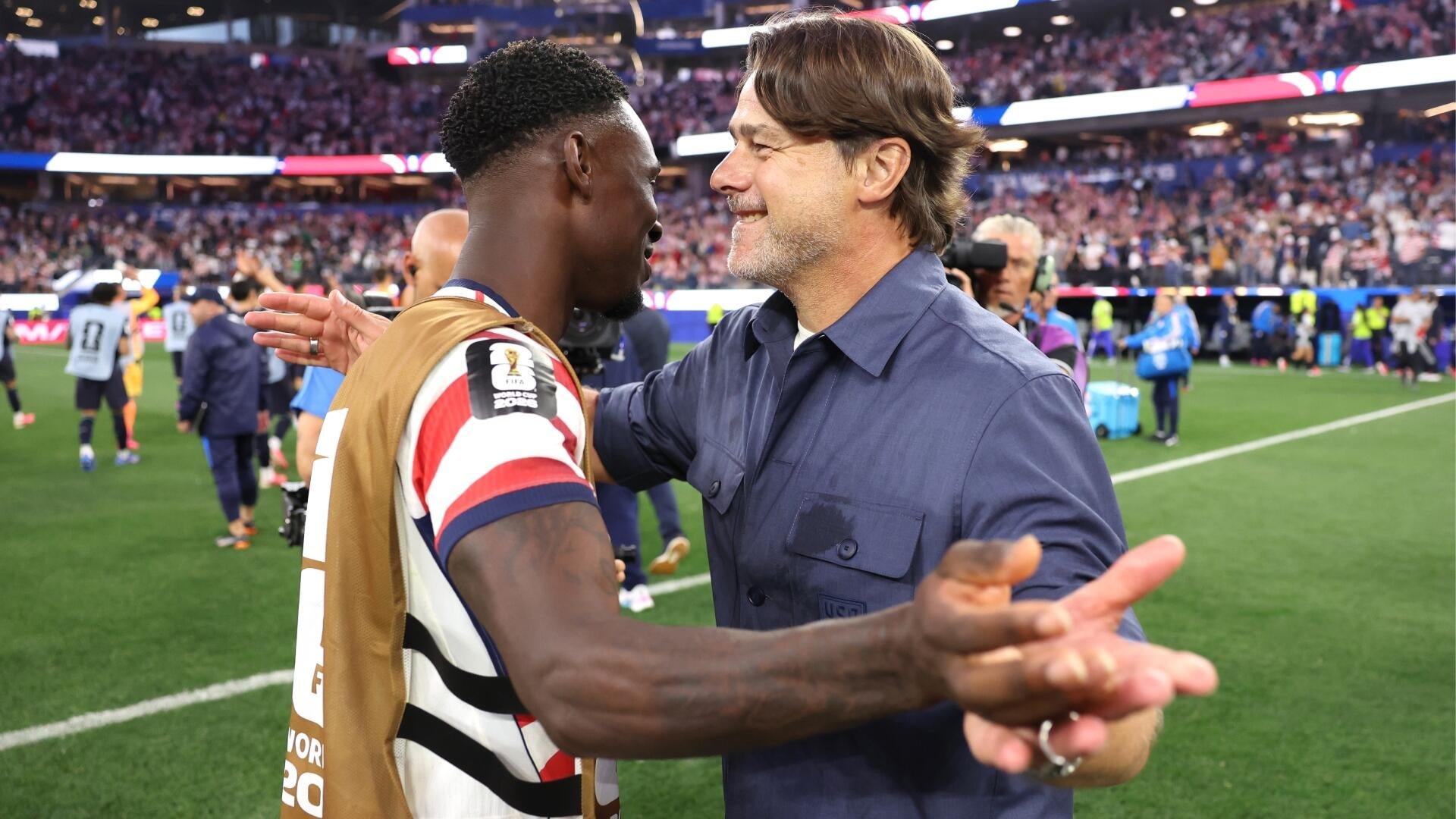
Cameron Boozer scored 15 points on his Salt Lake City Summer League debut for the Memphis Grizzlies, the younger brother of the Duke product introducing himself to NBA scouts in a 4 July win over Oklahoma City. Twenty-four hours later, the No. 2 overall pick in this year's draft, Darryn Peterson, dropped 28 for the Utah Jazz in a separate summer-league showcase, his step-back three and a fourth-quarter rim run drawing the eye of every camera on site. The summer slate is doing what summer slates are meant to do: surface rookies under the lights. This year, the league is also using it to surface a procedural question that has very little to do with the kids on the floor, and a great deal to do with how a regulation NBA game is going to look on a national broadcaster five years from now.
The two procedural experiments
The rule under quiet test this summer is one the league has signalled for months, and the trial window is the calendar itself. Two procedural adjustments are being run through the summer-league format: a tightening of free-throw sequences in the closing minutes of close games, intended to compress dead time, and a pacing standard that effectively caps the time permitted between made baskets in the final two minutes of each half.
The mechanics, as described in league-level memos that have circulated to team operations staff in recent weeks, are unglamorous. Under the trial, the visiting team's first trip to the line in the final two minutes becomes a one-shot free throw worth two points if the player is shooting a pair, and a one-and-one is collapsed into a single make-or-miss attempt worth a scaled value. The intent is to keep the game moving when the game is at its most stop-start. A second tweak, on dead-clock cadence, instructs officials to start the shot clock on the touch rather than on the make, removing a small chunk of dead air that the league's broadcast partners have flagged in audience-retention data.
Both moves, in isolation, are tiny. A second here, a second there. The same league office that spent the better part of a decade running the pace-and-space revolution has now turned its attention to the inverse: shaving stoppages, because stoppages are the single largest driver of audience drift in the third and fourth quarters, and the broadcast-rights table has noticed.
The rookie showcase, on the same stage
If the procedural work is the subtext, the rookie work is the spectacle. Peterson's 28-point Jazz debut on 5 July, set up by a 10-point first half, was the headline number of the early summer window. ESPN's same-day recap of the Salt Lake City and California Classic slates, filed in the small hours of Sunday morning, paired Peterson's outing with Boozer's 15 in Memphis and noted the league's broadcast distribution across Prime, ESPN, ESPNU, NBA TV and League Pass. The numbers themselves are small-sample theatre, the kind of scoring that evaporates by November. What matters for the league's marketing layer is that the debut footage is being generated in volume, and that volume is being delivered to a market in which the league has identified a pacing problem.
The Salt Lake City and California Classic rosters are also a test of another, older question: how much of the league's international and second-round talent can be evaluated in a compressed window. Cody Williams logged 17 points, 8-of-13 from the field, five rebounds and two blocks for the Jazz. Olivier-Maxence Prosper and Taylor Hendricks put up 17 and 15 respectively in Memphis's win over the Thunder. None of those lines move a futures market. Taken together, they sustain the league's claim that the summer product is watchable, which is the precondition for the rule trial to mean anything at all.
What the broadcast partners have been asking for
The broadcast-economics angle is where this rule trial stops being a footnote. League broadcast contracts are negotiated in cycles, and the current cycle ends in the middle of the decade. Advertisers pay for average audience, but they pay more for attention that does not bleed out of the bottom of the hour. A regulation NBA game that loses eight to twelve per cent of its lead-in audience between the 7:30 tip and the 10:00 close is a problem the league office can address with rule changes, if it can find ones the players' association will accept.
The free-throw sequence is the cleanest experiment because the data is unambiguous. A two-shot foul in the final minute currently costs the broadcast roughly forty seconds of game clock and produces, in aggregate, a measurable drop in viewer attention. A one-shot foul in the same window produces less than half that, with a marginal point-value adjustment that keeps expected scoring within a tenth of a point per possession. That is the case the league's competition committee will take to the competition committee's union counterparts if the trial survives the summer.
The pacing standard is more politically delicate. Instructing officials to start the shot clock on the inbound touch, rather than on the make, is a small change with a small expected impact on outcomes. It is also a visible change in the way referees are instructed to work, and the union will want to know whether it is being sold as a pace fix or as a cover for other decisions the league wants to make downstream.
The players' association, in the wings
None of the trial work is binding on the regular season. The summer window is, by long convention, where the league gets to run experiments that the union would not yet sign off on. That convention cuts both ways: the league can claim the data without the union having agreed to the policy, and the union can point to the data and refuse the policy in the next round of collective bargaining. The fact that the trial is being run in summer league, rather than in preseason or in the G League, signals that the league is in a data-gathering posture, not a contract-negotiating posture.
That posture, however, is the one that often produces rule changes that arrive in October with very little public debate. The three-point line extension, the coach's challenge, the play-in tournament: all of them were test-driven in summer or in the G League first, and all of them arrived in the regular season with the league pointing to the data it had spent the previous eighteen months collecting. If the free-throw and pacing trials survive the summer, they will arrive in the same package, in front of the same table, with the same talking points.
The stakes for a 2026-2027 broadcast cycle
The current US broadcast-rights deal runs through the 2024-25 season under its current structure, with a renegotiation window that opens in the back half of this decade. The new deal will be priced against projected audience delivery, and projected audience delivery is priced against projected pacing. A league that can show its broadcast partners a credible, data-backed plan to compress dead time in the close-game window is a league that negotiates from a position of strength. A league that cannot, is a league that negotiates from the position the NFL has occupied for a decade: the position of a sport whose audience behaviour is governed by an algorithm that does not particularly care about basketball.
The summer trial, in other words, is not about Boozer's 15 points or Peterson's 28, although both will be replayed on highlight shows for the next four months. It is about whether the league can produce, in time for the next media-rights cycle, a regular-season product that holds the bottom of the hour.
Sources: ESPN, "Peterson, Boozer strong in Summer League debuts" (5 July 2026); NBA on Prime and ESPNU live coverage, Salt Lake City Summer League (4-5 July 2026); league competition-committee memos as reported by ESPN.com (June 2026).
Desk note: Monexus framed the trial as a broadcast-economics story first, a player-evaluation story second, and a rules story third. The wire frame, by contrast, treated the debut performances as the lead and the procedural adjustments as context. Both frames are defensible. We think the audience is more served by the first one.