Ouarzazate bets again on cinema — this time with state money
Rabat is turning the desert studio town into a permanent production hub. The question is whether the infrastructure outlives the tax credit.
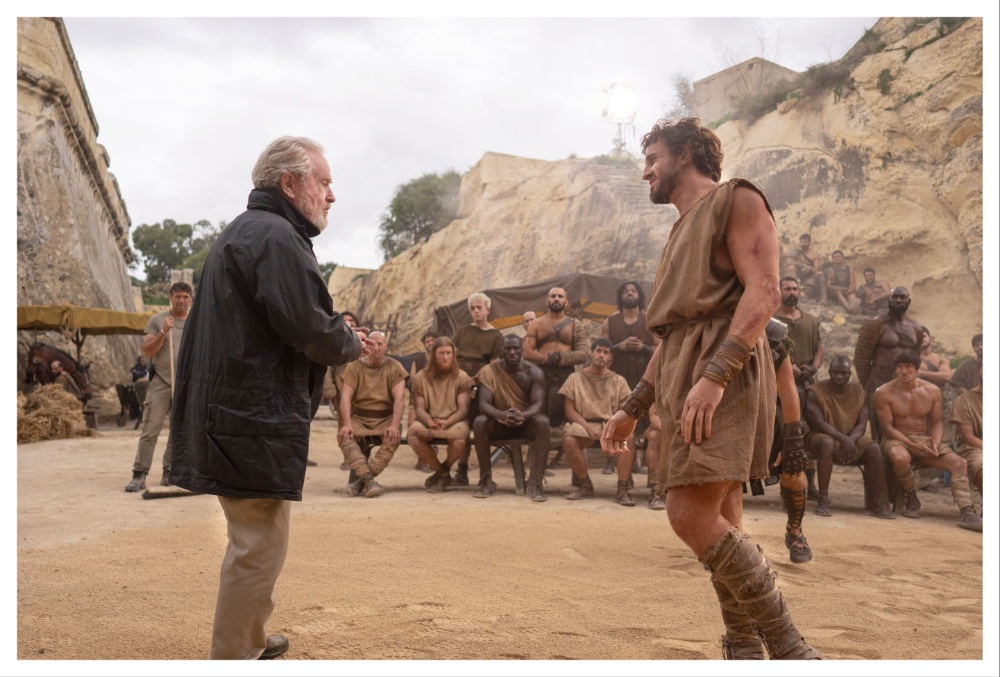
Construction is beginning on the International Cinema City in Ouarzazate, a state-backed film production complex in southern Morocco that the government has framed as a permanent anchor for a sector long dependent on tax incentives and the patronage of individual productions. Variety reported the launch on 3 July 2026, citing the Moroccan government's announcement that the new facility will rise on the same stretch of desert that hosted Gladiator 2 and a long list of foreign shoots before it.
The bet is industrial, not cinematic. Ouarzazate has spent two decades converting arid plateau into one of North Africa's most reliable location destinations — a status built almost entirely on geography and weather — and Rabat is now moving to convert that reputation into a fixed-asset base that survives the inevitable withdrawal of any single studio's slate. The model is closer to a public-works programme than a film commission.
What is actually being built
The International Cinema City is being constructed as a production hub rather than a finished studio lot — meaning the buildings, backlots and post-production capacity are intended to outlast any individual film shoot. The development sits in the same corridor that already hosts Atlas Studios and CLA Studios, the two facilities that have absorbed most of the foreign work since the early 2000s, and the government's pitch to Hollywood is that crews can now base themselves in Ouarzazate year-round rather than flying in for a single production window.
Variety's reporting frames the project as a continuation of an existing strategy rather than a rupture. Morocco already operates a 30% production rebate, has signed co-production treaties with more than fifty countries, and runs a national cinema centre that handles permit coordination. The new city adds physical capacity to that regulatory scaffolding. Whether it draws sustained occupancy is the open question.
The counter-narrative: incentives without audiences
The optimistic read is that Morocco is doing what smaller film economies cannot — accumulating studio space at sovereign scale. The sceptical read is sharper: Morocco has spent twenty years as a service economy for other people's stories, and a new complex does not on its own produce a domestic industry. Audience data inside Morocco remains thin, theatrical chains outside Casablanca and Marrakech are limited, and the country's own feature output, while growing, has not yet produced the kind of breakout that would let a studio schedule a slate around domestic demand rather than foreign footfall.
The same tax-credit architecture that drew Ridley Scott's team to Ouarzazate is also the architecture that lets a production pick Jordan, South Africa, Cape Verde or the Canaries on the next project. Rabat can lower its marginal cost; it cannot stop other governments from lowering theirs. The structural risk is that the new facility becomes a depreciating asset subsidising productions whose long-term loyalty belongs to whichever finance minister is writing the most generous cheque in any given quarter.
Industrial policy, not cultural policy
The move fits a wider pattern in which North African and Gulf-adjacent states treat audiovisual infrastructure as heavy industry — long-cycle capital expenditure with downstream employment in construction, hospitality and transport. Algeria's public broadcaster has expanded co-production activity, Saudi Arabia's NEOM-adjacent media zone has attracted international producers, and Egypt has held on to its position as the region's largest volume producer despite currency pressure. Morocco's distinct move is to build for export rather than domestic broadcast.
This is also a Global South industrial-policy posture in plain form. The state carries the upfront cost, accepts the slow payback, and treats cultural infrastructure as a tradable service — analogous to port logistics, free-zone manufacturing or submarine cable landings. The same logic that pushed Kenyan and Rwandan governments to invest in cloud capacity rather than wait for hyperscalers is now pushing Rabat to invest in stages rather than wait for studios to relocate organically.
Stakes over the next cycle
If the International Cinema City draws sustained occupancy, the upside extends beyond direct production spend into construction contracts, equipment rental, training pipelines and a deeper film-services labour market — the parts of the value chain that tend to stay after the cameras leave. If it does not, the facility joins a familiar list of white-elephant cultural infrastructure across the continent: ambitious openings, partial activation, eventual renegotiation of the financing.
The next eighteen months will be diagnostic. The markers to watch are occupancy rates at the existing Atlas and CLA facilities, the diversity of the productions choosing Ouarzazate for whole-shoot residencies rather than partial location work, and whether Moroccan crews move into above-the-line roles on productions that previously flew European or North American talent in for the senior positions. Industrial policy can buy steel and concrete; it cannot, on its own, buy the trust that a producer will still book the lot two budget cycles from now.
What remains uncertain
The available reporting identifies the launch, the site, and the broader rationale, but does not specify the construction timeline, the capital envelope, or the public-private split behind the financing. It also does not detail the labour agreements that will govern work on the site — a consequential omission given that film-set conditions across the region have become a flashpoint in recent years. And it leaves open the basic question of who the anchor tenant will be, and on what terms.
What the sources do establish is that Rabat has decided to treat Ouarzazate as permanent infrastructure rather than a recurring location, and that the decision was made at cabinet level rather than left to a tourism ministry or film commission. That, on its own, is the story.
Desk note: wire coverage of this announcement has been predominantly industry-facing; Monexus reads it as an industrial-policy story first and a film story second, in line with how Rabat is selling it.