Pentagon's European drawdown paused after allied pushback, Wall Street Journal reports
A planned further cut to US forces on the continent was shelved late last month after resistance inside the alliance, according to the Wall Street Journal as relayed by Fars News and OSINT watchers.
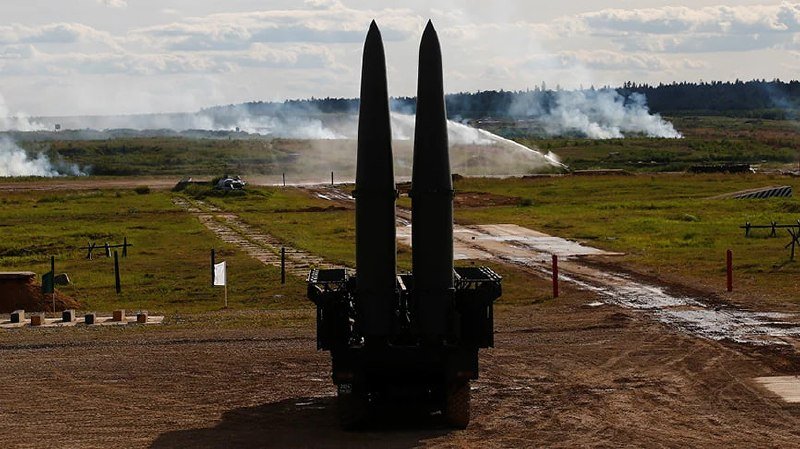
A Pentagon plan to announce a further reduction of US forces in Europe during last month's NATO defence ministers' meeting in Brussels was blocked after allied resistance, the Wall Street Journal reported early on 3 July 2026. The disclosure, relayed through OSINTdefender on Telegram at 02:30 UTC and corroborated within the hour by Iran's Fars News Agency, offers the clearest picture yet of how far the Department of War under Secretary Pete Hegseth was prepared to go — and how quickly the alliance pushed back.
The episode is small in scope and large in signal. A scheduled withdrawal announcement, deferred inside the room in Brussels, tells a wider story about how the Trump administration's second-term defence posture is negotiated against a NATO machinery that still has institutional weight. It also illustrates, again, that wire reporting on transatlantic basing now moves at the speed of Telegram channels.
What the WSJ report says — and what the wires relay
According to the Wall Street Journal reporting summarised by OSINTdefender and Fars News, Hegseth had been prepared to announce additional reductions to the US military presence in Europe beyond the deployments already cancelled or withdrawn. The forum was last month's NATO defence ministers' meeting in Brussels. The plan was blocked after concerns were raised inside the alliance, the Journal reported. Fars News's write-up, published at 01:06 UTC on 3 July, framed the episode as the US "temporarily stopping" the drawdown plan, attributing the underlying reporting to the Wall Street Journal and naming Hegseth directly as the official who had intended to make the announcement.
Neither OSINTdefender nor Fars News published the Journal's full text. Both reproduce its central claim and the institutional context: the meeting, the official, the direction of travel, the resistance. The thread converges on the same architecture — Hegseth wanted to use the Brussels gathering as a venue, and was pulled back before he could.
Two structural details matter. First, the reductions were described as "additional" — meaning they were on top of an already announced baseline of cancellations and withdrawals, not a reversal of zero. Second, the blocking happened inside the room, before any public statement. The decision was not leaked by a defeated faction; it was averted.
The Hegseth doctrine and its European reception
The Wall Street Journal's account fits a pattern visible since the start of the second Trump administration: a Pentagon willing to make basing decisions quickly, and a European side that responds more cautiously, sometimes publicly and sometimes — as in this case — in private at the ministerial table. The mechanism here is the NATO defence ministers' format, a twice-yearly gathering that produces communiqués but also, less visibly, gives allies a chance to press senior American officials before announcements become faits accomplis.
For European capitals, the calculation is familiar. They want continuity of the US deterrent — particularly with Russia's war on Ukraine in its fifth year — but they are also being asked to absorb more of the conventional burden, including through defence-spending targets that the alliance has repeatedly raised. A further drawdown before European stockpiles and force posture have caught up is, in that frame, a sequencing problem rather than a strategic one. The Brussels blocking is consistent with that reading.
There is a counter-reading worth marking. Officials in Washington pushing for the cuts may view them as a cost-discipline measure: American taxpayers underwriting a European security order that, in their telling, has under-delivered on burden-sharing for three decades. In that frame, the deferral in Brussels is the alliance again slowing a recalibration it has long postponed. Both readings sit on the public record in different forms; neither can be confirmed from the Telegram-relayed summary alone.
What we verified, and what we could not
The verifiable spine of this story is narrow but consistent. OSINTdefender, citing the Wall Street Journal, reports that Hegseth planned to announce additional troop cuts in Europe at last month's NATO defence ministers' meeting in Brussels, and that the proposal was blocked after concerns from within the alliance. Fars News, citing the same Journal report, adds that the plan has been "temporarily stopped" and identifies Hegseth by title. Both items are dated 3 July 2026, with timestamps of 02:30 UTC and 01:06 UTC respectively.
What we could not verify, and do not assert:
- The specific number of additional troops or units that were to be cut. The Journal summary does not quantify them, and neither Telegram item supplies a figure.
- The identity of the officials who blocked the announcement. The report attributes the resistance to "concerns inside the alliance" without naming ministers, permanent secretaries, or the NATO Secretary General's office.
- Whether the deferral is procedural (a postponement to a later ministerial) or substantive (the plan shelved indefinitely). Fars News's word "temporarily" is the only temporal marker in the available reporting; the Journal's own characterisation is not visible in the relayed excerpts.
- Whether the cuts that were already announced — described in the OSINTdefender item as "previously canceled and withdrawn deployments" — are themselves proceeding on schedule, paused, or under renegotiation. The thread does not address them.
- The Wall Street Journal's own publication timestamp, headline, and byline. Both relays refer to "the Wall Street Journal" without linking to the article directly; the underlying WSJ URL does not appear in the source items provided.
The ledger matters because the story's significance is in the specifics. A deferred announcement is not a cancelled one. A Brussels blocking is not a Washington reversal. Readers should hold the framing carefully: this is a credible report of a near-miss, not a confirmation that the drawdown is off the table.
Stakes and the road to the next ministerial
If the Journal's account is accurate, the alliance has, for now, preserved the status quo on European basing through the back channel of a defence ministers' meeting. That preserves planning assumptions for NATO's eastern flank during a year in which Ukraine's defence remains the alliance's most politically expensive line item. It also preserves the optics of US engagement ahead of a likely autumn summit season and US budget negotiations.
The forward question is whether the deferral is a pause or a pivot. Hegseth's reported intent to use the Brussels platform suggests the Department of War sees ministerial meetings as the right venue — high-level, allied-led, and harder for Congress to micromanage. A future NATO gathering, or a US-only announcement outside the alliance framework, remains a credible next step. European defence planners will be watching not for whether further cuts are proposed, but for whether they are proposed with allied forewarning or against it.
The broader structural pattern is harder to miss. Transatlantic security is being re-priced in real time, with the Pentagon acting faster than its allies and the allies pushing back more visibly than they did five years ago. The Brussels episode is a single data point in that re-pricing — small in itself, but a useful one.
This article relies on Wall Street Journal reporting as relayed through OSINTdefender and Fars News on Telegram; the underlying Journal article is not directly accessible in the thread, and unverifiable specifics have been left out.
Wire provenance
This editorial synthesis draws on the following public wire/social posts:
- https://t.me/s/osintlive
- https://t.me/s/FarsNewsInt
- https://t.me/s/wfwitness