Three years after Toronto pulled it, ‘Satluj’ reaches a global audience uncut
A Khalra-inspired drama that never made it past festival censorship in 2022 has begun streaming in full on ZEE5 Global — a quiet end to a long fight over who gets to tell Punjab’s recent history.
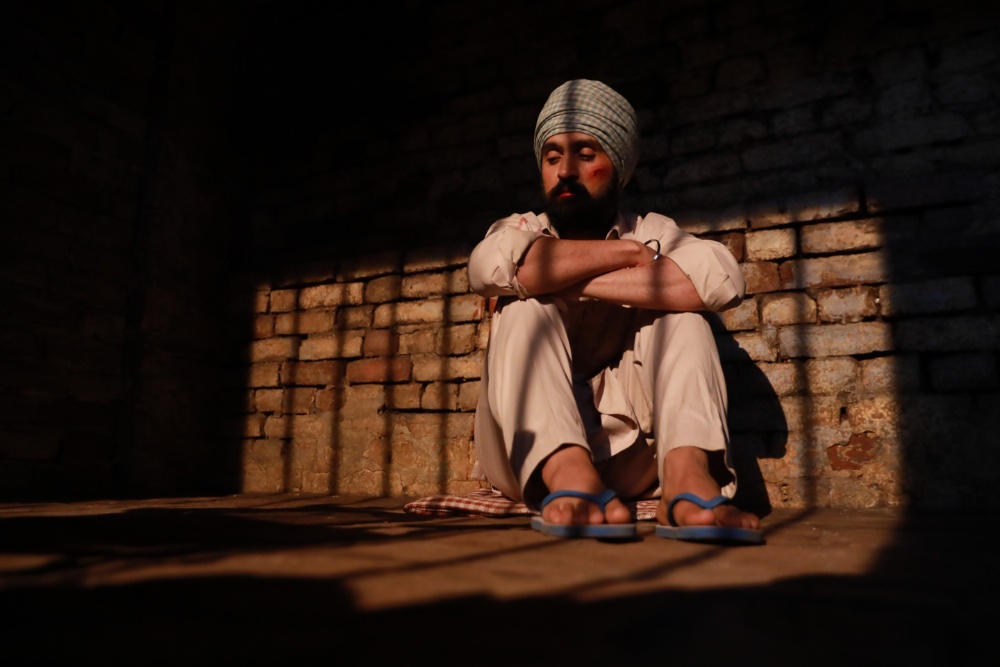
On 3 July 2026 at 14:45 UTC, a Punjabi-language drama whose very title was once treated as too combustible for a Canadian film festival began streaming worldwide, intact and uncut, on ZEE5 Global. The film now called Satluj — named for the river that has long stood in for Punjab itself — is the same project pulled from the 2022 Toronto International Film Festival under its original name, Punjab ’95, after Sikh-diaspora organisations objected to its central characterisation of the human-rights defender Jaswant Singh Khalra.
The three-year gap between a censored Toronto premiere and a clean global release is the story. It is a story about who gets to set the terms for depicting Punjab’s recent past, about the leverage of organised diaspora politics in the cultural marketplace, and about a streaming platform willing to absorb political risk in 2026 that a festival hierarchy was not willing to absorb in 2022. It is also, more quietly, a story about the economics of attention: in a market saturated with Punjabi-pop crossover hits, a film that once drew headlines for being banned is now a release with built-in narrative gravity.
What changed between 2022 and 2026
The simplest version of the change is the credits. The film is directed by Honey Trehan and led by Diljit Dosanjh, the actor-singer whose Punjabi-pop crossover has made him one of the most-followed Indian performers on social media. The 2022 controversy centred on a climactic scene that Khalra’s family, Sikh activist groups and Canadian political figures, including Ontario’s then-attorney general, asked TIFF to cut. TIFF obliged. The producers withdrew the film rather than screen a version they did not authorise. The title Punjab ’95 was retired at some point thereafter, and the project re-emerged in 2026 under a new name, with no reported concessions on content. Variety’s 3 July 2026 report describes the ZEE5 Global release as “the complete film, without any cuts or compromises,” a phrasing chosen, presumably, to settle the question before viewers ask it.
The deeper change is structural. In 2022, the Toronto International Film Festival was the bottleneck: a single gatekeeper deciding whether a particular depiction of a 1990s Punjab was fit for a North American audience. In 2026, the bottleneck has moved. ZEE5 Global, an over-the-top platform serving the South Asian diaspora and a growing domestic audience, does not have to clear its slate with a Canadian arts organisation or a Sikh-Canadian lobby. It clears it with its own subscribers, with advertisers, and with the regulatory environment in India, where the film has already received a censor-board certification in some form before this international rollout. The diaspora objection that defeated Punjab ’95 in Toronto does not automatically translate into leverage over a Mumbai-headquartered streaming service that depends primarily on Indian subscribers.
The shift is not unique to this film. It is the same shift that has carried series like Paatal Lok and Scam 1992 to global charts on Netflix and Amazon Prime Video: a domestic Indian platform economy that can finance politically uncomfortable material because its audience is large enough, and foreign enough from the diaspora pressure-points, to absorb the controversy.
The Khalra question, restated
The film dramatises the life of Jaswant Singh Khalra, a human-rights activist whose 1995 disappearance — and the police investigations that followed — became one of the most contested episodes of Punjab’s post-1984 history. Khalra was investigating alleged cremations carried out by Punjab Police in the early 1990s; he was abducted in 1995 and his body has never been recovered. A Central Bureau of Investigation inquiry ultimately led to convictions against several police officers, including a senior superintendent, in 2007. He is, in the language of the Indian human-rights establishment, a martyr of the Sikh cause, and the same name carries contested political freight across the diaspora.
This is the territory Satluj walks into. The 2022 dispute was not about Khalra’s heroism — that was a settled premise of the film — but about the way he was portrayed at the moment of his death, with critics arguing the scene dignifed a Sikh radical beyond what the evidence supports and could expose real witnesses to retaliation. The producers disputed that reading. Three years on, the public argument has gone quiet; the film is out, intact, and is being received, in Variety’s framing, as a piece of national cinema rather than a provocation.
Streaming and the new leverage map
There is a global-local geometry to be read here. Punjabi-language cinema has been the fastest-growing regional industry in India by both box-office share and YouTube consumption for several years, a shift carried by the visibility of figures such as Dosanjh and by a domestic exhibitor base willing to programme in the language. Satluj enters that market not through a festival-cinema pipeline but through a subscription-video service with distribution in over 190 countries, in Punjabi, Hindi and several other Indian languages.
For the producers, the route offers something a censored festival premiere could not: a release that is both wide and under the platform’s direct control, with no intervening gatekeeper whose pressure can be mobilised by a single phone-call campaign. For the diaspora groups that pressed TIFF, the release is a defeat of sorts — the film they argued should not be screened is now screening globally. For the Indian regulatory environment, the film has presumably been through the Central Board of Film Certification in the form it appears on the platform. For the international audience, the experience of watching the film is now decoupled from the 2022 controversy: the controversy becomes a marketing story, the film becomes a product, and the original political questions get folded into the paratext of review pieces such as this one.
The unsatisfying part, from a reporting standpoint, is that the public record is thin on what, if anything, was changed in the production between 2022 and 2026 beyond the title. Variety reports the release as complete and uncut, and the producers’ position, as Variety paraphrases it, is that this is the film they always wanted to show. The critics who pressed TIFF in 2022 have, as of writing, not been quoted in a comparable venue contesting that claim. The reasonable reading is that the title change gave both sides a face-saving way to land in a different commercial channel; a more cynical reading is that the substance of the film did not change and the leverage simply moved platforms. Both readings are compatible with the same on-screen product.
What to watch next
Three things will determine whether Satluj matters beyond the release-day headlines. First, whether ZEE5 Global publishes viewership data — the platform has historically been more opaque than Netflix or Amazon Prime Video on numbers — and whether the film’s Punjabi-language cohort shows up in the first week. Second, whether Indian and Punjabi-language press covers the film on its artistic merits rather than as a re-litigation of the 2022 controversy; the tone of that coverage will tell us whether the film has been absorbed into the cultural conversation or remains a cause. Third, whether the Khalra case, already a subject of court proceedings that have stretched across three decades, generates any fresh procedural movement while the film is in the public eye — the kind of synchronicity that would convert a release into a moment.
What is certain is that the longer arc has bent towards the producers. A film that could not survive contact with a 2022 festival gatekeeper is, in 2026, a streaming release with a global footprint, an A-list lead, and a title chosen for the river rather than the year. The dispute has not gone away; the venue has simply changed.
— This piece was framed by the desk as a study in cultural-distribution leverage rather than a verdict on the underlying 1990s Punjab controversy, on which Monexus takes no position. The source material does not specify what, if any, content was altered between the 2022 Toronto-bound cut and the 2026 ZEE5 Global release beyond the title change.