Spain's World Cup has a 19-year-old fulcrum, and Yamal is not flinching
While the world's cameras keep finding Lamine Yamal, Spain's manager keeps talking about midfield. That tells you where this World Cup is going to be won.
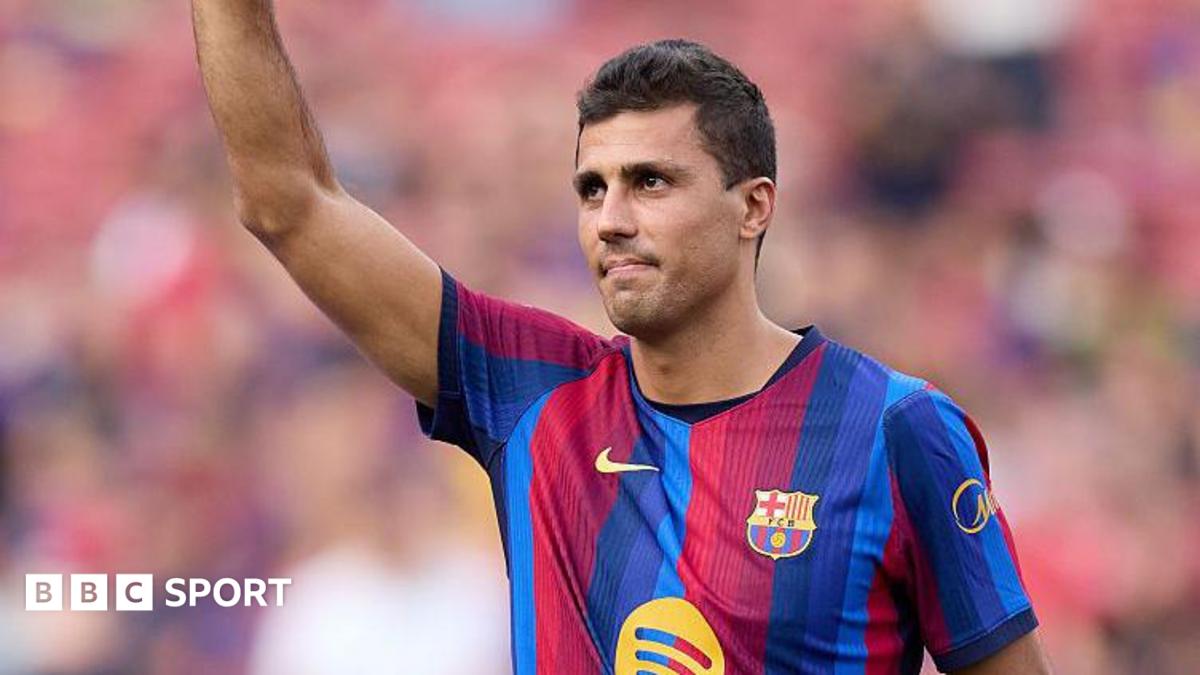
On 3 July 2026, the morning Spain's squad regrouped at their Dallas-area base, Luis de la Fuente was asked the obvious question. Was the noise around Lamine Yamal a problem? The manager, as recorded in a Guardian Q&A published two days later, smiled through a deflecting opener ("You've filtered these, right?") and then proceeded to spend most of his reply on Spain's midfield, on Rodri's restored authority, on Pedri's range. Yamal, the 19-year-old Barcelona winger, came up almost in passing: advice for him was, the manager suggested, the same advice he gives any young player, which is to keep playing. That an entire press conference did not rotate around the boy wonder said everything about where Spain want the axis of their World Cup to sit, and nothing about where it actually will.
A little context helps. Spain arrived at this tournament as European champions and as the side most neutrals circled in red on the bracket, not because they were favourites, exactly, but because de la Fuente's group has spent three years building an identity around control. The Spanish football federation's project, articulated in interviews from Madrid and trailed by outlets including the Guardian and ESPN, has been patient possession, a high defensive line, and a midfield three that can rotate possession against any press. Into that machinery has been slotted a 19-year-old whose tape already looks like edited highlights of players twice his age. Yamal is Spain's X-factor, but he has not been allowed to become Spain's storyline.
The temptation to make him one is real. It is in the stands, where Barcelona shirts with "YAMAL 19" have been a quiet retail phenomenon since his Camp Nou breakthrough; it is in the Spanish-language press, where debates about his role and his minutes cycle weekly; and it is in the wider football internet, where every dribble isocharted and every misplaced pass scanned for the influence of fame. None of that has come from the dressing room. By the time the knockout rounds were being finalised on the evening of 5 July, with Spain's last-16 tie against Portugal confirmed for Dallas on Monday (per ESPN's round-of-16 reporting), de la Fuente was still answering questions that, on paper, were about Yamal, and answering them with midfielders.
That is also where the structural read sits. Project Spain under de la Fuente was always a project about midfield. The 2008-2012 era won a World Cup and two European Championships with Xavi, Iniesta, Busquets and a wing order. This version does not have a Busquets, and does not pretend to, but it does have the same institutional faith in possession as a form of pressure relief. When the manager says, with characteristic understatement, that he has "the best midfield in the world," he is not throwing a line, he is describing a load-bearing wall. Yamal is the decoration on the façade. Pull him out and the wall holds. That is what makes Spain more dangerous in a knockout bracket than a side that simply gifts the ball to its most gifted attacker and asks him to settle the match.
There is also the unavoidable Portuguese counter-narrative waiting in Dallas on Monday. Cristiano Ronaldo, eleven years Yamal's senior and still starting for Portugal, told reporters on 5 July that this World Cup will be his last. "They've tried to kill me for 23 years," he said, framed in a six-tournament career of 232 caps and 146 international goals. The contrast is almost too pointed: a 41-year-old veteran preparing to hand the baton to a generation he will not join, against a 19-year-old preparing to take it, with neither man talking much about the exchange. The ESPN and Guardian wires both carried the Ronaldo line within hours of one another, and both treated it as a discrete story from Spain's. That separation is itself the story. A 19-year-old fulcrum against a 41-year-old valediction, and the bracket has arranged them as the undercard for everyone else's last sixteen. Spain will not mind.
The stakes, plainly, are sporting, generational, and commercial. Spain are two wins from the last four. A win over Portugal on Monday books a quarter-final against either Mexico or England, depending on how the Azteca tie resolves. (Thomas Tuchel, who told reporters on 5 July his side were coping with altitude in Mexico City, would be a juicier opponent than Javier Aguirre's hosts.) Win that, and the semi-final comes back into view. For Yamal personally, the milestones are starting to gather: another goal ties him with the youngest World Cup scorers in the modern record, another assist puts him past the Argentine benchmark that has floated around his family WhatsApp for two years. For de la Fuente, the brief is simpler. Keep the kid playing. Keep the midfield speaking. Let the noise do what the noise does. The manager, plainly, has been preparing for this exact frame of attention for years. On the morning of 3 July, his midfield was happy to do the talking for him.
Sources
- Guardian: "Luis de la Fuente: 'I say this with the greatest respect: we have the best midfield in the world'" (5 July 2026, 07:00 UTC)
- ESPN: "Ronaldo: 'This will be my last World Cup'" (5 July 2026, 21:31 UTC)
- Guardian: "'They've tried to kill me for 23 years': Cristiano Ronaldo says this World Cup will be his last" (5 July 2026, 20:41 UTC)
- Guardian: "England braced for a Mexican whirlwind as Tuchel strives for calm amid the chaos" (5 July 2026, 00:55 UTC)
- Guardian: "'Here to write our own chapters': England not daunted by unique occasion of Mexico game, says Tuchel" (5 July 2026, 02:51 UTC)
Desk note: Monexus read Spain's progression on the morning of 3 July mainly through the Guardian's manager Q&A and the wider wire, choosing the player-as-project framing rather than the family-paparazzi framing as the more analytically durable read.