The body on display: how a Tehran funeral became a foreign-policy stage
Foreign delegations filed past the casket of Iran's Supreme Leader in Tehran this week. The guest list — not the ceremony — is the news.
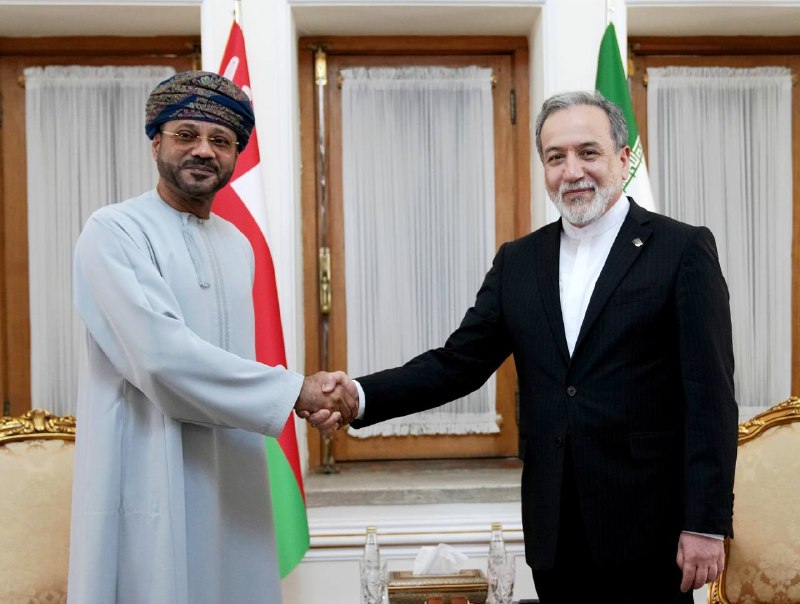
Foreign delegations arrived in Tehran on 3 July 2026 to pay respects at the lying-in-state of Iran's Supreme Leader. By 08:02 UTC, Tasnim's English service and Middle East Spectator were circulating images of a large Yemeni delegation, a delegation of Russian scholars, and a separate delegation of female students from across the world filing past the casket. A piece of the late leader's robe had already been displayed at the shrine. The guest list — not the liturgy — is the news.
This is not a normal mourning cycle. The body on display belongs to Ali Khamenei, who has shaped the Islamic Republic for nearly four decades. The Iranian state is using the funeral as a foreign-policy instrument: a curated sequence of foreign visitors whose presence communicates which relationships the next Supreme Leader intends to inherit, and which the Islamic Republic expects the rest of the world to read as legitimate. The image management is deliberate. The body is the message; the visitors are the channel.
Who came, and what the line told us
By mid-morning UTC on 3 July, three distinct delegations had been photographed in sequence. First, according to the English-language Tasnim account, a delegation of Russian scholars paid tribute at the body of the martyred Imam. Then, per the same outlet's English wire, a delegation of female students "from all over the world" — a phrase Tasnim used without naming the institutions or countries of origin — paid their respects, with the outlet's editorial line carrying the hashtag must_rise. Finally, by 08:02 UTC, Middle East Spectator reported a "large Yemeni delegation" doing the same. Tasnim simultaneously circulated an image of a fragment of the late Imam's robe on display at the shrine.
Each line in that procession reads differently to a foreign-policy analyst. The Russian scholars' presence telegraphs that the strategic partnership between Moscow and Tehran — built on battlefield cooperation in Ukraine, drone and missile technology transfer, and shared sanctions exposure — extends beyond state-to-state machinery into the cultural and religious sphere. The Yemeni delegation's presence is the more pointed signal. Sanaa, held by the Houthi movement since 2014 and at war with a Saudi- and Emirati-backed coalition, has been one of Iran's most visible clients in the Arab world. A Houthi-aligned delegation in Tehran is a declaration of continuity: the axis of resistance intends to hold.
The female-student delegation is the softer signal — civil-society framing, gender-balanced optics, a counter-image to the regional caricature of the Islamic Republic as a closed clerical fortress. It is also the most ambiguous, because Tasnim did not name the students' countries or institutions, and the line of visitors is the kind of curated scene that can be assembled from friendly diaspora networks rather than from genuine foreign representation.
How the wire handled it
Western wire services have, on past precedent, treated Iranian state-media footage of foreign visitors with care. AP, Reuters and AFP routinely describe such imagery with the caveat "in images released by Iranian state media," because the editorial control sits in Tehran. The Tasnim wire service is itself part of the Iranian state media ecosystem — founded in the 2000s as a domestic outlet close to the Islamic Revolutionary Guard Corps and now operating a multilingual international arm — and its footage of foreign visitors should be read as part of the Iranian state's communications strategy, not as neutral documentary photography.
That is not a dismissal. It is a calibration. The presence of the Russian scholars and the Yemeni delegation in the procession is consistent with patterns the open-source record already establishes: documented military cooperation between Iran and Russia since 2022, documented Houthi-Iranian alignment through the war in Yemen, documented Iranian courting of foreign academics and religious figures to extend the regime's soft-power footprint. The Tasnim images corroborate that pattern; they do not, on their own, prove the depth of any specific bilateral relationship. The framing the reader receives should reflect both — what the footage shows, and the editorial hand on the camera.
What the body on display is doing, structurally
A succession in a theocratic state is a moment of structural vulnerability. The Islamic Republic has had one Supreme Leader since 1989. Every major institution — the Guardian Council, the Expediency Council, the Assembly of Experts, the IRGC, the intelligence services, the bonyads, the foreign-affairs and oil ministries — has been calibrated to his preferences, his networks, his reading of which faction inside the system is trustworthy and which is not. The successor, whoever they turn out to be, inherits not just a title but a coalition.
That is the structural reason the funeral matters. Funerals of long-serving leaders are not just rites of passage; they are summits. Every foreign visitor who files past the body is, in effect, taking a public position on which internal coalition they expect to win. The Russians want continuity, because the partnership has paid them battlefield dividends. The Houthis want continuity, because their missiles and drones have an Iranian provenance and an Iranian logistic chain. The female-student cohort, if genuinely transnational, is signalling that the regime's projection of ideological reach survives the transition.
The piece of robe on display is the smallest, most theatrical detail, and it is worth dwelling on. In Shi'a ritual practice, fragments associated with a revered figure are circulated for blessing — a normal devotional form. That Tasnim chose to highlight this particular fragment, on this particular day, suggests a campaign: the regime is staging not just a mourning but a relic cult around the late leader, much as it did around Ayatollah Khomeini in 1989. The political purpose of relic cultivation is to fix the dead leader's authority beyond dispute — to make questioning of his legacy an act of impiety rather than an act of politics.
Counter-narrative: the visitors do not necessarily speak for their states
There is a counter-reading worth taking seriously. A "delegation of Russian scholars" is not the Russian state. Scholars affiliated with Russian institutions can travel to Iran through academic and religious exchange channels that do not require a Kremlin travel order; Russian-Orthodox and Russian-academic engagement with Iran has its own logic, dating back to the post-Soviet 1990s, that is not reducible to the war in Ukraine. The "large Yemeni delegation" may include figures whose relationship to the Houthi political-military command is loose, partial, or contested — Yemen's internal politics are sufficiently fractured that no single faction speaks for the whole country.
The female-student line is the most over-determined and the least verifiable. Tasnim's phrase "from all over the world" is editorial, not forensic. Without named institutions, named countries, or named individuals, the cohort cannot be checked. It could include Iranian diaspora students who hold foreign passports; it could include students from friendly states who have been brought in for the occasion; it could include a much smaller core than the framing implies. Western readers should hold this image lightly, while still noting that the Iranian state clearly believes the image is worth producing.
What is not yet known, and why it matters
Three things remain genuinely unknown on 3 July 2026. First, the identity and ideological line of the next Supreme Leader. The Assembly of Experts has the constitutional authority, and its deliberations are not public. Second, the policy direction of the new office on the file that matters most to Iran's neighbours — the nuclear file. Iran's enrichment programme has been the subject of intermittent talks with the United States since 2025; whether the next Supreme Leader treats the file as leverage, as a fait accompli, or as a deliverable is not knowable from the funeral guest list. Third, the operational continuity of the regional axis. The Houthi missile and drone campaigns, the network of Iraqi militias, the Lebanese affiliates — these are now semi-autonomous sub-state actors with their own political economies. A new Supreme Leader inherits a portfolio, not a switchboard.
What is known is that Tehran is investing significant symbolic capital in staging this transition as continuity rather than rupture. The body is on display; the visitors are filing past; the relics are circulating. The implicit message to both domestic factional rivals and foreign powers is that the Islamic Republic's external architecture will outlast the man who built it. Whether that message survives contact with the internal politics of succession is the open question for the rest of 2026.
This publication read Tasnim News and Middle East Spectator as state-aligned inputs, and treated their footage of foreign visitors as Iranian editorial output rather than neutral documentary. Where the same images might appear in Western wires, they will carry the standard "in images released by Iranian state media" caveat; that caveat, not the underlying presence, is the news.
Wire provenance
This editorial synthesis draws on the following public wire/social posts:
- https://t.me/Middle_East_Spectator
- https://t.me/tasnimplus
- https://t.me/tasnimnews_en
- https://t.me/tasnimnews_en
- https://en.wikipedia.org/wiki/Tasnim_News_Agency
- https://en.wikipedia.org/wiki/Ali_Khamenei
- https://en.wikipedia.org/wiki/Assembly_of_Experts
- https://en.wikipedia.org/wiki/Yemeni_Civil_War_(2014%E2%80%93present)
- https://t.me/Middle_East_Spectator
- https://t.me/tasnimplus
- https://t.me/tasnimnews_en
- https://t.me/tasnimnews_en
- https://en.wikipedia.org/wiki/Tasnim_News_Agency
- https://en.wikipedia.org/wiki/Ali_Khamenei
- https://en.wikipedia.org/wiki/Assembly_of_Experts
- https://en.wikipedia.org/wiki/Yemeni_Civil_War_(2014%E2%80%93present