Kyiv strikes railway bridge and electronic-warfare sites across occupied Crimea and Sevastopol
Overnight strikes hit a rail bridge over the Krasnogvardeisky canal, a radio-electronic-warfare station near Artemivka, and an intelligence unit in Sevastopol — a methodical campaign to attrit Russian military logistics in occupied Crimea.
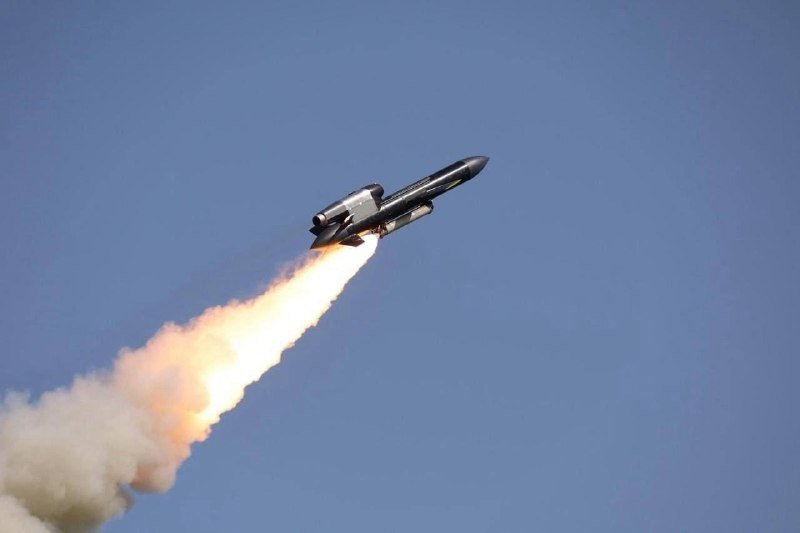
Ukraine's General Staff confirmed on 3 July 2026 that overnight strikes hit three targets across occupied Crimea: a railway bridge over the Krasnogvardeisky canal near the town of Krasnogvardiiske, used by Russian forces for military logistics; a radio-electronic-warfare station near Artemivka; and an electronic-reconnaissance unit in Sevastopol. The strikes, reported by the General Staff briefing channel at 14:48 UTC and elaborated by open-source monitors in the following hour, are the latest in a months-long campaign by Kyiv to attrit Russian sustainment capacity on the peninsula.
The pattern is now familiar enough to name. Ukraine is methodically taking apart the rail and electronic backbone that allows Russia to move men, fuel, ammunition and signals-intelligence equipment across Crimea and onward to the southern axis of the front. The Krasnogvardiiske bridge is a particular prize: it sits on the only direct rail line crossing the Krasnogvardeisky (North Crimean) canal and feeds the logistics spine that connects occupied Kherson, Melitopol and Mariupol. Knocking it out, even temporarily, forces Russian forces onto longer road convoys that are far easier to target with loitering munitions and first-person-view drones.
What was struck, and why it matters
The Krasnogvardiiske canal crossing is not a decorative piece of infrastructure. Russian forces have used the rail line running across it since at least the early months of the full-scale invasion to resupply units in southern Ukraine, including the grouping that has historically threatened Zaporizhzhia and the road west toward Mykolaiv. A bridge strike does not eliminate the route — rail traffic can in principle be diverted, pontooned, or trucked around — but it slows the cadence of resupply and forces commanders to keep a larger share of their combat power on logistics duty rather than at the front.
The second target, a radio-electronic-warfare station near Artemivka, sits at the heart of the Russian effort to jam Ukrainian drones, GPS-guided artillery and communications along the southern axis. REW stations are unglamorous but decisive: they degrade the precision munitions that have made Ukrainian artillery effective since 2024, and they protect Russian drone operators conducting ISR and correction missions. Taking one off the air, even for days, reopens a window for Ukrainian fires.
The third target, an electronic-reconnaissance unit in Sevastopol, is the most politically sensitive. Sevastopol hosts the headquarters of Russia's Black Sea Fleet and a dense constellation of military-intelligence facilities that have supported operations against Ukrainian ports and shipping. A hit on a reconnaissance node inside the city is a reminder that no part of occupied Crimea is outside the reach of Ukrainian munitions.
The counter-narrative, and why it does not hold
Russian-aligned channels have, in the past, dismissed Ukrainian claims of infrastructure strikes as exaggerated or fabricated, or attributed damage to Ukrainian drones that were intercepted by Russian air defence. The framing is consistent: Kyiv announces, Moscow denies, and the underlying war of attrition continues below the surface of the press releases.
That framing does not survive contact with the open-source record. Independent OSINT monitors have repeatedly geolocated damage to the kind of infrastructure Ukraine describes — railway bridges, REW masts, port facilities — and the pattern of strikes has been cumulative rather than occasional. If Kyiv were inventing successes, it would not need to recycle the same three target categories, week after week, with the same modest, technical language. The Russian reflex to deny is informative about propaganda posture; it is not informative about facts on the ground.
A separate counter-narrative worth naming is the war-weariness line — that these strikes are escalatory, that they will provoke Russian retaliation against Ukrainian cities, and that the diplomatic cost outweighs the military gain. The argument has surface plausibility. It is also the argument Kyiv has explicitly rejected since the full-scale invasion began: that defensive strikes against an occupying force's logistics are not escalatory in the moral or legal sense, and that the burden of escalation sits with the party that annexed the territory in the first place. Russian bombardment of Ukrainian cities has been continuous for more than three years; the policy choice is whether Ukraine is permitted to make it more expensive, or whether it is to be denied the means.
The structural picture
What is happening in Crimea is not a series of disconnected tactical events. It is the slow grinding down of the infrastructure that makes the occupation sustainable. Peninsula logistics depend on a small number of chokepoints: the Kerch Strait railway, the North Crimean canal crossings, the road bridges and rail spurs feeding Sevastopol and Yevpatoriya, the port infrastructure at Feodosia and Kerch. Each strike degrades the system; cumulatively, they raise the cost of keeping troops in southern Ukraine and shorten the horizon over which Moscow can sustain an offensive.
This is not new doctrine. It is the same logic that produced the campaign against Russian air bases in 2024 and the strikes on the Kerch bridge in 2022 and 2023 — but it is being applied with greater regularity and against a wider target set. Electronic-warfare and reconnaissance nodes are now within scope because Ukraine's deep-strike capacity has matured, not because the targeting logic has changed. The bridge was hit because it was on the list; the REW station was hit because it was on the list; the reconnaissance unit in Sevastopol was hit because it was on the list.
The other structural feature worth naming is the information tempo. Three Telegram channels — the General Staff, OSINTLive and the WarTranslated aggregator — carried the strikes within roughly half an hour of each other, with overlapping but not identical detail. That is the operating rhythm of a wartime information environment in which the official Ukrainian claim, the open-source verification, and the English-language translation move in near-real-time. It complicates the kind of fog-of-war framing that was routine in earlier phases of the conflict, and it puts pressure on Russian denials to keep pace.
Stakes and what to watch next
If the trajectory holds, the operational consequence is a steady erosion of Russian logistics tempo on the southern axis. Ukrainian brigades will not need to mass for a single decisive blow if the supply tail behind the Russian grouping thins by even ten or fifteen percent over a quarter. The political consequence is harder to read. Moscow has, since 2022, treated strikes on Crimea as politically intolerable and rhetorically escalatory; the volume of strikes has nevertheless increased. That gap between rhetoric and reality is itself an indicator.
Three things are worth watching in the weeks ahead. First, whether Russian forces attempt to bypass the Krasnogvardiiske canal crossing with a temporary rail spur or a pontoon bridge — and how quickly. Second, whether the REW and reconnaissance losses force a visible degradation in Russian drone activity along the southern front, which is the most testable near-term effect. Third, whether Kyiv's deep-strike cadence continues at this tempo or compresses further.
The honest caveat is also worth recording. The reporting here rests on Ukrainian military communications and on the open-source channels that aggregate them. Independent visual confirmation of the specific bridge and station damage is not yet in the public record at the time of writing; the sources do not specify casualty figures, the ordnance used, or the precise extent of structural damage. The pattern of past strikes suggests the claims will hold up to scrutiny, but this publication will update the record if and when satellite imagery, photographic geolocation, or independent on-the-ground reporting corroborates — or complicates — the overnight claims.
Desk note
Where Western wires have tended to compress overnight strike packages into single line-items, Monexus treats the Krasnogvardiiske bridge, the Artemivka REW station and the Sevastopol reconnaissance unit as three distinct pieces of a single campaign against Russian sustainment in occupied Crimea — and reads them inside the longer pattern of attrition against the peninsula's logistics spine.
Wire provenance
This editorial synthesis draws on the following public wire/social posts:
- https://t.me/noel_reports/
- https://t.me/osintlive/
- https://t.me/wartranslated/