Ukrainian missiles hit Russian power plant in Belgorod as long-range strike campaign deepens
Overnight strikes on the Luch power plant in Belgorod mark the latest in a widening Ukrainian campaign against Russian energy and industrial sites deep inside the border regions.
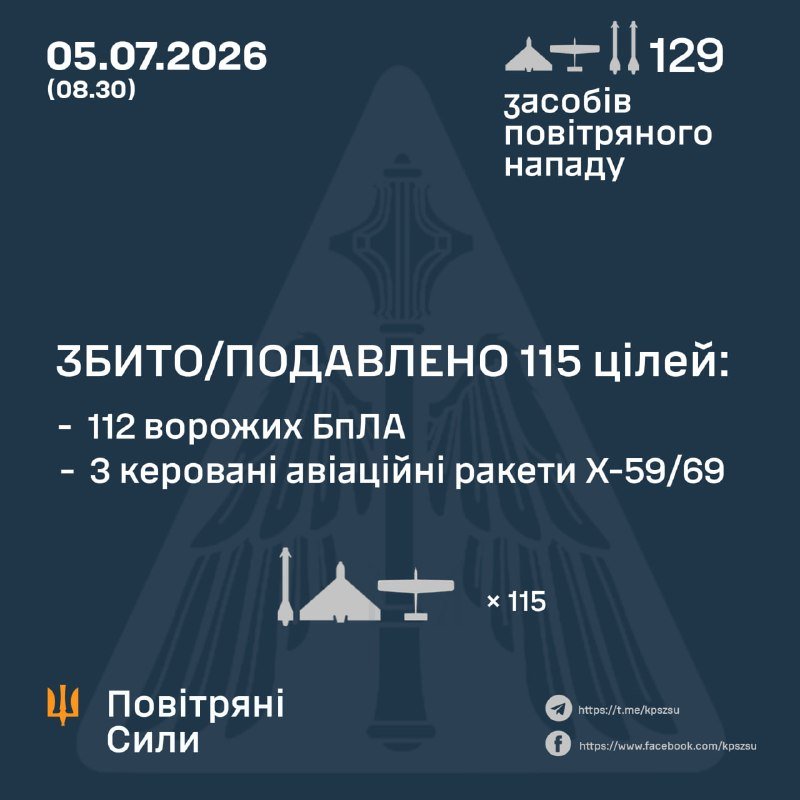
Overnight on 3 July 2026, residents of the Russian border city of Belgorod reported a major Ukrainian missile attack aimed at the Luch power plant, with locals describing power and water outages and at least one column of smoke rising from the industrial site. The strike, reported by both Ukrainian and Russian media between roughly 21:10 and 21:39 UTC, extends a months-long pattern in which Kyiv has used domestically produced and Western-supplied long-range systems to push destruction deeper into Russian territory — beyond the frontline oblasts and into the energy grid that feeds them.
What began in 2024 as a campaign against oil refineries and military-industrial sites has, by mid-2026, settled into a more deliberate tempo: critical civilian-adjacent infrastructure, signalling pressure on the Russian civilian economy without crossing the line that Western backers have drawn around direct attacks on the Kremlin itself.
The Belgorod strike
According to the Telegram channel OSINTtechnical, relayed via osintlive at 21:10 UTC on 3 July 2026, locals in Belgorod described a multi-missile barrage targeting the Luch plant, with at least one visible column of smoke and reports of power and water outages across surrounding districts. BellumActaNews, a Telegram channel tracking the conflict, confirmed the strike at 21:39 UTC, citing both Ukrainian and Russian-language sources and noting that the Luch facility, a power generation site on the northern edge of the city, was the primary reported target.
The geography matters. Belgorod sits roughly 40 kilometres from the international border and has functioned, since the early months of the full-scale invasion, as a logistics and staging hub for Russian forces operating in the Sumy and Kharkiv sectors. The Luch plant supplies electricity to the city itself and to parts of the Belgorod Oblast grid, one of the regions that has absorbed a substantial share of the war's industrial relocation from more exposed frontline areas.
The strike is the latest in a sequence that has accelerated through the spring and summer of 2026. Ukrainian long-range systems — domestically produced Neptune derivatives, ATACMS-class munitions supplied by Western partners, and aerial drones operated by the SBU and GUR military intelligence — have hit refineries in Krasnodar, fuel depots in Bryansk and Tula, and airfields as far east as Engels. Belgorod has been struck repeatedly, but the targeting of a generation asset rather than a fuel depot or ammunition point signals a shift in Ukrainian priorities toward sustained economic pressure.
The counter-narrative from Moscow
Russian state-aligned Telegram channels have framed the Belgorod barrage as an attack on civilian infrastructure, emphasising the power and water outages and characterising the broader Ukrainian long-range campaign as a Western-enabled assault on Russian non-combatants. Russian-language military bloggers — including channels that have generally been critical of the defence ministry's battlefield management — have nonetheless, in recent months, shifted toward a more sympathetic framing of Belgorod residents as a population under sustained bombardment.
That framing is not without substance. Power and water outages in a city of roughly 400,000 people during a Russian summer are a real disruption, and the boundary between military-industrial and civilian-adjacent infrastructure in the Russian border belt is thin. Yet the framing also serves a strategic purpose. By recharacterising Ukrainian strikes on generation assets — which feed military logistics as well as civilian consumption — as attacks on non-combatants, Moscow attempts to reset the proportionality debate on terms favourable to its own long-range campaign against Ukrainian energy infrastructure, a campaign that has destroyed a substantial share of Ukrainian generation capacity since 2022.
The asymmetry is worth naming. Russian strikes on the Ukrainian grid through the autumn and winter of 2022 and 2023 produced rolling blackouts across Kyiv, Kharkiv and Odesa. Ukrainian strikes on the Russian grid, by contrast, remain episodic and concentrated on facilities that have a documented dual-use character. The dominant Western framing of the two campaigns as morally equivalent does not survive contact with the scale differential. That is not an argument against the principle of proportionality in either direction; it is a refusal to accept a frame that erases the sequencing and the relative scale.
The structural frame: long-range strike as economic warfare
What is unfolding on both sides of the front is a campaign in which energy infrastructure has become a primary battlefield — not as a side effect of operations, but as the operation itself. The logic is straightforward and predates this war: a state's ability to sustain mobilisation, to operate its defence-industrial base, and to maintain civilian consent under wartime strain depends on a functioning grid. Damage to that grid is damage to the war effort.
Ukraine's expanding long-range strike capacity — built on a mix of domestic production, Western-supplied munitions, and the operational reach of modified aircraft — has compressed the distance between the frontline and the Russian interior. The Luch strike is roughly 600 kilometres from Ukrainian-controlled launch points, well within the envelope of systems Kyiv has been permitted to employ against military-industrial and energy targets since Western partners loosened restrictions through 2025. The political ceiling on Ukrainian strikes inside Russia remains in place at the symbolic level — strikes on Moscow itself remain politically constrained — but the operational ceiling has moved steadily eastward and southward over the past eighteen months.
Russia, for its part, has invested heavily in air defence around generation assets and has accelerated the construction of dispersed and hardened backup systems. The result is a contest of attrition in which each side imposes costs on the other while rebuilding what has been lost. That contest is not winnable in a single strike, or in a season of strikes. It is winnable, if at all, only through the cumulative erosion of one side's tolerance for the cost — a calculation that depends less on operational reach than on domestic political dynamics that neither Kyiv nor Moscow fully controls.
Stakes and the trajectory ahead
The immediate stakes of the Belgorod strike are local. Residents will spend the coming days without reliable power and water, and emergency services will be working to restore supply. The longer stakes are strategic. If the Ukrainian campaign against Russian energy infrastructure continues at the current tempo and at the current accuracy rate, the cumulative effect on the Russian wartime economy through the winter of 2026-27 will be material — not decisive, but measurable in refining output, in industrial production, and in the political pressure those effects generate inside Russia.
If, by contrast, Western-supplied air defence and Russian dispersal efforts blunt the campaign, Ukraine's leverage narrows to the battlefield itself, where the manpower and ammunition balance is less favourable. The Luch strike is therefore not a tactical event to be read in isolation. It is a data point in a longer campaign, and its significance lies less in what it destroyed tonight than in what it tells us about the trajectory both sides are now on.
One ambiguity remains. The exact munition mix used in the Belgorod barrage — whether Ukrainian-produced, Western-supplied, or a combination — has not been confirmed in the immediate aftermath, and OSINT analysts caution that the visible smoke pattern is consistent with damage to a transformer yard rather than to a generation unit, a distinction that matters for both the operational effect and the political messaging on either side of the border. The sources do not yet agree on that detail, and neither do the early Russian-language reports.
Desk note: this article was assembled from Telegram-based OSINT channels in the immediate aftermath of the strike. Wire confirmation from Reuters, AFP and the Russian defence ministry had not yet appeared at the time of writing, and casualty figures — if any — remain unverified. Monexus will update this piece as the picture sharpens.
Wire provenance
This editorial synthesis draws on the following public wire/social posts:
- https://t.me/osintlive
- https://t.me/BellumActaNews
- https://t.me/WarMonitors
- https://t.me/WarMonitors
- https://en.wikipedia.org/wiki/Belgorod