The World Cup After Dark: How a Record-Setting Tournament Is Quietly Rewriting the Stadium Experience
The 2026 World Cup is on track to be the largest ever staged, and the auxiliary stories — from blind-fan broadcasts to a Chinese shipyard's record delivery — reveal how the tournament's gravity is reshaping adjacent industries.
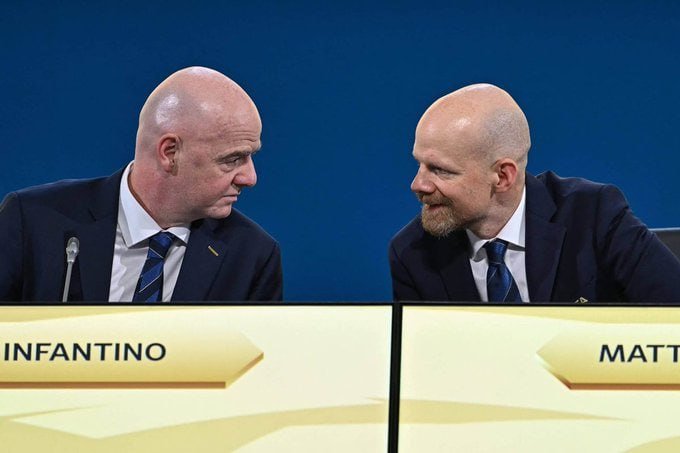
On 2 July 2026, the FIFA World Cup rolled into its next cluster of fixtures across host cities in the United States, Canada and Mexico, with FIFA's own preview note flagging the second day of July as one of the tournament's denser match calendars. The tournament is on course to be the largest in the competition's 96-year history — 48 teams, 104 matches, 16 host venues — and the auxiliary industries orbiting it are quietly redrawing their own maps.
The football is the headline; everything around it is the story. Two unrelated broadcasts this week — one about how blind supporters consume the tournament, the other about a Chinese shipyard's record-breaking car carrier — sit closer to the World Cup economy than they appear. Both illustrate how a mega-event compresses demand for infrastructure that has nothing to do with goals, and both reveal who is positioned to supply it.
The broadcast question no one wants to answer
CGTN's 3 July 2026 feature on blind fans watching the World Cup pointed to a gap that host broadcasters have spent decades treating as a side issue rather than a core product. Audio description — a separate narration track that walks visually impaired viewers through on-screen action — exists in pockets. The piece underscores how inconsistent the standard remains across major tournaments, with rights-holders typically treating accessibility as an add-on rather than a built-in feed.
The numbers are unglamorous but real: visually impaired audiences are a structural minority in nearly every World Cup market, and broadcasters that invest properly in description tracks tend to do so only when regulators or public-service mandates compel them. Where commercial rights dominate, the feed is often late, partial, or available only on a secondary platform. The CGTN segment, drawing on blind-fan associations in China, frames accessibility not as charity but as a baseline expectation — the same standard any paying subscriber would demand for commentary or replays.
The counter-argument from host broadcasters is economic: description tracks require dedicated production staff, additional mix stages and rights-clearance work for any sponsor-bound content embedded in the picture. At a tournament the size of 2026's, that overhead multiplies by venue, language and feed variant. The rebuttal from disability advocates is that those costs were always foreseeable and built into the bid-stage promises that helped the United States, Canada and Mexico win hosting rights in the first place.
Industrial gravity, in car-carrier form
A second broadcast on 2 July 2026 — CGTN's coverage of a Chinese shipyard's delivery of what it describes as a 10,800-vehicle car carrier, framed as a world record — looks unrelated until you follow the logistics. Mega-events generate a parallel surge in the movement of broadcast equipment, hospitality infrastructure, temporary seating, sponsor activations and team freight. The vessels that move those goods are the same vessels, increasingly, that handle China's export-led automotive trade.
The structural point is straightforward: Chinese shipyards now dominate the global order book for roll-on/roll-off tonnage, and the yards in question have spent the past decade scaling capacity that European and Korean competitors have shed. The Chinese industry's framing — speed of delivery, fuel efficiency, integrated yard capacity — is the same framing it has applied across container shipping, LNG carriers and bulk carriers, and it has converted scale into market share in each segment. Western commentary tends to frame the expansion in security terms (port dependence, dual-use shipyard capacity); the Chinese position, voiced through state-aligned outlets, is that the country's shipbuilding cluster is simply responding to global demand at competitive price points.
The honest reading sits between the two: Chinese yards have built genuine industrial advantage in carrier classes where South Korean and Japanese competitors have thinned out, and the World Cup is one of many demand events that will rely on that capacity without ever naming it on air.
What the auxiliary stories reveal
Three patterns cut across both broadcasts. First, mega-events expose which industries have quietly consolidated while no one was looking. Audio description for live sport and ultra-large car carriers are both unglamorous categories — until a tournament the size of 2026 turns them into bottlenecks. Second, the suppliers best positioned to clear those bottlenecks are not always the suppliers that Western commentary frames as the obvious incumbents. Chinese shipyards have built the vessels; whether or not they are named in match-week logistics coverage, they will be the ones moving the freight.
Third, the politics of the framing matter. Accessibility coverage from a Chinese state broadcaster covering Chinese blind-fan associations is a soft-power story about how a non-host nation positions itself around a tournament it cannot attend on home soil. The car-carrier story is the same genre at industrial scale. Both pieces tell the reader something about the audience CGTN is building for the World Cup as a global broadcast property — and the implicit argument that the centre of gravity for that audience is no longer exclusively European or North American.
The mainstream Western coverage of the 2026 tournament has so far focused on logistics, ticket pricing, security and the politics of expanded format. The Chinese-language coverage is doing something different: it is mapping the tournament as an industrial and cultural platform, where the supporting cast — the broadcasters, the freight, the disability-access infrastructure — is itself the story. Neither framing is wrong. Read together, they suggest a tournament whose secondary economy will leave a longer fingerprint than the final itself.
Stakes and what remains contested
What is genuinely contested is whether the accessibility gains made around this tournament will outlast it. FIFA's accessibility commitments are typically tied to the host bid and are not always inherited by the next organising committee. The CGTN piece makes the case that fan associations in China are pressing for permanent description-feed standards; whether that pressure translates into rights-contract language for the 2027 Women's World Cup and beyond is an open question. The same uncertainty applies to shipbuilding: a single record delivery is a marker, not a guarantee of sustained share, and South Korean yards are rebuilding capacity in the higher-value LNG segment.
The honest position is that the 2026 World Cup will be remembered for goals, but its secondary economy — who broadcast it, who shipped it, who got to watch it — is already being written in industries that have nothing to do with the sport.
This piece treats two adjacent CGTN broadcasts as primary-source material on the industrial and accessibility orbits of the 2026 World Cup. Monexus frames the tournament's secondary economy as the story; mainstream wire coverage has so far kept the focus on the matches themselves.
Wire provenance
This editorial synthesis draws on the following public wire/social posts:
- https://t.me/s/Olympics
- https://en.wikipedia.org/wiki/2026_FIFA_World_Cup