World Cup Friday: Cape Verde, Egypt and the long-tail bet that matters most
Cape Verde's first World Cup appearance meets Argentina's group-stage caution. Friday's slate carries more structural weight than the betting markets seem to price in.
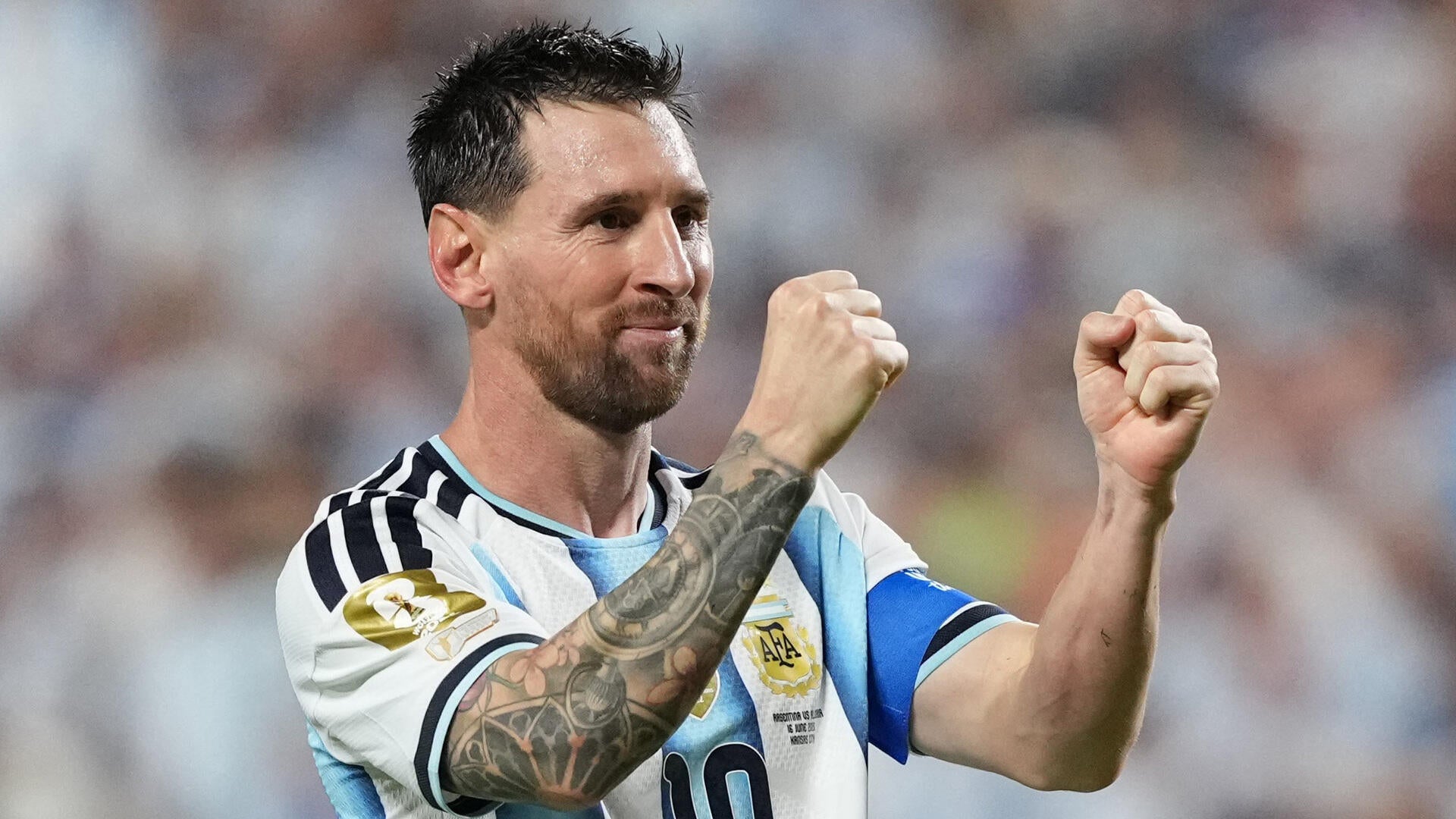
Friday's 2026 World Cup slate carries a quiet structural fact that the betting markets have not fully priced: Cape Verde's first-ever appearance at a men's World Cup finals, against a group containing Argentina, with kickoff scheduled in the early European window and broadcast into North American prime time.
That matters less for the headline matches than for the long-tail markets around them. When a debutant faces the defending champions in the same group as a regional heavyweight, the proposition is not really about winning. It is about whether Cape Verde — an island nation of roughly 600,000 people, the smallest state ever to qualify — can extract a point, score a goal, or simply refuse to be the footnote the tournament's marketing layer assumes it will be.
The Cape Verde angle
Cape Verde arrived in North America as the lowest-ranked side in their group by every available measure, and the cleanest upset candidate on the Friday card. SportsLine's model and team of soccer experts, writing at CBS Sports on 3 July 2026, singled out Cape Verde's match as the day's highest-variance leg: a debut side facing a group that already contains a confederation favourite and the defending champions.
The structural read is straightforward. Debutant nations at World Cups tend to be priced as walk-overs in group play and have, over the last four cycles, generated a disproportionate share of the tournament's most-watched moments — Senegal over France in 2002, Iceland's draw with Argentina in 2018, Canada's group-stage run in 2022. Cape Verde do not have Senegal's diaspora depth or Iceland's Nordic conditioning base, but they have a settled tactical identity under their coaching staff and a frontline that has been scoring consistently in confederation qualifiers. The proposition in the parlay markets is whether that translates into a goal, a draw, or a head-to-head not being a blowout. The base case the betting markets appear to be running is that Argentina's group-stage caution — protecting key players for the knockouts — is itself the Cape Verde tailwind.
Egypt's group-stage calculus
Egypt's match on the same Friday card sits in a different analytical lane. SportsLine flagged it as a separate leg of the day's recommended parlay, with the framing driven less by upset potential than by Egypt's need to bank points early in a group that does not allow recovery.
The Egyptian squad carries the weight of a confederation that has not produced a World Cup knockout-stage winner this century. The domestic league has spent heavily on retainers for European-based players, and the senior squad's age curve — a function of a generation that nearly qualified for 2018 and did qualify for the group's prior cycle — means every group-stage match is being treated inside the camp as a must-not-lose. The SportsLine write-up of 3 July 2026 does not quote the camp directly, but it leans on the broader point that Egypt's matches are tactical rather than atmospheric: low-block games decided by set pieces and goalkeeping, not open exchanges.
For bettors, the implication is that Egypt's pricing carries less variance than Cape Verde's, and the day's recommended parlay treats the two as a deliberate hedge — high-variance leg paired with a lower-variance leg, the structure most staff-writer columns describe as "balanced exposure" rather than doubling down on a single outcome.
Counter-narrative: why the parlay markets may be wrong
There is a respectable counter-read. The same SportsLine model that flagged Cape Verde's upset ceiling has, in prior tournaments, under-weighted the gap between a debutant's first match and their second. First-game debuts routinely produce tighter scorelines than the model expects — partly because the opposition is also taking them seriously — and Cape Verde's first appearance may not be the cleanest shot at the upset that the betting markets seem to imply. The second or third group match, when the group is already shaped and rotation kicks in, has historically been a better moment for a debutant to land a result.
Egypt, on the counter-read, is also more volatile than the market implies. Their squad's age curve cuts both ways: experience compresses variance, but accumulated minutes across a long European season compound, and the camp's rotation discipline in tournament football has been tested. A flat performance is not the base case, but it is a non-trivial tail.
The honest framing is that the parlay's risk lives in the correlations the public markets are ignoring. If Cape Verde over-perform, they likely do so in a way that pulls Egypt's group into a more open shape — which is the opposite of the low-block outcome the Egypt leg is priced for. That is the kind of structural correlation a model can flag and a reader can price, but a single-match parlay does not capture it.
Stakes and what to watch
The stakes for Friday are not just two group-stage results. They are the first data points on whether Cape Verde's debut is treated by the broadcast and betting layer as a real competitor or as a marketing footnote — and whether Egypt's group is the orderly three-game campaign the camp wants, or the kind of group where the second match becomes the de facto elimination game.
What remains genuinely uncertain is whether the variance SportsLine flagged survives kickoff. The sources do not specify line-ups, tactical shape, or injury status beyond what is implicit in the group composition. Monexus will be watching not just the scoreline but the minute-by-minute shot-quality differential — the metric that best separates debutant over-performance from a flattering scoreline.
This piece focused on the structural shape of Friday's parlay rather than reproducing individual selections. Monexus defers to the SportsLine team's published picks for the specific leg recommendations.
Wire provenance
This editorial synthesis draws on the following public wire/social posts:
- https://en.wikipedia.org/wiki/Cape_Verde_national_football_team
- https://en.wikipedia.org/wiki/Egypt_at_the_FIFA_World_Cup
- https://en.wikipedia.org/wiki/2026_FIFA_World_Cup