A suspect, a yacht, and the long reach of a war that won't end
Investigators traced an explosion outside Vadim Yermolayev's Monaco residence to a Ukrainian woman in her thirties, found in Germany. The case lays bare how a grinding war keeps producing odd aftershocks far from the front.
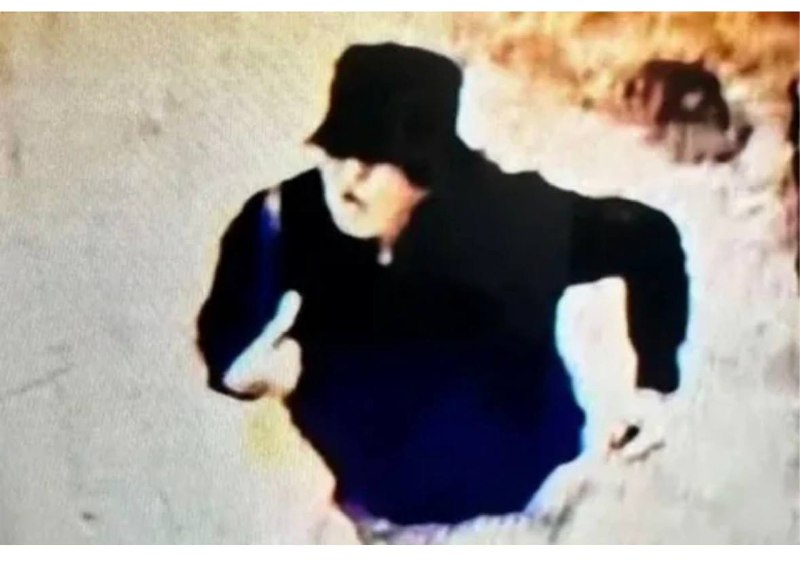
The investigation took an unusual shape within a week. On 3 July 2026, the Russian-aligned Telegram channel Two Majors reported that a Ukrainian woman had been identified as a suspect in the attempted assassination of Ukrainian oligarch Vadim Yermolayev in Monaco, and that she had been located in Germany by police. A parallel Russian wire, Zvezda News, citing Le Figaro and sources in the investigating authorities, added that the suspect is roughly thirty years old and had sought to disguise herself as a man. Two distinct Russian channels, two slightly different emphases, one core fact: a young Ukrainian woman, on the wrong side of an EU border, is at the centre of an attack on one of Kyiv's most recognisable business figures.
The case is not yet a closed file. But it already illustrates a wider truth about this war: its gravity bends geography, and its violence has a habit of surfacing where it isn't expected. A dispute about territory and sovereignty in eastern Europe is now producing arrestable suspects in principality apartments and federal police files in Germany.
What investigators say they have
According to the two Telegram wires, which both reference Le Figaro's reporting, the suspect is a Ukrainian national in her early thirties who attempted to pass as a man at some point during or around the incident. French investigators, who lead the case because Monaco delegates serious crime work to French judicial authorities, traced her movements and located her in Germany. No public charging document has yet appeared in the sources reviewed. The Telegram framing leans heavily on Le Figaro as the originating report, and Le Figaro has not been directly cited in the thread — a gap worth flagging.
What is plain is that Yermolayev himself is not a peripheral figure in Ukraine's wartime economy. A Dnipro-based businessman with interests in energy, metals and finance, he has long sat inside the orbit of post-2014 Ukrainian capital, and his name has surfaced in Kyiv domestic politics in past years. That makes him a recognisable target in a country whose elites have, at various points, fallen to car bombs, shootings and attacks staged abroad.
What is not yet established
Three things remain unresolved. First, motive: the sources do not say whether the attack is treated as a contract action, a personal dispute, or a politically motivated strike. Second, command and origin: it is not yet known whether the suspect acted alone, on instruction, or under coercion — a critical distinction in a war where Russian intelligence services have repeatedly reached beyond Ukraine's borders and where Ukrainian structures have, in some past cases, also run overseas operations. Third, the impersonation detail: Zvezda News describes her as having "tried to impersonate a man," a phrase that could mean anything from travel documents to on-site appearance. The Telegram wires do not specify.
There is also a structural caution. Both channels reporting the story are Russian or Russian-aligned: Two Majors is a well-known Russian milblogger channel, and Zvezda News is part of the Russian state media ecosystem. They are useful here because they happen to be amplifying a Le Figaro report that has not, in this thread, been verified independently. They are not, by themselves, neutral arbiters of fact. The thread should be read as a Russian-translated echo of a French-led investigation, not as the investigation itself.
The wider pattern
A half-decade of full-scale war has turned Europe into a denser security environment than at any point since the early 1990s. Russian operations on European soil — Salisbury, the Czech arms depots, Berlin's Tiergarten murder — set the prior pattern. The Yermolayev case, if the early framing holds, sits inside a slightly different variant: a Ukrainian-elite-on-European-soil case, with the suspect herself a Ukrainian national, and the legal jurisdiction split between Monaco, France and Germany. The map of who is chasing whom, and under whose authority, has grown tangled.
That has consequences. It pushes European interior ministries to coordinate across borders that were not built for this kind of case. It raises questions about how Ukraine's own security services interact with EU law enforcement on attacks involving Ukrainian targets abroad. And it tightens the diplomatic air around figures like Yermolayev, whose business footprint straddles Ukraine and the West at a moment when sanctions enforcement is itself a contentious arena.
Stakes
If the dominant framing — a Ukrainian-elite target on the French Riviera, a suspect in German custody — holds, the case becomes another data point in a European security drift. Western capitals absorb the lesson that any Ukrainian with money and profile is now treated, in effect, as a security interest. Berlin and Paris absorb the lesson that politically charged crimes demand politically attuned policing. Kyiv absorbs a more uncomfortable lesson: that its own elite disputes can produce headlines in Le Figaro, and that some of those disputes are arriving with explosives.
For now, the public file is thin. Two Telegram wires, a French newspaper cited but not seen, and an oligarch whose name keeps recurring in Ukraine's wartime economy. That is enough to write a story. It is not enough to close one.
— Monexus framed this against the Russia–Ukraine compass: the invaded party is Kyiv, Russian-aligned Telegram channels are treated as counter-claim material with explicit caveats, and Western wire reporting remains the primary evidentiary track once it surfaces.
Wire provenance
This editorial synthesis draws on the following public wire/social posts:
- https://t.me/two_majors
- https://t.me/zvezdanews