Eala writes a new chapter in Philippine tennis — and a country that doesn't quite know how to read it
A 21-year-old from Manila has carried the Philippines into the second week of Wimbledon — the first Filipino to reach the fourth round of a Grand Slam. The country's reaction says as much about the state of its sporting imagination as her forehand does.
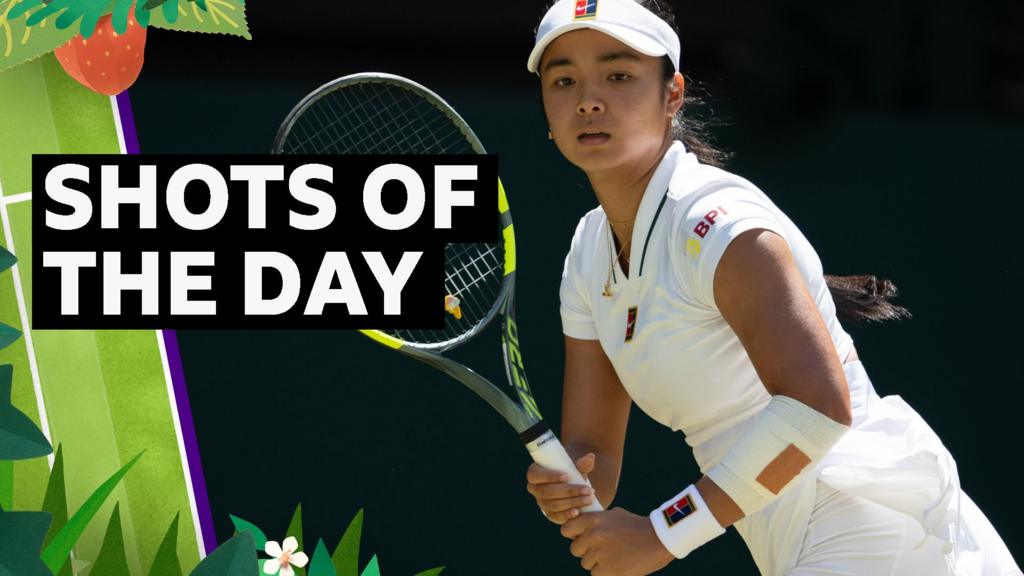
Alexandra Eala stood on the grass of the All England Club on Friday and, for a few minutes, did the thing elite athletes almost never do: she stopped competing and started thanking people who could not hear her. The 21-year-old from Manila, who became the first player representing the Philippines to reach the fourth round of a Grand Slam in the Open era, dedicated the moment to her grandfather and her brother — the family members who first put a racket in her hands as a child. "This is everything," she said afterwards, in the kind of plain, unfiltered register that television rarely transmits from the second week of a major. The win that prompted it was not a fluke. It was the fourth consecutive match Eala had won at the Championships, against a series of opponents whose rankings had placed her, on paper, as the underdog in nearly every round.
The result matters beyond the scoreline because the Philippines — a country of more than 110 million people and a boxing-mad sporting culture — has, until this fortnight, produced almost no tennis memory worth the international headlines. Eala's run is not merely a personal breakthrough. It is the first sustained, headline-grade evidence that the country's athletic identity can stretch beyond Manny Pacquiao's sport of choice, and it lands at a moment when Manila is bidding to host major international events and trying to reposition itself as a serious Southeast Asian sports market.
A country discovering a new kind of athlete
Eala's victories arrived in stages. The third-round win, completed on 3 July 2026, made her the first Filipino to reach the second week of a Grand Slam in the Open era. The fourth-round appearance, sealed a day later, extended that boundary further still. Each round increased the volume of attention at home. According to reporting from BBC Sport, the reaction inside the Philippines has been unusually broad — not confined to tennis circles or the Manila middle class that tends to follow the international game, but spilling into the wider sports conversation that usually runs through boxing and basketball.
That spillover is the under-reported half of the story. The Philippines has long produced world-class boxers, but tennis infrastructure at the elite level has been thin. There is no equivalent of the public sports-school system that funnels European juniors into the professional game, and Filipino players who have reached the upper reaches of the WTA or ATP tours in the last two decades can be counted on one hand. Eala trained abroad, in the Spanish system, and her development path is closer to that of an Eastern European junior prodigy than to anything in Manila's sporting mainstream. The breakthrough, in other words, is not the product of a pipeline — it is the product of one family and one talent.
The counter-narrative: a one-off, not a movement
Sceptics — and they exist in Manila's sports press even now — argue that a single breakthrough run does not a tennis culture make. They point out that Eala's results in the WTA Tour main draw over the past eighteen months have been respectable but unspectacular, that she was given a wildcard path into the Championships, and that no Filipino junior is currently ranked inside the world's top 200. The structural conclusion they draw is unflattering: this is a Cinderella story, not a foundation-laying one.
The counter to that counter is straightforward. Cinderella stories in tennis have a way of becoming platforms. Naomi Osaka's 2018 US Open win catalysed a generation of Japanese juniors; Bianca Andreescu's 2019 run in New York produced, within three years, a Canadian women's team capable of reaching the Billie Jean King Cup finals. A single visible victory at a flagship event changes what parents imagine is possible for their children, what federations feel pressure to fund, and which corporate sponsors think is worth a sponsorship dollar. Whether the Philippines captures that wave, or lets it pass, is now a question of policy — not of talent.
What the reaction tells us about the country
The tone of the coverage inside the Philippines has been telling. Local outlets have framed Eala not primarily as a tennis player but as a national story — a Filipino daughter, trained by family, carrying the country's flag into a space where the tricolour has rarely flown. That framing is partly sentimental and partly strategic: the sports-mad segments of the Philippine media know that the country's international profile is rising on other fronts (hosting bids for major events, hosting the recent Basketball World Cup stage, growing economic integration with the rest of Southeast Asia), and Eala's run slots neatly into a broader narrative of arrival.
There is also a generational dimension. Eala is a product of the Spanish academy system, of the WTA's development pathways, and of a global junior circuit that did not exist when her parents were her age. Her success is, in this sense, an argument for openness — for the idea that Filipino athletes can be built anywhere, by anyone, as long as the pathway to the top of the game is real. That argument has political weight in a country that has historically debated whether its best sporting talent should pursue professional boxing, basketball, or American football pathways, and where tennis has often been treated as a sport for the Manila elite rather than a national pursuit.
What remains uncertain
It is worth being honest about what this run does and does not establish. Eala is 21, ranked outside the WTA top 30 at the start of the tournament, and into the second week of a Grand Slam for the first time. The fourth round, when it comes, will almost certainly be her hardest match yet. The structural question — whether a country of 110 million can sustain a tennis programme capable of producing the next Eala — will not be answered by Wimbledon, however far she goes. The headline the Philippines is writing this weekend is real, but the chapter it begins is still being typed.
How Monexus framed this: the wire led with the tennis. We led with the country — because the more interesting question is not whether Eala wins the next match, but what a nation that built Manny Pacquiao chooses to do with the fact that it has, all of a sudden, also built her.