Aljira at 35: how a Newark artist-run room outlasted the gentrification it was built to survive
A Newark institution that championed Dawoud Bey, Firelei Báez and Jeffrey Gibson turns 35 with a question hanging over it: can an artist-led space still hold ground in a city that has finally, uneasily, arrived?
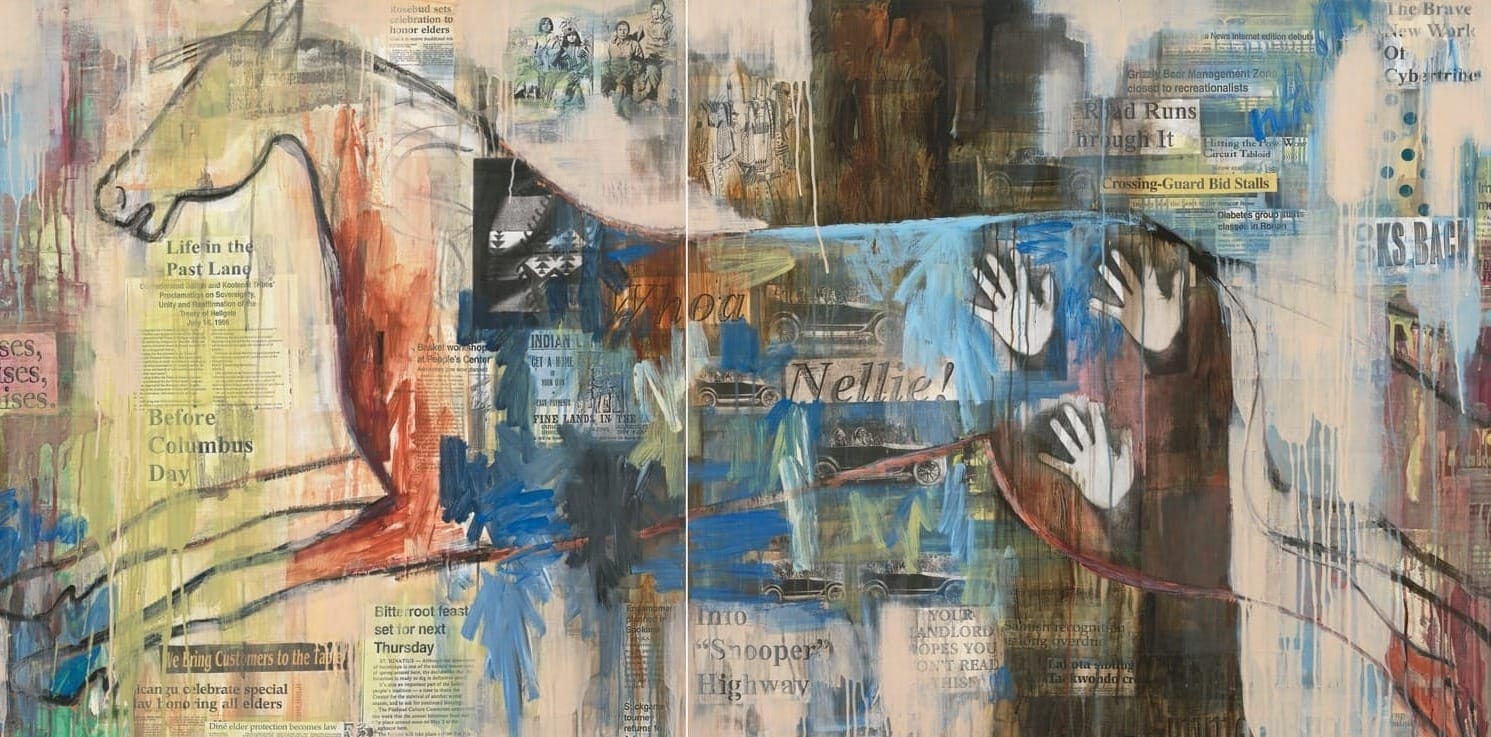
On 4 July 2026, a small box on Washington Street in downtown Newark marks thirty-five years of operations under a name that most visitors will mispronounce on their first try. Aljira, a Center for Contemporary Art, opened its doors as an artist-run space in 1991, and over the decades has hosted the work of figures including Dawoud Bey, Firelei Báez and Jeffrey Gibson — artists whose careers have since moved into major institutional orbit while remaining anchored in the social questions that Aljira was built around. The gallery's anniversary arrives at an awkward moment for the institution's own subject matter: the city that hosts it has, after decades of disinvestment, finally become a place outsiders want to be in. Aljira was founded in part as a critique of that drift. Thirty-five years on, it is still making the critique.
The anniversary is not, on its face, the kind of news that demands sustained attention. There is no funding crisis to announce, no building condemned, no imminent closure. But the institutional question Aljira poses — whether a city can develop without displacing the cultural infrastructure that made it developable — is one that American cities from Pittsburgh to Oakland are now litigating in real time. The longer arc of Newark's revival is what makes this small anniversary worth reading against the grain.
What Aljira actually does
Aljira operates two floors of gallery space in a converted commercial building near Military Park and the New Jersey Performing Arts Center, the latter of which opened in 1997 and is now widely credited with anchoring Newark's cultural comeback. Its programme, as a non-profit artist-run space, has historically tilted toward emerging and mid-career artists whose work engages race, place, capital and the texture of urban life in the United States. The 2026 anniversary programme revisits that record.
The list of artists who have shown there is a partial map of contemporary American practice with a political edge: Dawoud Bey, the photographer whose portraits of Black Americans at public-historical sites have shaped a generation of image-making; Firelei Báez, the Dominican-American painter whose work on diasporic history earned her a Hugo Boss Prize; Jeffrey Gibson, the Choctaw-Cherokee artist who represented the United States at the 2024 Venice Biennale. None of those names require Aljira's introduction. All of them, at some point in their development, were given a room by it.
That pattern — institutional incubation at the moment when bigger institutions are not yet paying attention — is the operating model of artist-run spaces everywhere. What is less common is staying in business for thirty-five years while keeping that posture. Most artist-run spaces close within a decade. Aljira has outlasted many of the galleries and cultural centres that were operating in Newark when it opened, and a fair number of the developers it was implicitly positioned against.
Newark as the case study
The city Aljira sits inside has been the subject of a long-running argument about who benefits from urban redevelopment. Newark's population, which collapsed through the second half of the twentieth century, has been stabilising and partly growing since the 2010 census. New construction, much of it around the downtown core where Aljira is located, has brought in new residents and new businesses. Rents in the central wards have moved upward. The median household income in Essex County still trails the metropolitan average, and the gap between the city and its wealthier neighbours remains wide — but the trajectory, for the first time in living memory, is upward.
Artist-run spaces exist, in their purest form, because that trajectory has a cost. When a city becomes valuable to capital, the people and institutions that made it legible to outsiders are systematically priced out. Galleries move to cheaper neighbourhoods or close; the artists they supported disperse to other cities; the cultural infrastructure that drew the first wave of investment disappears, replaced by a more polished, less local version of itself. The critique is not novel. What is novel — and what makes Newark a useful case — is that the displacement is happening in slow motion, with public hearings, with lawsuits, with named developers and named tenants, rather than in the abrupt way it happened in some other American cities.
Aljira's programming has tracked that arc. The 2026 anniversary returns to questions the space was founded around: whose image of Newark gets made visible, whose work gets bought, who can afford to live in the same zip code as the gallery that represents them. The framing is consistent with the institution's history. It is also consistent with the complaints of long-time Newark residents, who have argued for years that the city's cultural revival is happening to them rather than with them.
What an artist-led space actually protects
The standard defence of artist-run spaces is that they take risks on work the market will not touch — too formal, too political, too blunt, too slow to commercialise. That defence holds. There is a less standard defence, however, which is that they hold ground.
Artist-run spaces in American cities have historically anchored neighbourhoods whose later redevelopment often removes them. The pattern repeats often enough that it has become a kind of structural irony: a space opens in a marginalised area, draws attention, is cited as evidence that the area is becoming something, and is eventually unable to afford the rent it helped justify. Aljira, by virtue of being non-profit, institutionally connected and on a long lease, has been less vulnerable to that pattern than most. But the question is no longer hypothetical even for it. The rental market in downtown Newark in 2026 is not the rental market of 1991, and the rent Aljira pays today is not the rent Aljira paid in 2001.
Holding ground is, in itself, a cultural product. It produces exhibitions that reflect the city around the gallery rather than the taste of collectors in other zip codes. It produces institutional memory — a record of which artists passed through Newark and what they said about it. It produces a counter-narrative to the standard redevelopment story in which artists arrive, are displaced, and the cycle continues.
The counter-read, fairly stated
The strongest case against treating this kind of anniversary as a story is the obvious one: thirty-five years of operation, in a city where much smaller and more fragile institutions have folded, is evidence that Aljira has figured something out. A building still standing, a programme still running, a list of alumni that includes a Venice Biennale representative — these are not trivial outcomes.
A version of that defence has been made in various forms over the years by New Jersey arts funders, including the Geraldine R. Dodge Foundation and the Prudential Foundation, both of which have supported Aljira's programming in periods when the institution's future looked less certain. The argument is that artist-run spaces deserve to be sustained like any other cultural infrastructure — through grants, through long-term leases, through institutional partnerships with larger museums — and that doing so is not nostalgia but stewardship. That argument is not wrong. Aljira's survival is not a coincidence, and the funders and staff who kept it running deserve the credit.
The reason the counter-read does not close the question is that the gentrification story has not closed either. Newark in 2026 is a city in which displacement is still ongoing, in which long-time residents still lose leases, in which the cultural economy is still sorting itself into winners and losers. An institution celebrating thirty-five years inside that process is not exempted from the question; it is the most legible place to ask it.
What remains uncertain
The sources do not specify whether Aljira faces a near-term lease renegotiation, capital campaign or other financial pressure that would test its model in 2026. Anniversary programming is announced, alumni are celebrated, but a full picture of the institution's operating budget, lease status and endowment health is not in the public reporting this article is based on. A reader who wants to evaluate the immediate future of the space will need to wait for the institution's next annual filing or a longer piece of investigative reporting.
What the available reporting does show is that the conversation the gallery was founded to host — about art, capital, race and the American city — is one that is still being had, in Newark and elsewhere, in terms that the gallery helped set.
— Monexus framed this as a structural question about artist-led space and urban development, rather than a straight anniversary profile — the wire coverage leaned retrospective; this publication treats Aljira's 35th as a way into a question Newark is still answering.
Wire provenance
This editorial synthesis draws on the following public wire/social posts:
- https://en.wikipedia.org/wiki/Aljira,_A_Center_for_Contemporary_Art
- https://en.wikipedia.org/wiki/Dawoud_Bey
- https://en.wikipedia.org/wiki/Firelei_B%C3%A1ez
- https://en.wikipedia.org/wiki/Jeffrey_Gibson_(artist)