Antonelli takes Silverstone sprint as Hamilton's Ferrari return narrows Mercedes' hold
Antonelli's sprint win at Silverstone was the lede. The wider story is that Mercedes' early-season lead has shrunk to a wing-mirror's width, with Ferrari now locking out the top step of the podium on a Saturday.
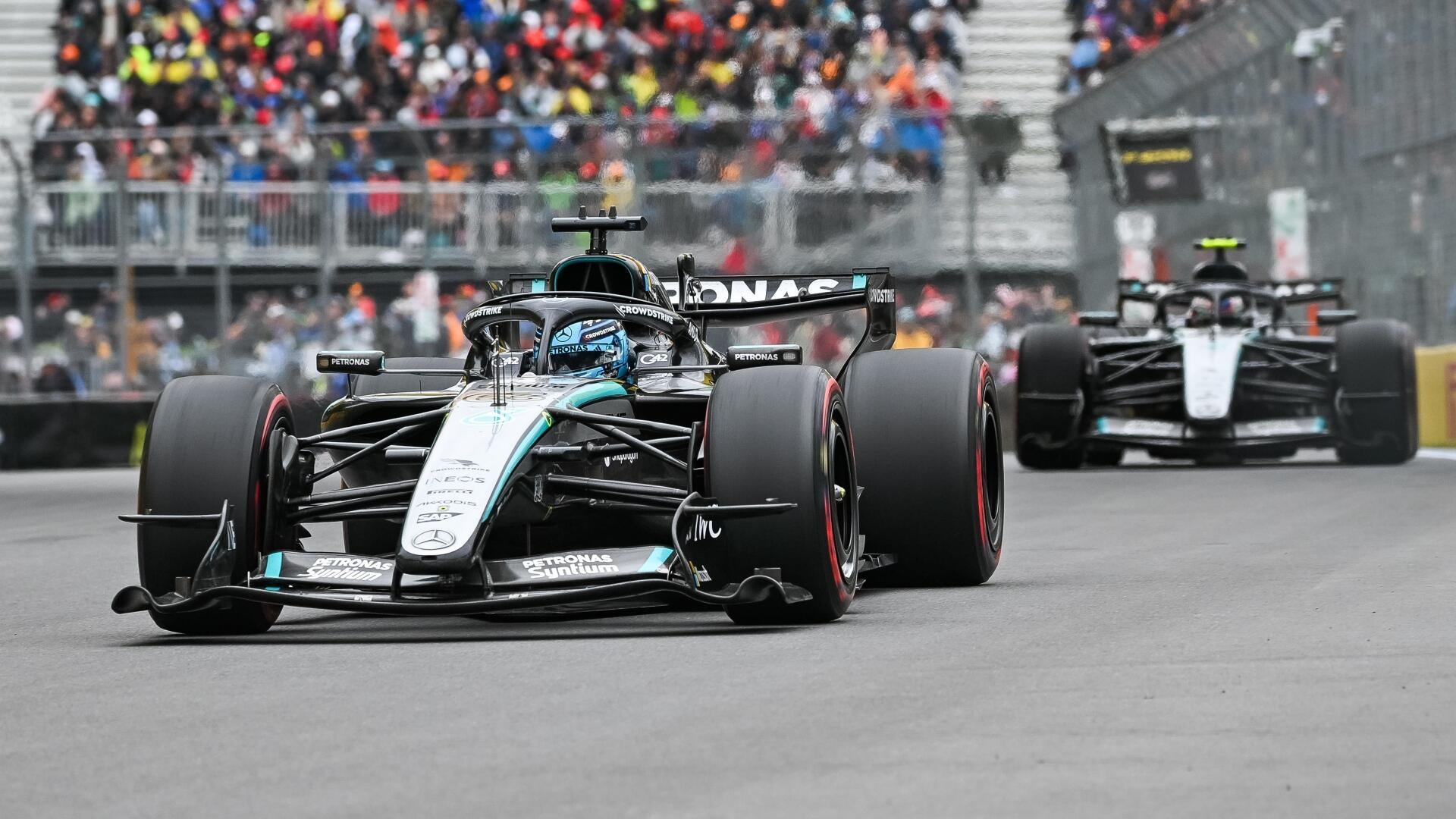
Kimi Antonelli crossed the line at Silverstone on Saturday and the timing chips on Formula 1's broadcast did what timing chips do: flashed a name, a team, a gap, and moved on. The numbers underneath the graphic are the more interesting story. The 19-year-old Italian, in only his second full season, converted pole into a controlled sprint victory, his fourth podium of the year, and pulled Mercedes' early-season points lead back from the brink of collapse.
That collapse did not actually happen. But it nearly did, and the speed at which it nearly happened is the real story of the weekend. Nine races into the 2026 season, the constructors' standings show Ferrari has consolidated second place and trimmed a gap that, in March, looked comfortable for the Brackley squad. On Saturday at Silverstone, the team that finished first and third was Ferrari. The team that finished second was Mercedes.
The overtake, and what it actually meant
The wire coverage led on the overtake, which is correct but thin. Antonelli's move on lap one was clean and early, the kind that decides sprint afternoons before anyone has settled into a rhythm. But a sprint is nineteen laps, not sixty-six, and the more telling data points were elsewhere on the timing screen. Ferrari brought both cars home in the top three. Leclerc, freed from the management imperatives that defined his Friday, ran second in the early stint and finished third. Hamilton, starting from a position that briefly looked like it could deliver something more, came home where his team-mate did.
Mercedes' problem is no longer the gap to the midfield. It is the gap to the car in front of it on Sundays.
Hamilton's weekend, and the season inside the season
Lewis Hamilton described his own race with characteristic bluntness: "all the magic just disappeared." The phrase landed in his post-sprint remarks and did the rounds because it sounded final, the sort of verdict a driver delivers only when a day has gone specifically and completely wrong. The race itself was less catastrophic than the wording suggested. Third place is third place, and at Silverstone, in a Ferrari, in a car that did not exist in its current form six months ago, third is a working result.
But Hamilton has been here long enough to know the difference between a working result and the result he came for. The British Grand Prix was supposed to be the soft launch of the next phase of his career, the symbolic home weekend that confirms the move has bedded in. Instead it became a confirmation of something narrower: that the move has bedded in, but the car has not yet caught up with the driver, and on a Saturday in July that is the wrong order.
The framing that matters is structural, not sentimental. Ferrari are rebuilding around a 41-year-old seven-time champion whose contract runs past the next regulation reset. The rebuild is not a question of whether to invest in Hamilton; it is a question of how aggressively to design a car around a driver whose feedback loops are sharper than anyone else's in the paddock, and whose tolerance for a half-finished product is finite.
The constructors' picture, in plain numbers
Nine rounds in, the constructors' standings tell a story that the sprint result merely confirmed. Ferrari sit second. Mercedes sit first, but the cushion that allowed them to manage development across the early flyaways is gone. The gap that mattered in March, the one that let Mercedes treat the sprint format as a controlled experiment, has been compressed by a combination of Ferrari's upgrade trajectory and Mercedes' own stumbles.
ESPN's weekend read framed it as "a close fight now with Ferrari," which is the right way to put it and not the way most pre-season previews would have. The interesting question is what happens when it stops being close and becomes something else. Mercedes have historically responded to constructors' pressure by pulling development forward and trusting the factory. Ferrari have historically responded by introducing updates that work for two races and then stop working. Which of those reflexes kicks in first will define the second half of the season more than any single overtake at Silverstone.
What the next six races actually decide
The calendar from here is unkind to anyone hoping for a quiet summer. Belgium, Hungary, and the Dutch round at Zandvoort are tracks where downforce and chassis balance dominate, and where Ferrari's current car philosophy tends to age well. Spa in particular has rewarded high-commitment setups in recent years, and Antonelli's sprint win was built on exactly the kind of front-end trust that Spa rewards.
For Mercedes, the structural fix is the one that does not show up on a Saturday timing screen. The team has been open, in the run-up to Silverstone, that reliability concerns and a handful of strategic miscalls have cost points the car should have scored. A close fight with Ferrari is solvable. A close fight with Ferrari plus the operational drag of a difficult first half is a different problem, and it is the one Brackley will spend the August shutdown actually solving.
The kid won the race. That part is the lede because it has to be. The wider story is that the win did not move Mercedes further clear; it kept them in front by the width of a wing mirror, on a weekend when the team they are trying to stay ahead of put both cars on the podium. The rest of 2026 will be decided by which of those two teams solves its own problem first.
Sources
- https://www.skysports.com/f1/news/12040/13450897/all-the-magic-just-disappeared-hamilton-reveals-silverstone-regrets, Sky Sports, "All the magic just disappeared: Hamilton reveals Silverstone regrets", 6 July 2026
- https://t.me/formula1/41827, Formula 1 Telegram, "TEAM STANDINGS (after Silverstone): Ferrari consolidate second and close the gap to Mercedes", 6 July 2026
- https://www.espn.com/f1/story/_/id/45789021/mercedes-ferrari-title-race-close-fight-2026, ESPN, "A close fight now with Ferrari: Mercedes' reliability concerns", 6 July 2026
Desk note: Monexus framed this as a development milestone for Antonelli and a competitive datapoint for Ferrari's rebuild around Hamilton, rather than a generational passing of the baton. The wire led on the overtake, which is correct but thin.