Argentina survive Cape Verde scare to reach last 16, as Egypt edge Australia on penalties
A defending champion wobbles in a 3-2 win while Mohamed Salah's panenka sends Egypt through — and Polymarket is already pricing the announcers' next soundbite.
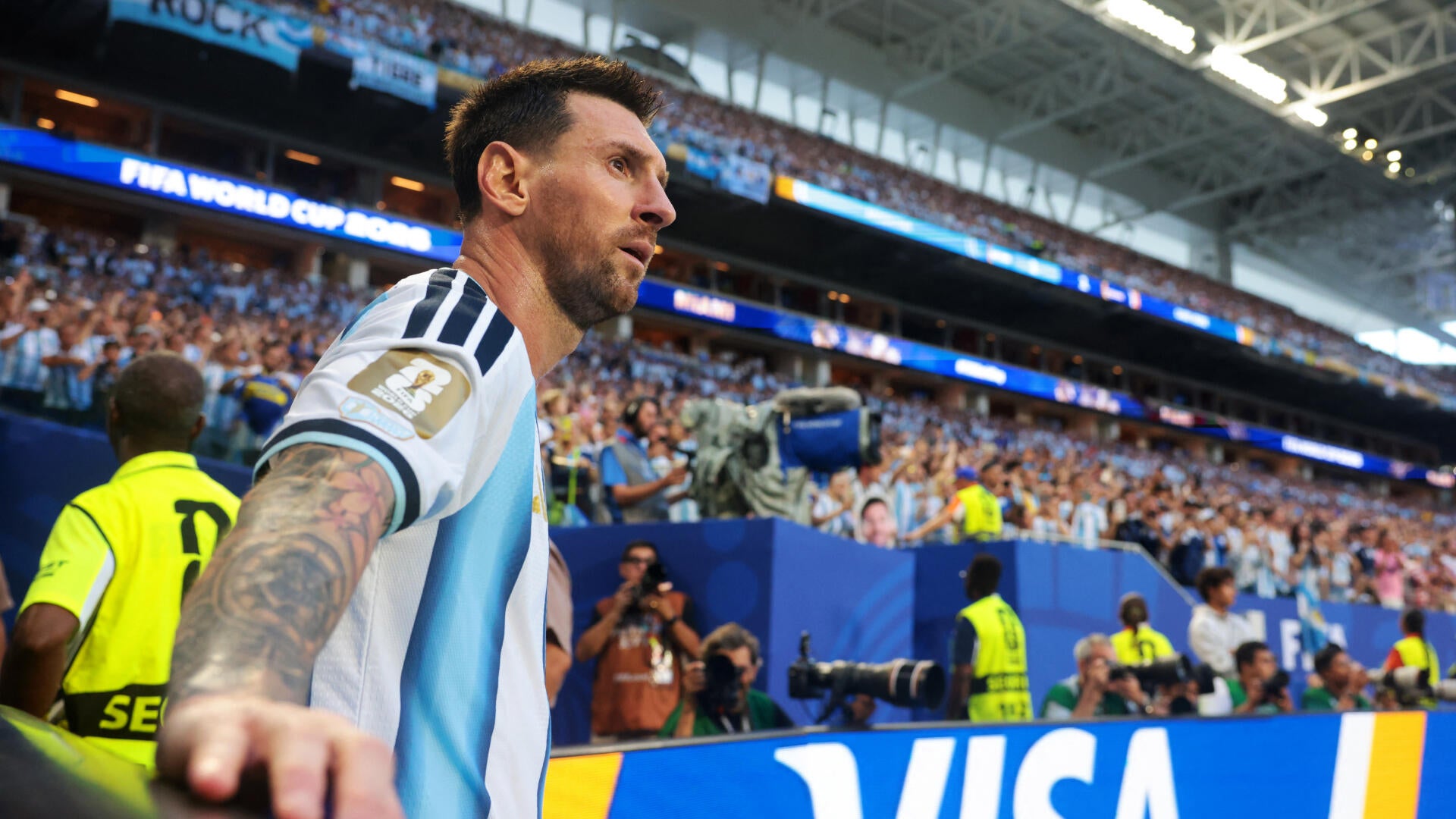
Argentina booked its place in the last 16 of the 2026 World Cup with a 3-2 win over Cape Verde in the early hours of 4 July 2026 (UTC), a match that ping-ponged between settled brilliance and defensive slippage and that, by kick-off of the next round, had already spawned a Polymarket contract on what the broadcasters will say next.
The result extends a 24-team knockout phase that has so far favoured pedigree over promise. Holders Argentina needed a late response to put away a Cape Verde side that drew level at 1-1 in the first half and again at 2-2 before the holders found a third, per the running commentary thread at the WFWitness Telegram channel, which logged the equalisers at 21:18 UTC on 3 July and 00:17 UTC on 4 July before the final scoreline at 00:47 UTC. The fixture sits inside a tournament that has also delivered Egypt's first World Cup knockout win: Mohamed Salah's panenka helped Egypt beat Australia 4-2 on penalties the prior evening, as reported by France 24's English service on 3 July 2026.
What the scoreline actually says
Argentina–Cape Verde was not the walkover the rankings implied. The WFWitness thread shows three lead changes in effect — Argentina ahead, Cape Verde level, Argentina ahead, Cape Verde level — before a final Argentine goal in the closing minutes. Cape Verde, appearing in the last 16 of a World Cup for the first time, played the kind of vertical, transition-heavy football that punishes a back line caught high; Argentina's three goals suggest the attack functioned but the defensive shape did not hold for 90 minutes. The 3-2 margin understates how close this was to extra time.
For Argentina, the takeaway is twofold: the squad has a finisher's instinct that survives a bad defensive day, and the squad has a defensive day worth interrogating before the quarter-final. For Cape Verde, the takeaway is structural. A nation of roughly 600,000 people reached the last 16 and forced the holders to chase the game. The result is the headline; the performance is the story.
Counter-narrative: the prediction market had already priced the spectacle
By 21:48 UTC on 3 July 2026, hours before kick-off of Argentina–Cape Verde, the prediction platform Polymarket had listed a market on what broadcasters would say during the match — the framing explicit in the listing on poly.market. The market's existence is the small data point. It treats the contest less as a sporting event with unknown outcomes than as a content property whose commentary is itself the tradeable surface. Argentina's progression is news; the announcers' next adjective is, to a meaningful slice of internet users, an event of comparable salience.
A counter-reading: prediction markets are simply faster polling, and a contract on broadcast commentary is the natural extension of pre-match prop bets that have existed on every major tournament for a decade. The more unsettling read is that the platform treats world football as a continuous stream of micro-events whose monetisation does not pause for the actual sport. Both readings point to the same structural shift: live sport is increasingly narrated by traders as much as by pundits.
The structural frame: a World Cup where the minnows bite
Egypt's win over Australia is the cleaner illustration. The France 24 report frames it as Egypt's first World Cup knockout victory, with Salah's panenka — a chip down the middle of the goal — as the decisive act in a 4-2 penalty shootout after 120 minutes could not separate the sides. Australia, a round-of-16 regular this decade, exits at the first knockout hurdle. Egypt, absent from the knockout phase for most of the post-2010 era, advances.
Read together, the two results describe a tournament in which the gap between the seeded sides and the rest is narrower than the FIFA rankings imply. Cape Verde forced a holder into a chase. Egypt, gated through Africa's qualifying path, broke an Australian side that had built its identity on set-piece efficiency. The 48-team format, expanded from 32 in 2026, has lengthened the field; the football itself has not flattened to match.
Stakes: who needs the next round most
For Argentina, a defending champion advancing is relief rather than revelation; the quarter-final draw is where the bracket becomes legible. For Egypt, the last-eight is uncharted territory in the modern era and the economic and political weight of a Salah-led run back home is substantial. For Cape Verde, elimination is the wrong word — a last-16 appearance on this stage is itself a record, and the players who forced Argentina into a chase are now visible to every European scouting department.
The Polymarket contract, listed before kick-off, will resolve in the next broadcast cycle. Argentina's third goal, scored with the game still tense at 2-2, is the kind of moment traders will have priced in retrospect. The match moves on; the secondary market on what gets said about it does not.
Desk note: WFWitness supplied the running commentary; France 24 confirmed the Egypt–Australia result; Polymarket, via X, is treated here as a data point on how the tournament is being consumed, not as a news source on the football itself.
Wire provenance
This editorial synthesis draws on the following public wire/social posts:
- https://t.me/wfwitness
- https://t.me/wfwitness
- https://t.me/france24_en